Cooperation on fires and evidence
The task force agreement followed a two-hour meeting in Jakarta on October 27, 2026, between Singapore Foreign Minister Vivian Balakrishnan and Indonesian Foreign Minister Arrmanatha Nasir, according to the South China Morning Post. Their plans include sharing information, gathering evidence across borders and potentially recovering assets from companies linked to forest fires. Singapore offered to provide data on companies connected to the fires.
Grace Fu, Singapore's minister for sustainability and the environment, discussed the agreement during the second reading of amendments to the Transboundary Haze Pollution Act. She said the task force would help the two countries exchange information and coordinate more closely, and welcomed Indonesia's emphasis on preventing fires as a long-term response.
"We will continue to work with our neighboring countries to strengthen regional cooperation and prevent fires at their sources," Fu said, as quoted by ANTARA.
Weeks of unhealthy air
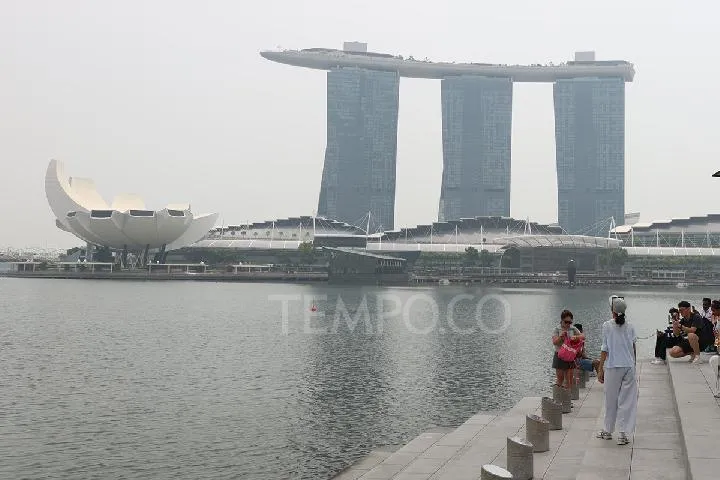
The cooperation follows what Fu described as Singapore's worst haze episode since 2015. From September 4 to October 25, 2026, air quality was in the unhealthy range on 33 days and the very unhealthy range on five days, Channel NewsAsia reported. The 24-hour Pollutant Standards Index exceeded 200 at one point, according to The Business Times.
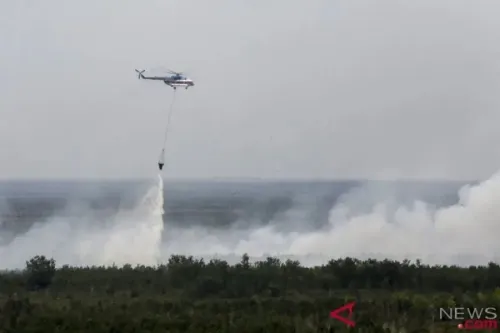
Residents had to cut back on outdoor activities and change their routines during the weeks of polluted air, Fu said. The South China Morning Post described the Indonesian forest fires behind the haze as the country's most intense in 11 years; smoke also spread to Malaysia and East Timor.
Fu said human activity contributes to the haze alongside natural factors. She cited irresponsible land clearing and management, including open burning and peatland drainage, as practices that can benefit companies commercially while leaving millions of people across Southeast Asia to bear the pollution costs.
Addressing those underlying causes requires continuing work by governments, businesses and communities throughout the region, she said, rather than action by Singapore alone.
Higher penalties approved in an urgent sitting
Parliament passed the Transboundary Haze Pollution (Amendment) Bill on Wednesday, November 4, 2026, following six hours of debate and speeches by 24 members of Parliament. The legislation raises the maximum fine for entities convicted of haze offenses from S$2 million to S$20 million, a tenfold increase.
A rare Certificate of Urgency signed by Singapore's president allowed the bill to be introduced and receive its second reading in the same sitting. The procedure permits introduction, debate and passage through all three readings in one sitting. Channel NewsAsia reported that it was last used to pass the Insurance (Amendment) Bill in 2024.
The haze law dates to 2014. According to The Business Times, Fu said the amendments were being made urgently because investigations into the 2026 haze episode were already under way and agencies needed the expanded powers to advance that work.
During her speech, Fu outlined proposals to improve how authorities obtain and verify information, trace corporate relationships and supply chains, and impose financial penalties for irresponsible burning. Singapore also plans wider scrutiny of companies connected to burning through business dealings, supply chains or financing arrangements.
Investigations and business restrictions
Under the amended law, the Director-General of Environmental Protection can require entities suspected of having links to haze to hire private-sector assessors at their own expense. Authorities can also put large forestry and agriculture businesses on notice about their supply chains.
The minister can designate errant companies or individuals and order restrictions on business dealings with them. Violating those orders carries a maximum fine of S$1 million per contravention, with additional fines of up to S$100,000 a day for continuing breaches.
Other provisions give officers arrest powers within Singapore and allow courts to hear cases under the Act without the accused being present. The law also adds a civil penalty framework capped at S$10 million, alongside a disgorgement provision.
Enforcement activity had begun before the amendments. In the preceding month, the National Environment Agency issued Section 9 Preventive Measure Notices to 10 Indonesian companies. Another 10 companies registered in Singapore received Section 10 notices, marking the agency's first use of that provision.
Fu said the stronger rules were meant to safeguard Singaporeans from haze and promote more responsible business conduct. But she cautioned that legislation could not solve the problem by itself: limits on national jurisdiction over activities abroad made close cooperation with neighboring countries, especially Indonesia, essential.