Overseas demand and West Java's role
The Indonesian Migrant Worker Protection Information System (SIP2MI) listed 278,848 overseas job openings as of Oct. 25. Indonesian workers had filled 72,924 of those positions, leaving 205,924 available.
Mukhtarudin said Indonesia needed to prepare workers with the qualifications international employers require. "The scale of international employment opportunities needs to be matched by improvements in the competency of Indonesia's human resources," he said.
He pointed to aging populations in Japan, South Korea and European countries as a source of labor demand. Indonesia's large working-age population, meanwhile, gives it an opportunity to benefit from its demographic dividend while pursuing its 2045 development goals.
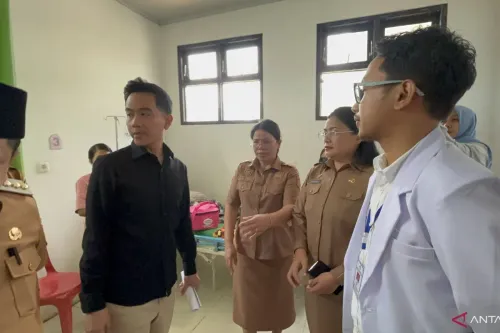
The meeting at the Ministry of the Protection of Indonesian Migrant Workers (KP2MI) brought together Garut Regent Abdusy Syakur Amin, House of Representatives member Ade Ginanjar of West Java XI, and labor officials from Garut Regency, Tasikmalaya Regency and Tasikmalaya City. Universities and vocational institutions from the region were also represented.
West Java is a major source of Indonesian migrant workers. KP2MI recorded 239,821 migrant worker placement services from the province between 2023 and Oct. 26, 2026. Those figures included 2,725 services from Garut Regency, 1,412 from Tasikmalaya Regency and 560 from Tasikmalaya City.
Abdusy called for checks on overseas vacancies and better coordination to prepare and protect applicants. He also sought wider access to government-to-government (G2G) recruitment, particularly for South Korea, saying closer coordination could make recruitment more orderly and improve protection. Regional governments, he said, could enlist existing institutions and training providers to offer short, intensive courses suited to overseas employers' requirements.
Training plans and placement targets
KP2MI's SMK Go Global program seeks to equip vocational school graduates for overseas employment, with training matched to international labor needs. It follows President Prabowo Subianto's directive to prepare 500,000 workers. The placement schedule calls for 40,000 workers in 2026, 140,000 in 2027, 180,000 in 2028 and 140,000 in 2029.
At a Sept. 2, 2026, press conference in Jakarta, Deputy Minister of Migrant Workers Protection Christina Aryani said the overall goal covers 300,000 vocational high school (SMK) graduates and 200,000 people from the general public, according to ANTARA News.
Aryani identified nursing, caregiving, welding, bus and truck driving, and hospitality as priority fields. The program's destinations include Japan, South Korea, Germany, Malaysia, Singapore, European countries, Turkiye and Taiwan.
One training effort is underway at Universitas Indonesia. The university and KP2MI inaugurated SMK Go Global at the UI Migrant Center on Sept. 2, 2026. According to the university's Vocational School, 200 participants were receiving training in waitressing, housekeeping, caregiving, elderly care assistance and plant cultivation, along with English and Mandarin instruction.
Mukhtarudin asked regional administrations and higher education institutions to publicize the program and encourage eligible applicants to enroll. Registration for its second batch is open through Oct. 31, 2026.
Legal recruitment and protection throughout employment
The ministry's proposed partnerships extend beyond training. KP2MI has offered to work with regional governments and universities on sharing workforce data, distributing information about legal overseas vacancies, developing applicants' skills and establishing Migrant Centers.
By Oct. 12, 2026, the ministry had inaugurated 43 Migrant Centers at higher education institutions and another at a training institution. The centers provide access to verified overseas vacancies and explain legal recruitment and placement procedures, as well as migrant workers' rights and available protections.
The cooperation is intended to support SMK Go Global and protect workers at each stage of employment: preparation before departure, work abroad and reintegration after returning to Indonesia. For graduates in Garut and the Tasikmalaya area, the initiatives could broaden access to jobs while helping reduce irregular recruitment and migration.
"Integrating job training with safe migration education is expected to reduce the number of workers using irregular channels while improving the welfare of communities in the regions," Mukhtarudin said.
Loans and budget support
Financing is another part of the ministry's effort to curb illegal departures. In an Aug. 5, 2026, announcement reported by ANTARA News, Mukhtarudin said KP2MI offers prospective migrant workers People's Business Credit (KUR) microloans of up to Rp100 million, about US$5,564. The loans carry a 6 percent interest rate and a three-year repayment period. The ministry's 2026 disbursement target is Rp393.5 billion, or US$21.89 million.
Separately, Mukhtarudin said on Dec. 4, 2025, that the government had allocated an estimated Rp35 trillion to Rp40 trillion from the 2026 state budget for migrant worker placement, according to ANTARA News Bali. He cited roughly Rp23 trillion for training and about Rp19 trillion for placement costs.