
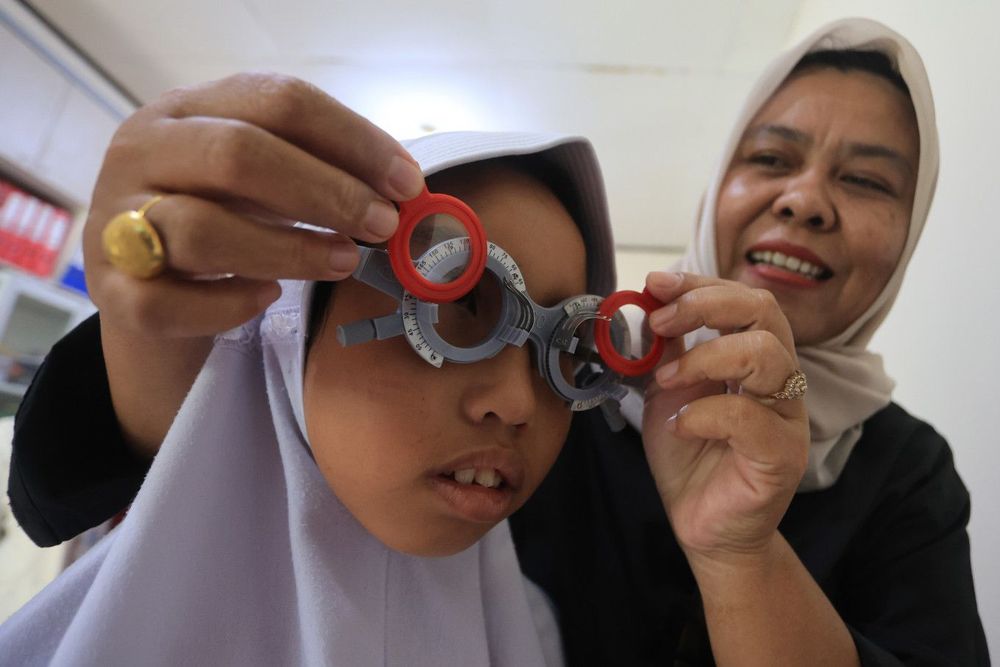
Early detection key to preventing vision loss from cataracts and glaucoma
Eye health often takes a back seat to other health concerns, even as serious threats to vision develop silently and gradually. Yet worldwide, at least 2.2 billion people have a vision impairment, with at least 1 billion cases that could have been prevented or remain unaddressed, according to the World Health Organization.
The consequences of neglecting eye health are particularly evident in Indonesia, where untreated cataracts account for 81.2 percent of blindness among people aged 50 and older, according to a 2021 analysis of Rapid Assessment of Avoidable Blindness surveys conducted in 15 provinces by the Indonesian Ophthalmologists Association (Perdami) and the Health Ministry's research and development agency.
"Many patients routinely monitor their blood sugar and blood pressure, as well as their heart and kidney function, but not their eyes," said Low Jin Rong, a consultant ophthalmologist at Cornerstone Eye Centre, Asian Healthcare Specialists, Singapore, during a health talk in Central Jakarta in late July.
This oversight is particularly concerning given the strong connection between systemic health conditions and eye disease. People with diabetes are 40 percent more likely to develop glaucoma and nearly 60 percent more likely to develop cataracts compared to those without diabetes.
The silent threat of glaucoma
Glaucoma, the second leading cause of blindness worldwide, affects approximately 80 million people globally. The condition is often called the "silent thief of sight" because it typically has no early symptoms, making regular screening essential for early detection.
The Asia-Pacific region bears a disproportionate burden of vision loss, accounting for approximately 60 percent of the global burden of blindness. Southeast Asia has particularly high rates of cataract-related blindness, placing Indonesia's challenges within a broader regional context.
Treatment success depends on timing
While cataracts dominate Indonesia's blindness statistics, effective treatment exists. Cataract surgery has a success rate of approximately 95 to 98 percent in restoring functional vision when performed before the cataract becomes too advanced. However, outcomes decline significantly when surgery is delayed until complete blindness occurs.
"The earlier you do it, the lower the risk, and the sooner you can enjoy good vision," Low emphasized.
Indonesia's universal health coverage program, Jaminan Kesehatan Nasional (JKN), covers cataract surgery. However, utilization rates remain low in rural areas due to limited access to ophthalmology services and awareness. The country faces a severe shortage of ophthalmologists, with approximately one ophthalmologist per 100,000 population, far below the WHO recommendation of one per 50,000 in developing countries.
Prevention strategies
Beyond regular screening, several modifiable risk factors can help prevent vision loss. Smoking doubles the risk of developing cataracts and increases the risk of age-related macular degeneration, while UV exposure without proper eye protection accelerates cataract formation.
The WHO recommends comprehensive eye examinations every one to two years for adults over 60, and every two to four years for adults aged 40 to 54. Those with risk factors such as diabetes or a family history of eye disease should undergo more frequent examinations.
Regular eye examinations can detect sight-threatening conditions early, particularly in people at higher risk. With cataracts and glaucoma among the leading causes of blindness identified in the 2021 RAAB analysis, early detection and timely treatment remain critical to preserving vision across Indonesia's aging population.