Government answers challenge to Budi's record
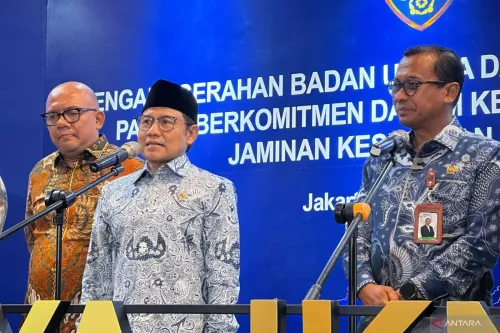
The response addresses a November 4, 2026, petition from the Coalition for Health Justice opposing Budi's candidacy, according to Health Policy Watch. The Indonesian coalition questioned his suitability for the post, alleging that he systematically punished doctors who challenged his policies, curtailed medical associations' authority and encouraged the commercialization of healthcare.
The ministry rejected those accusations as misleading or false. It argued that Budi's reforms had strengthened Indonesia's health system by tackling persistent problems with governance, management and financing, and that his experience qualified him to lead the WHO.
As evidence of his record, the ministry pointed to the administration of 453 million COVID-19 vaccine doses and a decline in childhood stunting from 24.4% to 19.8%. It also cited Indonesia's role during its 2022 G20 presidency in helping establish the World Bank-hosted Pandemic Fund.
"WHO faces interconnected challenges involving health inequalities, financing constraints, health emergencies, health-system resilience and technological transformation," the statement said. "The Government considers Mr. Budi's experience in institutional management, national health-system transformation, and international cooperation relevant to these responsibilities," it continued.
Licensing changes and a court ruling
A central issue in the dispute is the 2023 Omnibus Health Law. The legislation removed professional medical associations' exclusive control over licensing and introduced a hospital-based route for training specialists. In its filing, the ministry defended those changes by citing a projected shortage of nearly 65,000 specialists by 2032, Health Policy Watch reported.
Opposition to Budi's overhaul predates the WHO candidacy dispute. In June 2025, 372 Indonesian medical professors publicly expressed a lack of confidence in his leadership.
In October 2026, Indonesia's Supreme Court struck down 70 provisions of the reforms. The ruling ended the health minister's exclusive authority to appoint members of the Health Council, the collegiums and the Professional Disciplinary Council. According to Health Policy Watch, the government must revoke the provisions within 90 days of receiving the ruling, with that deadline likely to fall around the WHO Executive Board's January 2027 session.
Lawrence Gostin, a Georgetown University global health law professor, told Health Policy Watch that government control of licensing and oversight, rather than control by private medical guilds, is routine in high-functioning systems such as Britain and the United States. He described Budi's reforms as "admirable," provided he governs transparently and accountably, and said domestic judicial disputes rarely derail a bid for WHO director-general.
Budi's proposals for the WHO
Budi outlined his approach to WHO financing in an AFP interview published November 2, 2026. He called for member states to increase their mandatory assessed contributions, saying regular funding should account for more than 50% of the organization's budget rather than the current roughly 20% to 30%.
He called the United States' withdrawal in January "not a total disaster," while arguing that Washington should be brought back into the organization. He also pledged to pursue a global pandemic treaty backed by a supporting fund.
Seven candidates and the election timetable
The WHO announced seven member-state nominees on October 29, 2026. Alongside Budi, the field includes Dr. Hanan Mohammed Al-Kuwari, Dr. Hanan Balkhy, Dr. Hans Henri P. Kluge, Dr. María P. Neira, Dr. Li Song and Dr. Gevorg Tamamyan. AFP reported that his rivals are candidates from Botswana, Qatar, Saudi Arabia, Belgium, Spain and China.
The first candidates' forum is scheduled for November 18-19 at WHO headquarters in Geneva, with a public webcast. Budi is due to present on Thursday, November 19, during the 9:30 a.m. to 12:30 p.m. CET session.
At its 160th session in early 2027, the 34-member Executive Board will narrow the field to five candidates, interview them and nominate up to three for consideration by the World Health Assembly. The Assembly will appoint the next director-general at its 80th session in May 2027. The appointee will take office on August 16, 2027.