Viral interview raises questions about participants
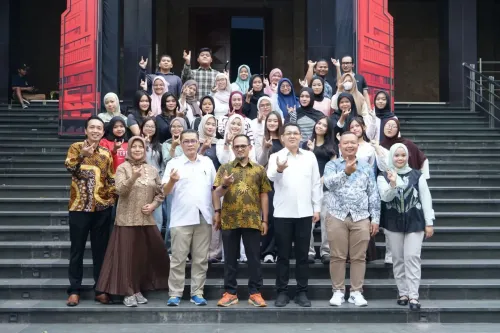
Police held the 2026 Indonesian Student Youth Pledge Declaration on October 29 at the Hotel Indonesia (HI) Roundabout in Central Jakarta, in front of the Thamrin Police Post. Students and community leaders attended, with the student turnout reported at approximately 100.
An interview circulated by Kompas.com brought scrutiny to a participant known as Dino. Wearing a Dian Nusantara University (Undira) jacket, he stumbled when asked where he studied and sought help from someone beside him. He then repeated his friend's answer, naming Bina Sarana Informatika (BSI) University despite wearing another institution's jacket. As the video spread on social media, users began questioning who else had attended as a student.
Kompas.id identified him as Bayu Setiadi, also known as Dino, and reported that he acknowledged he was not a student. He said a community group had invited him to the roundabout. "I got paid," he said on the Instagram account @bem_Undira. He also said he did not know who owned the jacket.
The use of university clothing drew criticism from Ziko Harnadi, a lecturer at Universitas Bina Sarana Informatika (UBSI) and son of its founder Herman Pratikto Harsoyo. In an October 30 Threads post, he called the misuse of his alma mater's regalia "a defamation of UBSI." Rather than blame a participant named Sari, he demanded accountability from those who had instructed her to attend.
Police pledge an internal review
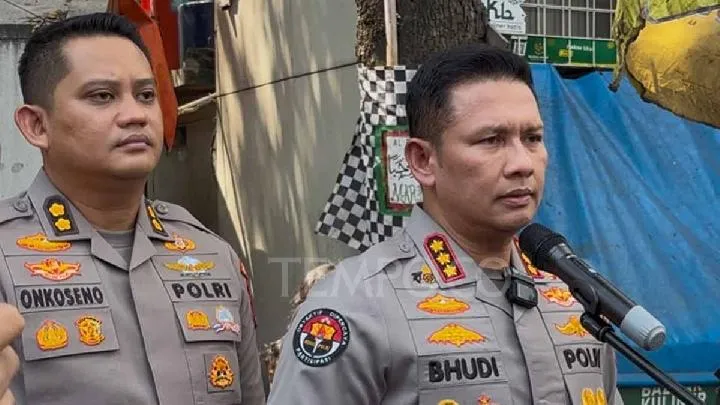
In a written statement on October 31, Jakarta Metro Police public relations chief Sr. Comr. Budi Hermanto apologized and said public criticism would inform an internal evaluation.
"On behalf of the Jakarta Metro Police, we apologize to the entire public. We understand that this event has generated a variety of responses, and we accept any criticism with open arms as constructive evaluation," he said.
Budi said police respected the public's views and criticism and would use the feedback to improve their services. He invoked the Youth Pledge's message of unity, saying police wanted to uphold it together with all elements of the nation.
The declaration marked the 98th Youth Pledge Day, with the theme "Patriotic, Persistent, Empathetic: Youth for Indonesia," although it took place a day after the observance. Budi described it as an effort to strengthen relationships among students, the public and security forces, rather than simply an annual ceremony. He also emphasized young people's role in developing positive initiatives and contributing to Indonesia's progress.
Raffi Ahmad and Willie Salim explain their roles
Among the guests were Raffi Ahmad, the president's special envoy for youth development and arts workers, and content creator Willie Salim. Budi said police had invited both men and that they attended with good intentions to promote the spirit of the Youth Pledge.
Both men said they were guests, not organizers. According to jawawa.id, citing detikcom's October 31 report on Raffi's Instagram statement, Raffi said he learned about the event only the night before.
Speaking at the declaration, Raffi praised the young attendees' enthusiasm and urged them to maintain national unity despite their different backgrounds. He contrasted earlier generations' struggle with sharpened bamboo with the challenges young people face amid rapid technological change, including social media hoaxes, hate speech and online provocation.
Following the scrutiny of Raffi's attendance, Guyon Waton, Tipe-X and Masddho were among the musicians who withdrew from the RANS Carnival Jogja at Maguwoharjo Stadium in Sleman. Jawawa.id, citing detikJogja, reported that the carnival was quiet during an October 31 visit, with only a few food vendors remaining.
Demonstration and broader criticism provide context
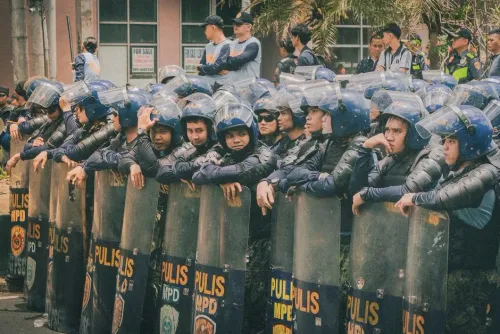
The declaration followed an October 28 demonstration involving thousands of people, including students. Kompas.id reported pushing and shoving between demonstrators and officers at that protest, while the police-organized declaration the next day proceeded in an orderly manner.
Commenting on the controversy to Kompas.id, Trisakti University law professor Trubus Rahardiansah described "mahasewa," or people paid to pose as students, as an established practice. He said authorities use it to suppress genuine student movements.
Hamluddin, a social observer at Universitas Muhammadiyah Bekasi Karawang, said such patterns dated to the New Order era, when intelligence personnel were placed on campuses.