Investigating networks across borders
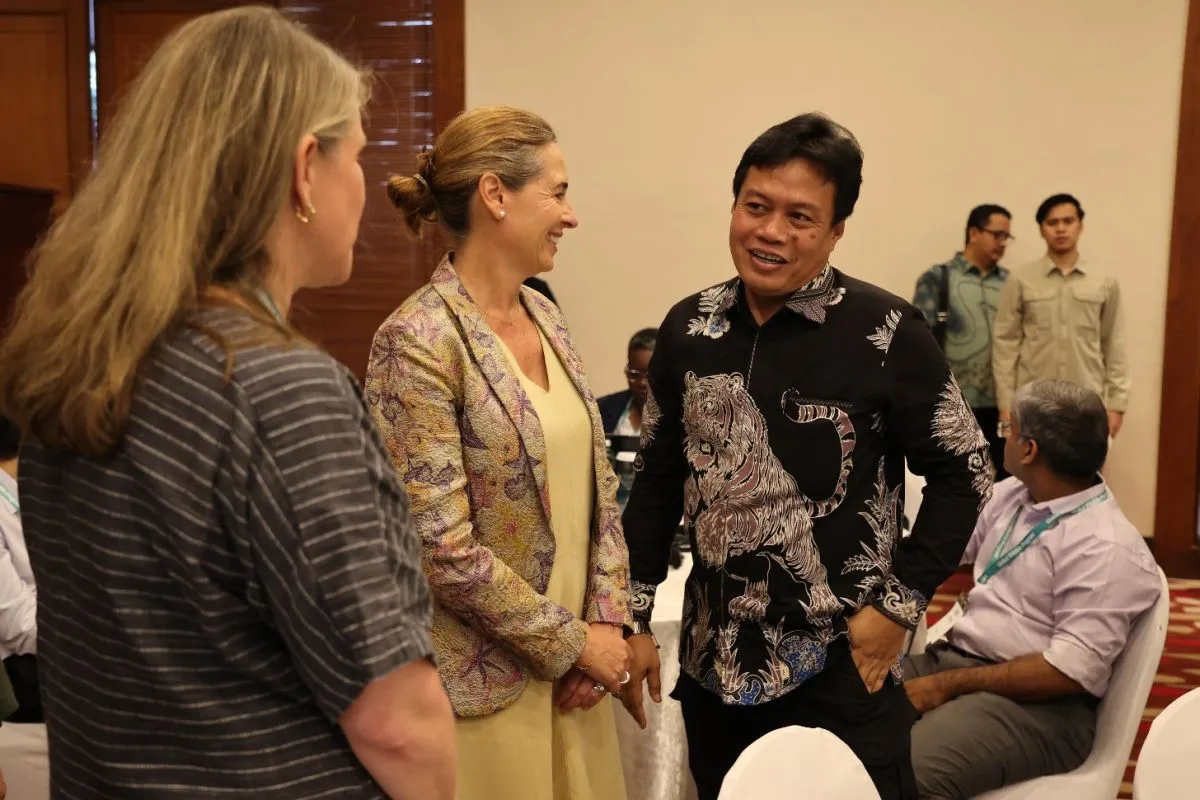
Dwi Januanto Nugroho, the ministry's director general of law enforcement, urged the 100 participants from 25 countries at the Global Wildlife Program (GWP) Annual Conference 2026 to improve cooperation and identify the networks and people profiting from trafficking.
"Crimes against wildlife know no borders. Perpetrators can take advantage of jurisdictional differences and weak information-sharing mechanisms to operate illegal trade networks," Nugroho said in a statement received in Jakarta on Monday.
Nugroho said wildlife trafficking has developed into transnational organized crime, often involving corruption, forged documents and money laundering. He described it as a challenge for law enforcement, governance, economies and international cooperation, rather than conservation alone.
The economic damage extends beyond wildlife trafficking. A 2019 World Bank estimate put annual losses from illegal logging, fishing and wildlife trade at $1 trillion to $2 trillion. Ecosystem services that have no current market price accounted for more than 90 percent of that estimate.
A global partnership meets in Lombok
The conference runs November 16-20 in Senggigi, West Lombok, in West Nusa Tenggara. The World Bank Group, Indonesia's Forestry Ministry and the United Nations Development Programme (UNDP) organized the meeting under the theme "Connecting Countries, Sectors and Solutions for Wildlife Conservation."
The GWP is led by the World Bank and funded by the Global Environment Facility (GEF). According to the World Bank, its $352 million in GEF funding and $2 billion in co-financing support national efforts across 38 countries in Africa, Asia, Latin America and the Caribbean. The bank describes it as one of the largest global partnerships tackling wildlife poaching, trafficking and demand.
GEF established the program in June 2015 under the name "Global Partnership on Wildlife Conservation and Crime Prevention for Sustainable Development." Its scope broadened in 2019 to include wildlife-based economies that produce economic benefits from protecting wildlife and habitats.
A separate World Bank assessment published in 2025 examined international funding to combat illegal wildlife trade from January 2010 through June 2023. The third edition of the bank's Illegal Wildlife Trade Donor Investment Analysis identified more than $3.63 billion invested by 73 international donors, averaging about $269 million a year.
Indonesia links enforcement with habitat protection
Nugroho said Indonesia is the only country to have participated consistently in the GWP across three consecutive GEF funding cycles: GEF-6, GEF-7 and GEF-8. He presented that continuity as evidence of the country's growing commitment to combining biodiversity conservation with the prevention and prosecution of wildlife crime.
Indonesia's participation under GEF-6 included the Combating Illegal and Unsustainable Trade in Endangered Species (CIWT) project. Under GEF-7, it took part in the Catalyzing Optimum Management of Natural Heritage for Sustainability of Ecosystem, Resources, and Viability of Endangered Wildlife Species (CONSERVE) initiative.
For GEF-8, Indonesia joined the Law Enforcement for Sustainable Viable Ecosystems and Biodiversity Resilience through Multi-Sector Engagement (LEVERAGE) program. That program aims to improve enforcement systems and investigative capabilities while strengthening collaboration across sectors.
"Indonesia's experience in CIWT, CONSERVE, and LEVERAGE shows law enforcement must proceed in tandem with conservation. We cannot protect wildlife without safeguarding their habitats, and we cannot defend their habitats without putting an end to threatening activities," Nugroho said.
Through the GWP, Indonesia is promoting practical international cooperation, training and other capacity-building efforts, and the exchange of knowledge.
One community effort under CONSERVE involves residents of Pulau Moyo in Sumbawa district. Ahead of the conference, the project's national project manager said residents had formed the "Kakatua Ranger" and "Kakatua Woman Ranger" groups to patrol and protect the conservation area.