Women's accounts of treatment
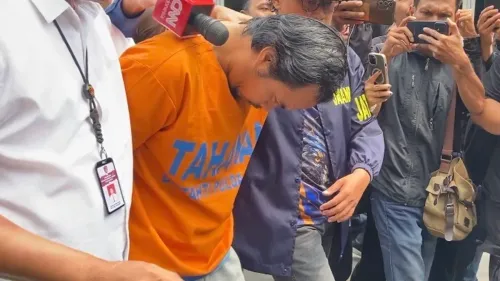
The allegations began appearing on Threads on November 5, 2026. Kompas identified the accused provider as Hmd; other Indonesian media named him as Hamda DF.
One woman, identified by Kompas as LT, said she arranged a massage for discomfort in her legs and back and met Hmd around noon Western Indonesia Time (WIB) on October 18 in Jakarta's Gelora Bung Karno area.
LT said he asked her to remove her underwear even though the massage was taking place in an open area. She alleged that he then touched her intimate areas, despite her having sought treatment for her legs and back. She said she followed his instructions because she trusted his knowledge of massage procedures. According to LT, he apologized after noticing her reaction but continued the massage.
Another woman, identified as S, posted her account on November 6. She said Hmd offered to treat a shin splint injury she had suffered while working as a pacer. Hmd, who was also a pacer, described himself as a certified sports massage therapist and offered treatment that night in his room at the hotel where the pacers were staying.
S alleged that he touched her intimate areas during the treatment, making her uncomfortable. She left for her own room and later received repeated messages asking her to return.
In a separate report, kumparan said a second alleged victim of the therapist dated the misconduct to October 20, during her second treatment session with him. She described her first session as fully professional.
Credentials and responses
The Indonesian Sports Therapists Association (PTOI) said Hamda DF was a brand ambassador for a well-known sports-watch brand but was not registered as a member of the sports-therapist profession, detikSport reported on November 10.
Indonesia has a national sport-massage competency certification scheme, "Pelaksanaan Sport Massage," administered under the National Professional Certification Agency (BNSP). Its basic eligibility requirements are either at least six months of continuous work in the spa industry or a competency-based training certificate. The scheme covers eight competency units, and certification lasts three years.
JawaPos reported on November 7 that the first complainant, whom it identified as L, had contacted the therapist on November 3 to demand a public apology by noon WIB on November 5. She said he instead denied harassment and characterized the contact as a massage technique, despite having previously acknowledged in private that he had been "carried away by the mood."
By November 9, kumparan reported that the massage therapist and a running coach facing a separate allegation had both issued public apologies. The outlet said at least three women had publicly described alleged sexual violence within the running community.
The separate allegation against the coach was shared through the Threads account @heyoputraa on November 7. The woman alleged that the coach had coerced her into sex and said fear had kept her silent for seven years, according to kumparan.
Barriers to reporting
Several alleged victims told Kompas they were hesitant to take legal action because of the power imbalance. They described Hmd as a prominent figure with a large social media following and said that standing influenced their decisions.
Wida Ayu Puspitosari, a gender sociology lecturer at Brawijaya University, said fear, shame and despair can make reporting sexual violence difficult. Beyond the violence itself, she said, victims must contend with the social repercussions of disclosing what happened.
Consent and safety in running communities
Adinda Nindyachandra, captain of the women-only running group RunstoppableWomen, said women cannot always feel fully safe while exercising. She described sports massage as a necessity for runners, not something they should seek only after an injury, and called for public education to discourage victim-blaming.
Wida said sports organizations should give protection a place alongside athletic achievement. She called for explicit standards governing consent, the boundaries of professional touch and client privacy.
Expressions of sympathy or condemnation after allegations spread online are not enough, Wida said. Organizations also need to change how they manage their members' safety.