Crews face dense vegetation and distant water sources
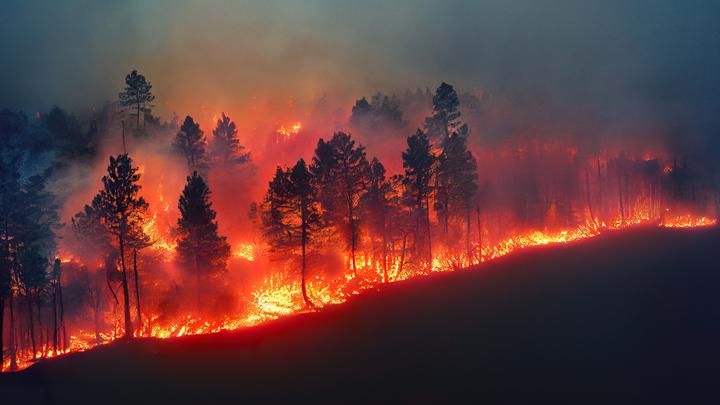
The fire in the East Lampung park has persisted since September 22, according to BNPB's accompanying team, as reported by iNews.id. A joint team put out fires across about 10.2 hectares on October 23, but other areas remained active over the following two days.
BNPB has divided ground personnel among operational areas. The agency said dense vegetation was limiting how much water dropped by firefighting helicopters could reach the ground, while water sources were about 1.5 kilometers from the fire locations, according to a written statement reported by Bloomberg Technoz on October 24.
Speaking in Bandar Lampung on Sunday, October 25, BNPB head Lieutenant General Kristomei Sianturi said he had inspected the response with other stakeholders to check that crews were acting quickly and concentrating their efforts where needed.
"Addressing forest and land fires must be done in an integrated way, prioritizing the safety of personnel, rapid response, and the precise identification of priority locations," he said.
Cloud-seeding flights support the joint operation
Sianturi said a Cessna Caravan was being used for weather modification alongside the ground operation. Two cloud-seeding sorties dispersed a combined 1,000 kilograms of sodium chloride, or NaCl, over Way Kambas National Park and West Lampung Regency.
The response involves BNPB, the Regional Disaster Management Agency (BPBD), the Indonesian National Armed Forces (TNI), the Indonesian National Police (Polri), the Meteorology, Climatology, and Geophysics Agency (BMKG), the fire department, the park authority and other agencies.
Operational decisions should draw on aerial observations, ground-team reports, hotspot data and current BMKG forecasts, Sianturi said. He described coordination among agencies and technological support as central to protecting the conservation area from wider fires.
BNPB also carried out weather modification over East Lampung on August 26-27, ANTARA News reported. Those flights released 1,600 kilograms of NaCl and produced light rain, with the aim of wetting Way Kambas' forest and peat soils to reduce fire risk. The August figures included a surge to 26 hotspots on August 27 and 674.5 hectares burned by the end of the month.
Fire approached an elephant conservation facility
Way Kambas spans approximately 125,631 hectares and supports an estimated population of 146 to 170 Sumatran elephants. Deputy Forestry Minister Rohmat Marzuki presented those figures during a July 2, 2026, visit, according to Jakarta Globe.
By late September, the fire had moved toward the park's Elephant Training Center, a key conservation facility, Jakarta Globe reported. As of September 29, there had been no reports of elephants being directly affected.
Sianturi urged residents, farmers, plantation owners and businesses to help prevent forest and land fires by using environmentally friendly methods to clear land.