Breakdown of missing foreign nationals released
Chinese officials released a breakdown Sunday of 261 foreign nationals from 23 countries missing in Tibet following a catastrophic mudslide triggered by glacier collapse at a strategic Himalayan border crossing with Nepal.
The highest number of missing foreigners are Nepalese citizens at 104, followed by 49 Indians, 33 Latvians, 18 Americans and 15 British nationals, officials from China's Tibet Autonomous Region said at a press conference. Beijing has notified foreign diplomatic missions about their missing citizens.
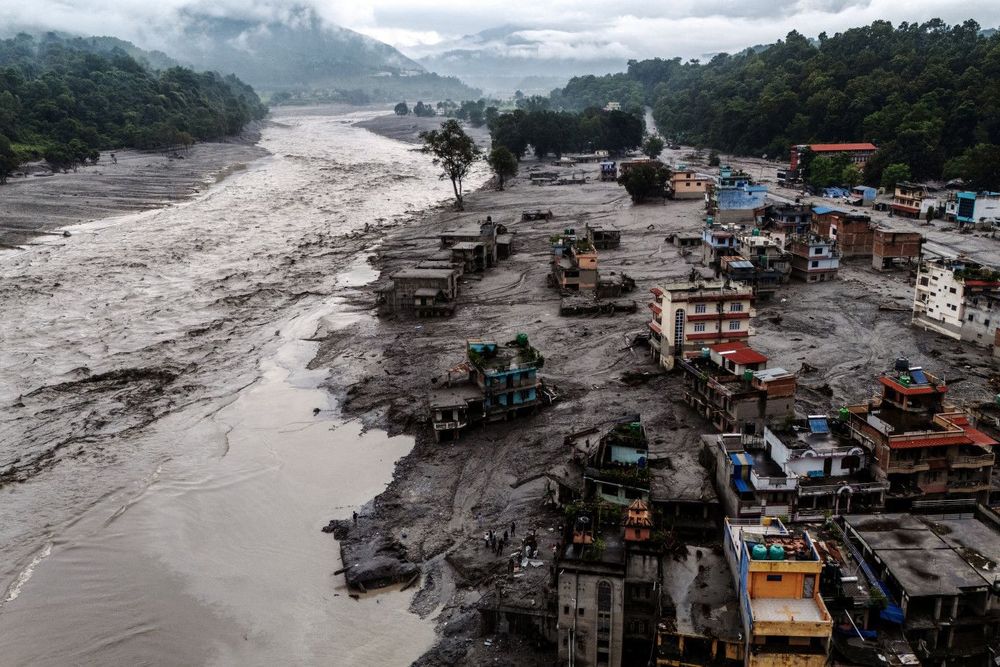
The breakdown marks the first detailed accounting from Chinese authorities since Wednesday, when a collapsing glacier unleashed torrents of ice, rock, mud and debris down mountain valleys. The disaster occurred at Gyirong County, a major trade and tourism gateway that handles significant commercial traffic between the two nations, explaining the international scope of casualties.
As of Saturday evening, authorities confirmed 16 deaths in Gyirong County with 546 people missing. Across the border in Nepal, the disaster authority reported at least 675 killed, 2,498 missing and 7,514 rescued.
Climate change blamed for disaster
Chinese state broadcaster CCTV reported Sunday that the disaster was "caused by glacier instability under the long-term effects of global warming," calling it a "new and prominent feature of cryosphere disasters" on the Tibetan plateau. The region, often called the "Third Pole" for containing the largest ice store outside polar regions, holds over 46,000 glaciers feeding major Asian river systems including the Ganges, Indus and Brahmaputra.
Scientific studies show the Hindu Kush Himalaya region has experienced accelerated ice mass loss since 2000, threatening water security for nearly two billion people downstream. Glacial lake outburst floods have been increasing in frequency across the Himalayas, with Nepal identifying over 3,000 glacial lakes and classifying dozens as potentially dangerous.
Chinese scientists determined the mudslide took six to seven minutes to travel from the Nepalese side to reach the Gyirong border crossing. Surveillance footage captured torrents of water and debris engulfing buildings as people attempted to flee.
Rescue operations and rising waters
Local police told Reuters that residents and rescue workers evacuated to higher ground after water levels in the nearby Trishuli River rose over recent hours. The Trishuli, a major Ganges tributary and critical source for Nepal's hydroelectric power infrastructure, poses ongoing flood risks that could affect multiple power projects along its course.
The conditions underscore continued danger even as rescue efforts proceed. China has mobilized over 2,100 emergency workers and allocated at least 220 million yuan ($32.7 million) for relief operations. Chinese support to Nepal includes emergency cash aid, disaster relief supplies, satellite and hydrological data, and tunnel rescue experts.
Foreign Minister Wang Yi told his Nepalese counterpart in a Saturday call that the mudslide represented their "most severe cross-border disaster" in recent years, with rescue operations of unprecedented difficulty and complexity. The two countries are coordinating to identify missing citizens and foreign nationals while strengthening cooperation in disaster prevention and climate-change response, building on joint disaster management protocols established in 2019.
The Red Cross estimates more than 90,000 people have likely been affected by the disaster, a figure that typically triggers international humanitarian response protocols for major emergencies.