Investors weigh alternatives
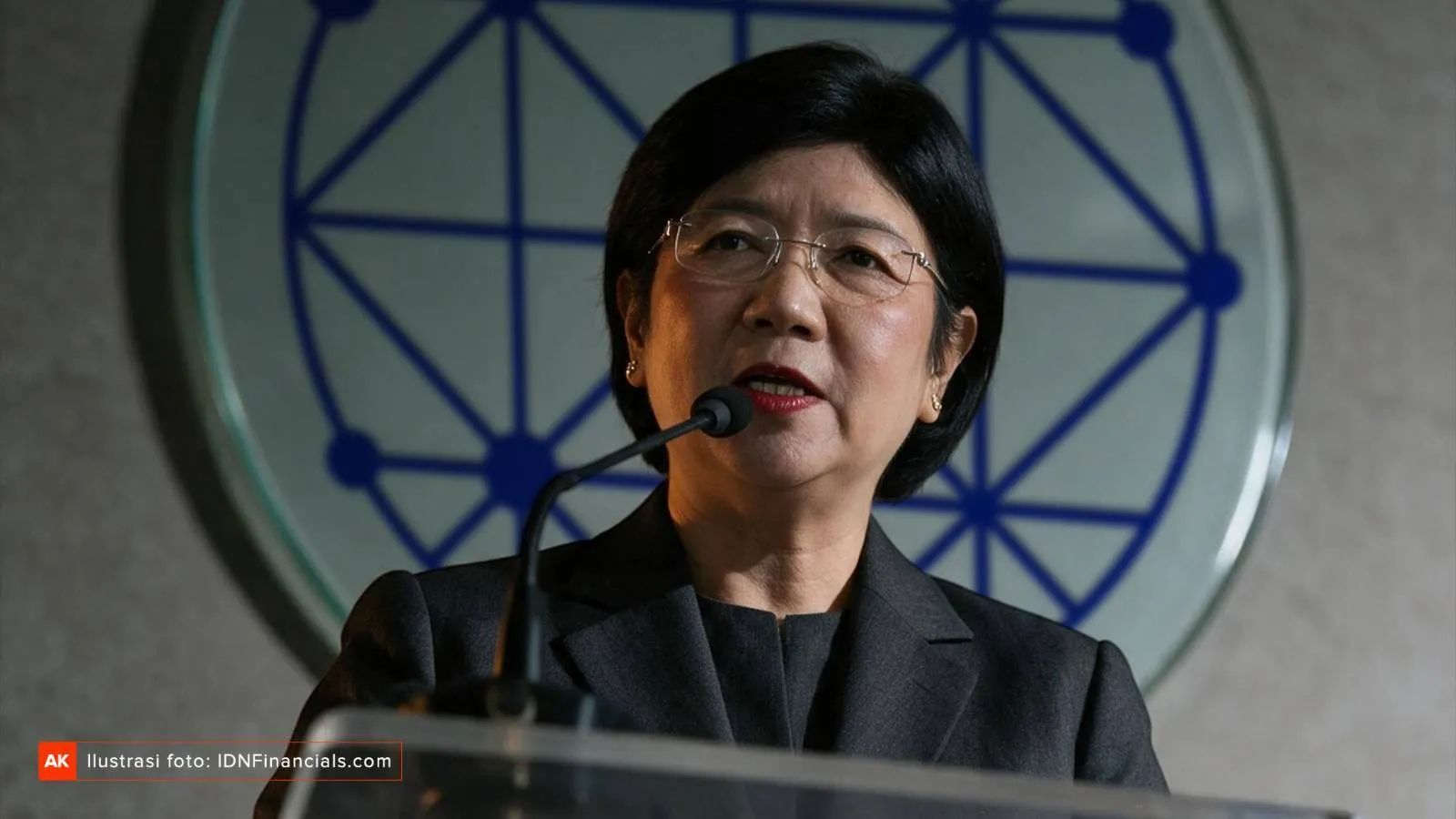
Speaking at the opening of the Kadin Indonesia National Leadership Meeting in Jakarta earlier this week, Destry described discussions with several global investors following MSCI's October 16, 2026, proposal to move Indonesia out of its Emerging Market classification. MSCI cited weak enforcement against capital market violations.
"They said they really like Indonesia and asked where else they could invest now," Destry said.
According to Destry, several investors and foreign banks viewed withdrawing their funds and reinvesting in the United States as too risky. She cited a US stock market valued at 2.4 times the country's gross domestic product and its concentration in technology stocks, which she described as overvalued amid the artificial intelligence boom.
"We do not know where this will eventually lead. This is also making them concerned, including about Europe," she said.
Risks in European financial markets were also encouraging the investors and banks to favor Asia, Destry said. "Where in Asia? They prefer Indonesia," she added.
Destry nevertheless called the MSCI issue serious and said the Financial Services Authority (OJK) was addressing it. She said BI was emphasizing Indonesia's strong economic fundamentals in efforts to reassure investors, alongside the finance minister, the OJK chairman and the chairman of the Board of Commissioners of the Indonesia Deposit Insurance Corporation (LPS).
Stocks fall as foreign capital leaves
The investor interest described by Destry comes alongside substantial market losses. IDNFinancials data put the Jakarta Composite Index's decline since MSCI's proposal at 13.76%. The index lost 7.03% over the past week, taking its year-to-date drop to 42.19%. Foreign net selling totaled IDR 3.05 trillion alongside the latest decline, bringing total foreign capital outflows from Indonesian stocks to IDR 97.9 trillion.
The initial selloff on October 16 sent the benchmark down nearly 12% and triggered a trading halt, The Business Times reported. It was the index's largest one-day decline since January 1998. The rupiah also weakened that day, falling 0.5% to 18,027 per US dollar.
For the week ended October 16, the index lost 14.91% to close at 5,185.105, according to Indonesia Stock Exchange figures reported by Jakarta Globe. Market capitalization fell 15.23%, from Rp 10,701 trillion to Rp 9,157 trillion, erasing about Rp 1,544 trillion (US$85.5 billion).
Henry Wibowo, an Alphagate Capital co-founder and former chief Indonesia strategist at JPMorgan Chase, estimated that a completed downgrade could prompt up to another US$5 billion in foreign outflows. He called for bold near-term regulatory action against market manipulators, including monetary penalties, criminal charges and proper enforcement mechanisms.
Reforms face MSCI scrutiny
OJK said it held 16 structured sessions with MSCI from February through October 2026. The regulator described Indonesia's market fundamentals as robust, pointing to about $589 billion in market capitalization, the second largest in ASEAN, and 31.1 million investors.
Together with self-regulatory organizations, including the Indonesia Stock Exchange, OJK is implementing an eight-point agenda covering liquidity, governance, transparency and law enforcement. Its measures include a gradual increase in the minimum free float to 15%, tighter beneficial ownership transparency, an expansion of investor categories from nine to 39, mandatory disclosure of stakes above 1%, and publication of the names of companies with high shareholding concentration.
MSCI has acknowledged the announced reforms, including more detailed investor classifications, disclosure of shareholders owning more than 1%, High Shareholding Concentration reporting and the roadmap toward a 15% minimum free float. But it said institutional investors need to see consistent implementation and evidence that the changes have a sustained, material impact.
The index provider said it expects to proceed with the downgrade unless its consultation produces clear evidence of material improvements in market governance and functioning. It also said feedback from market participants indicated that Frontier Market status would not adequately reflect the depth of the problems.
Pending further notice, MSCI is maintaining restrictions on certain index changes involving Indonesian securities. It will not increase Foreign Inclusion Factors or Number of Shares, add securities to the MSCI Indonesia Investable Market Index, or move securities into larger size-segment indexes. It will continue removing securities flagged under Indonesia's High Shareholding Concentration framework and adjusting free-float estimates using the 1% shareholder disclosure data.
If the proposal takes effect, Indonesia would be the first Asia-Pacific market classified as standalone, according to The Business Times. MSCI's existing standalone markets include Argentina, Nigeria, Ukraine, Zimbabwe and Lebanon.
Market participants can submit feedback on the proposed reclassification of the MSCI Indonesia Indexes through April 30, 2027. MSCI plans to announce its final decision on or before June 30, 2027, and may issue an interim update during the consultation.