A shared direction for Islamic finance
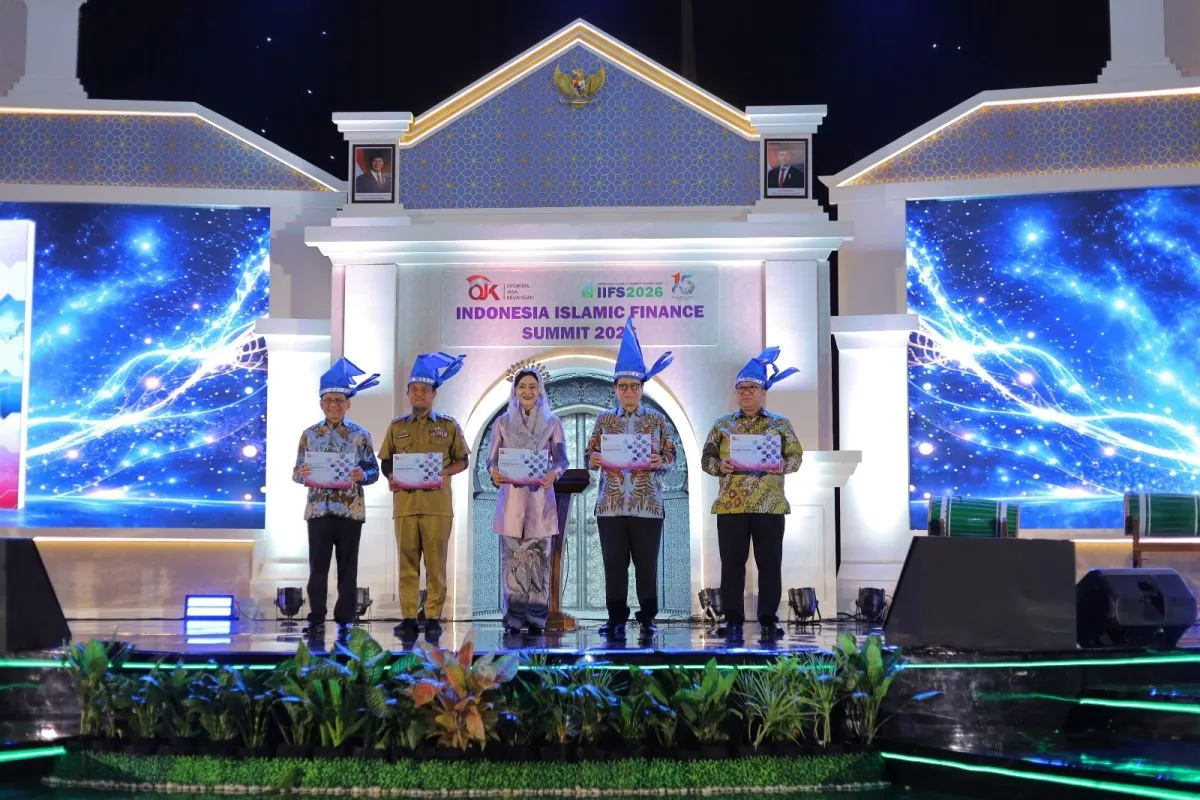
The Blueprint for the Development and Strengthening of Islamic Finance was unveiled at the Indonesia Islamic Finance Summit (IIFS) 2026. It spans banking, capital markets, insurance, guarantees, pension funds, financing institutions, financial sector technology innovation and digital financial assets.
OJK Board of Commissioners Chair Friderica Widyasari Dewi said the framework should guide a substantial advance in national Islamic finance rather than incremental growth. In a statement issued Monday, she called for closer integration so the industry's expansion delivers broader benefits to the public and the national economy.
Dewi said the goal goes beyond adding financial products and services: Islamic finance should become Indonesians' main choice. That requires innovative, competitive offerings suited to people across society, regardless of their religious background.
The launch took place during the November 2-3 summit, whose theme is "Strengthening Islamic Finance Ecosystem to Advance Sustainable Halal Economic Growth." This is the second edition of OJK's flagship Islamic finance forum and its first in Eastern Indonesia.
Policy priorities and links to social finance
The blueprint sets out a vision of a competitive, inclusive and professionally run industry whose sectors work together to support the national economy. Its three strategic directions address industry health, competitiveness and innovation; a comprehensive, inclusive ecosystem that contributes to the economy; and alignment of regulation, licensing and supervision across sectors.
OJK identifies four foundations for that work: technology and cyber resilience, fuller use of holding company ecosystems, a prepared workforce, and connections with social funds to support national economic empowerment.
Dewi also emphasized stronger institutions and resilience, product innovation and differentiation, talent development, and coordination both among sectors and across policies.
As part of the launch, OJK and the Ministry of Religious Affairs introduced "Sinergi Kota Wakaf," or Waqf City Synergy, to connect commercial Islamic finance more closely with the social sector. OJK also recognized 20 sharia banks for implementing the Cash Waqf Linked Deposit (CWLD) program.
Assets, participation and global standing
OJK figures presented at the launch put Indonesia's Islamic finance assets at Rp3,307.73 trillion as of September 2026, a 9.28 percent increase from a year earlier. The sector accounted for 11.21 percent of national financial assets. The reported breakdown listed Rp1,108.49 trillion in sharia banking, Rp2,071 trillion in the sharia capital market and Rp198 trillion in the sharia non-bank financial industry (IKNB).
Participation in Islamic finance remained below the national level. The 2025 National Survey on Financial Literacy and Inclusion by BPS and OJK, cited at the summit, recorded overall financial inclusion of 93 percent and literacy of 69 percent. For Islamic finance, inclusion was 13.24 percent and literacy was 43.07 percent.
OJK also presented Global Islamic Economy Indicator (GIEI) 2025/26 data placing Indonesia seventh in Islamic Finance. Its rankings in other categories were first in Modest Fashion, third in both Halal Food and Media & Recreation, and fourth in Pharma & Cosmetics.
Banking growth and the 2027 target
Sharia banks provided Rp757.32 trillion in financing in September 2026, up 12.05 percent from Rp675.86 trillion a year earlier, according to OJK data presented at the summit. Third-party funds increased 7.48 percent to Rp853.75 trillion, while the gross non-performing financing (NPF) ratio was 2.28 percent.
Dian Ediana Rae, OJK's chief executive of banking supervision and chair of the Islamic Finance Development Committee (KPKS), said the regulator aims to see three or four additional sharia banks comparable in size to Bank Syariah Indonesia (BSI) by 2027. He said BSI is currently the only large-capacity sharia bank.
South Sulawesi Governor Andi Sudirman Sulaiman described a regional shift toward Islamic banking at the event. Under the province's "Syariah First" program, 21 of its 24 regencies and cities had moved their Regional General Cash Accounts (RKUD) to sharia banking services, he said.
From separate roadmaps to implementation
Rae said the blueprint is intended to connect Islamic financial industries that have been developing individual roadmaps. OJK wants banks, insurers, financing institutions, capital market participants and other Islamic financial services to complement one another in supporting the national halal economy.
Work on the blueprint began in July 2026 and involved a comparative study of eight countries and discussions with relevant stakeholders, according to Rae. Separately, from June 2025 through November 2026, KPKS produced more than 100 policy recommendations drawing on comparative studies in eight countries to help strengthen national sharia regulation.
Rae said KPKS would continue overseeing implementation, with the aim of turning the shared direction into concrete policies and programs throughout the financial services sectors.