Confidence in reforms and economic fundamentals
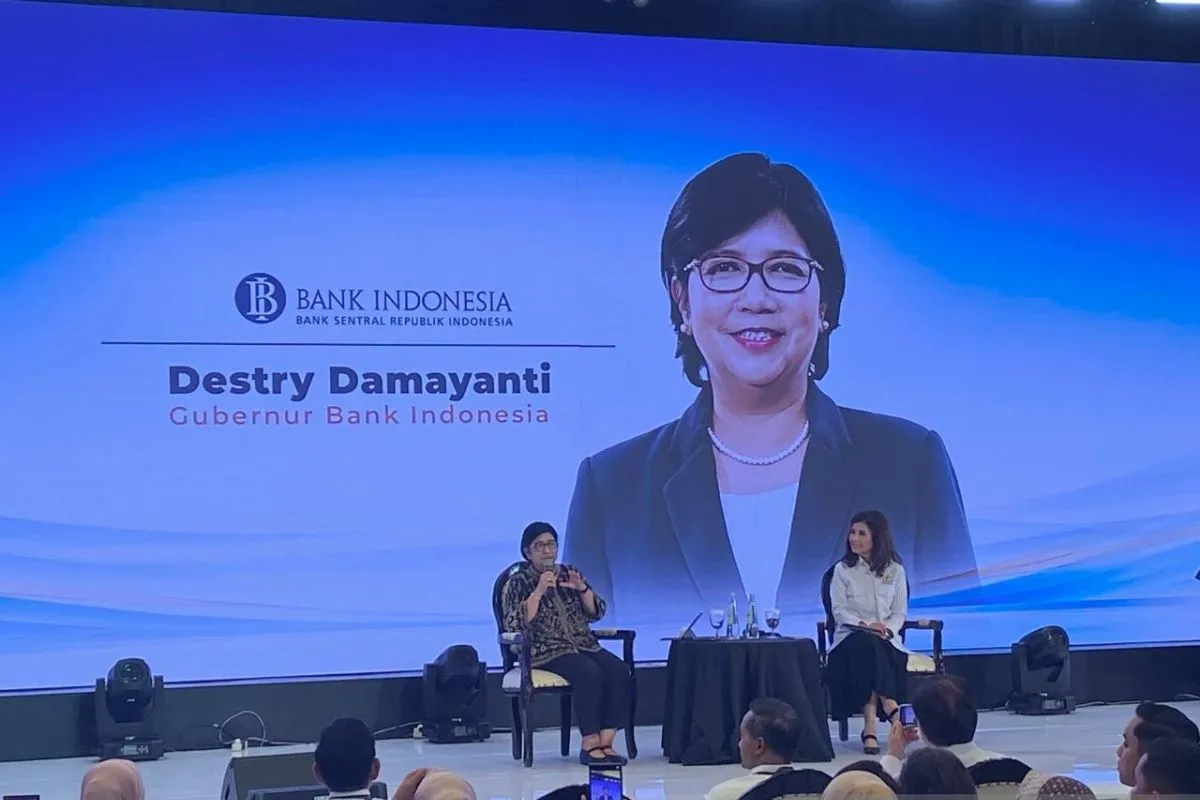
Addressing the Kadin National Leadership Meeting in Jakarta, Damayanti said Indonesia's strong economic fundamentals offered substantial opportunities to attract sustained foreign investment, ANTARA reported.
"We see the impact of MSCI's announcement as a short-term shock. And we hope that once the issues of concern have been addressed, investor sentiment will be able to recover," she said.
Damayanti urged stakeholders to use the announcement as an impetus to accelerate changes in capital market transparency, governance and regulation. She expressed confidence in the Financial Services Authority's (OJK) efforts to improve market operations, saying its rapid response and coordination within the Financial System Stability Committee (KSSK) would help sustain global investors' confidence in Indonesia's economic outlook.
Sell-off, rebound and potential outflows
The proposal was followed by an 11.57% fall in Indonesia's benchmark stock index on October 16, 2026, its steepest one-day decline since January 1998, according to a Reuters report carried by The Daily Star. About $60 billion in market capitalization was erased that day. Total losses since MSCI's January 2026 index freeze exceeded $350 billion.
By mid-October, foreign investors had sold a net $4.7 billion in Indonesian stocks during 2026, the report said. UBS estimated that an eventual downgrade could prompt about $4 billion in passive investment outflows, with active investors potentially withdrawing another $15 billion.
Stocks recovered sharply on October 20, according to Redwheel. The MSCI Indonesia Index's month-to-date decline in U.S. dollar terms narrowed from 19.1% to 11.0%. Redwheel also reported a valuation of 7.6 times forward earnings, more than two standard deviations below the index's long-run historical average.
Central bank incentives and market enforcement
Bank Indonesia increased its hedging incentives at its October 20-21, 2026 meeting. For Domestic Non-Deliverable Forward instruments, it raised the premium reduction for six-month tenors from 25% to 40% and for 12-month tenors from 30% to 45%.
The central bank said the measures, introduced in June 2026, had attracted $9.9 billion in foreign capital by October 20. It also said its cumulative policy rate increase of 100 basis points between May and June 2026 had improved yield spreads.
OJK stepped up enforcement after MSCI's announcement. Following investigations into capital market regulatory violations, it imposed a total of Rp2.1 trillion, approximately $116.4 million, in penalties and administrative fines on three publicly listed companies, ANTARA reported.
Ownership reforms face an implementation test
MSCI cited growing investor concerns about the investability of Indonesia's stock market, including persistent uncertainty about share ownership structures and allegations of coordinated trading.
The index provider acknowledged reforms announced by Indonesian authorities: greater disclosure for shareholders owning more than 1%, more detailed investor classifications, High Shareholding Concentration (HSC) reporting and a roadmap toward a 15% minimum free float. Institutional investors, however, wanted consistent implementation and evidence that the changes would have a sustained impact, MSCI said.
For companies valued at more than Rp5 trillion, about $275 million, the roadmap requires a minimum free float of 12.5% by March 2027 and 15% by March 2028, according to Redwheel. It also reported that MSCI had removed five companies from its Indonesia index since May 2026 for failing to meet free float and trading requirements.
FTSE Russell reached a different classification decision. On October 6, 2026, it retained Indonesia's Secondary Emerging Market status while acknowledging progress by regulators and listed companies, Redwheel said.
Consultation timetable and continuing index restrictions
MSCI began consulting market participants on October 15, 2026, about moving Indonesia from Emerging Market to Standalone Market status. It will accept feedback through April 30, 2027, provide updates during the consultation and announce its final decision by late June, with a stated deadline of June 30, 2027.
Meanwhile, MSCI's existing freeze on certain index-related changes for Indonesian securities remains in place until further notice. It will not increase Foreign Inclusion Factors or Number of Shares, add securities to the MSCI Indonesia Investable Market Index, or move securities upward across size-segment indexes.
MSCI will continue removing securities identified under the HSC framework and using the 1% shareholder disclosure data to revise its free float estimates.