Preparing businesses to seek financing
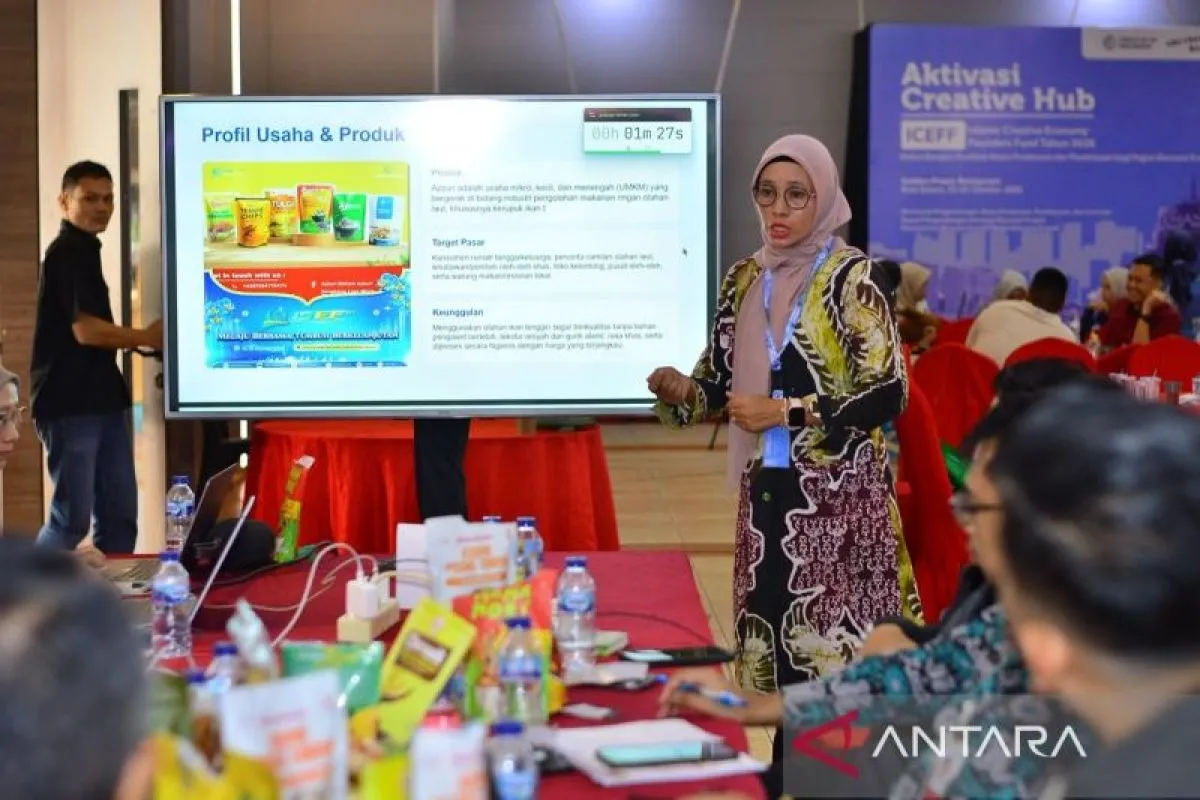
The Islamic Creative Economy Founders Fund (ICEFF) combines business training and mentorship with direct introductions to Sharia financial institutions. Its Batam bootcamp, held October 20-21, helped participants develop business plans, define their capital needs and prepare proposals for prospective financiers.
Organized by the ministry's Directorate for Access to Funding, Financing, and Investment, the two-day event included workshops on financing options for creative businesses, Islamic capital mechanisms and pitch-deck preparation. Participants presented their expansion plans to financiers on the second day to explore suitable funding schemes.
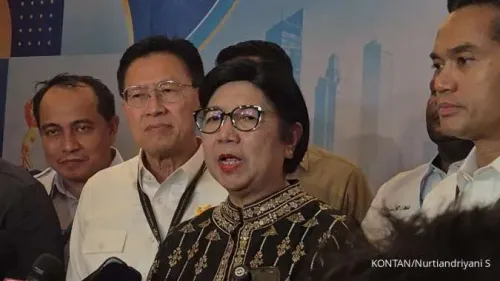
In an official statement received October 28, Creative Economy Minister Teuku Riefky Harsya said entrepreneurs need both capital and the business readiness to support sustainable growth.
"The ministry continues to ensure that creative economy players possess not only viable ideas and creative products, but also business maturity and suitable access to financing," Harsya said.
Anggara Hayun Anujuprana, the ministry's director of access to funding, financing, and investment development, described ICEFF as a link between small business owners and Sharia financial institutions. "Proper financing stems from well-prepared businesses," he said.
Financial partners and follow-up
The Young Entrepreneur Academy (YEA) collaborated on the event alongside seven financial institutions: Bank Syariah Indonesia (BSI), Bank Syariah Nasional (BSN), Pegadaian Syariah, Maybank Syariah, BRK Syariah Batam, BPRS Syariah Madani and BPRS Vitka Central.
The ministry is urging participants and financiers to follow up promptly on the potential funding, with any financing subject to the institutions' formal assessments.
Mohammed Ali Berawi, the ministry's deputy for strategic development of creative economy, said stronger regional creative ecosystems depend on business readiness and close cooperation with financial institutions. Batam Culture and Tourism Office head Ardiwinata emphasized cooperation among government, business communities and financiers as a way to improve local creative businesses' competitiveness.
From the Depok pilot to later editions
ICEFF's 2025 program covered Depok, Bandung, Surabaya and Makassar. It began with a pilot in Depok on October 24, 2025, involving 50 gig workers.
Under the ministry's partnership with PT Permodalan Nasional Madani (PNM), Depok participants who were ready to start businesses were to receive Rp2 million to Rp10 million in initial financing, disbursed in groups. The ministry set a target of about 300,000 gig workers taking part in ICEFF training and financing during 2026-2029.
The Surabaya edition followed on November 5-7, 2025. It also brought together 50 creative economy participants and identified Rp5.3 billion in potential Sharia financing, according to the ministry's post-event release.
Creative economy and Islamic finance figures
Indonesia's creative economy attracted Rp138.4 trillion in investment in 2024 and Rp90.1 trillion in the first half of 2025, according to Deputy for Strategic Creative Economy Development Cecep Rukendi. He projected investment would reach between Rp152.3 trillion and Rp183.7 trillion by 2029. Sector employment stood at 26.5 million in 2024 and was expected to reach 27.7 million by 2029.
Islamic banking financing nationwide reached Rp748.7 trillion as of August 2026, an increase of 11.61 percent from a year earlier. The gross non-performing financing (NPF) ratio was 2.3 percent, according to OJK Chief Executive of Banking Supervision Dian Ediana Rae, whose figures were cited in a Bank Indonesia release.
Bank Indonesia also cited the State of the Global Islamic Economy (SGIE) Report 2025/2026, which ranked Indonesia fourth worldwide in the Islamic economy ecosystem. Indonesia ranked first in modest fashion, third in both halal food and media and recreation, and fourth in halal pharmaceuticals and cosmetics.
At the 13th Indonesia Sharia Economic Festival (ISEF), held October 14-18, 2026, in Jakarta, agreements recorded during a business deals ceremony totaled approximately Rp27.43 trillion, according to Bank Indonesia. That included Rp499.75 billion in Islamic financing allocated to micro, small and medium enterprises and halal startups.