
Lower earnings forecast, higher ambitions
DIM presented its forecast at a Nov. 24 hearing before the House of Representatives' Commission XI, which oversees financial affairs. The projected profit of Rp 800 billion (US$43.6 million) is 76 percent below the original Rp 3.4 trillion target. Return on average equity is expected to be 0.85 percent rather than the targeted 3.5 percent.
The shortfall has renewed scrutiny of Danantara's investment strategy. DIM attributed the losses to Indonesia's stock market decline of more than 40 percent since the start of 2026. Danantara CEO Rosan Roeslani said treasury income, private investment income and total costs met or beat budget expectations, describing those as areas within management's control.
At the same hearing, Chief Investment Officer Pandu Sjahrir outlined a much higher profit goal for 2027: Rp 5 trillion to Rp 6 trillion (US$274 million to US$329 million), alongside a revenue target of Rp 21 trillion to Rp 22 trillion, according to Jakarta Globe.
Separately, state companies controlled by Danantara paid Rp 143 trillion in dividends in 2025. Dividend payments are expected to reach up to Rp 160 trillion in 2026 and 2027.
Market exposure weighs on returns
DIM held Rp 60.6 trillion in treasury and public investments, including stocks and bonds, as of Oct. 30. It estimated that profit could have been Rp 2 trillion higher without the market headwinds affecting those holdings.
Equities represented 57.4 percent of DIM's public investment portfolio in 2026, compared with 31.3 percent for fixed income and about 5.5 percent for liquid alternative investments, Jakarta Globe reported. The United States accounted for the largest geographic allocation, at 39.6 percent; Indonesia represented 13.3 percent and Japan 7.6 percent.
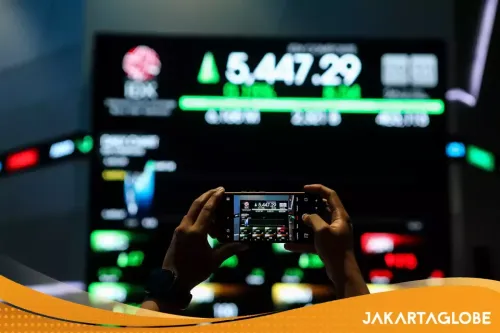
The domestic sell-off had pushed the Jakarta Composite Index down to 5,146 by Nov. 21, a year-to-date loss of 40.48 percent, according to Investortrust.id. The report put the loss in market capitalization at Rp 322 trillion and cumulative foreign net outflows from the Indonesia Stock Exchange at Rp 100.23 trillion. Indonesia ranked as the world's worst-performing stock market in 2026.
MSCI has begun consulting on whether to move Indonesia from emerging-market to standalone-market status, Jakarta Globe reported. In October, the JCI lost 11.57 percent in one session, its largest daily fall since the 1998 Asian financial crisis.
DIM's earnings forecast depends in part on where the index finishes the year. According to ANTARA News, the Rp 800 billion projection assumes a year-end JCI level of about 5,200. DIM's internal sensitivity table puts profit at roughly Rp 400 billion if the index closes at 4,000, or Rp 2 trillion at 6,000. The modeled profit rises to Rp 3.2 trillion at 7,000, Rp 4.4 trillion at 8,000 and Rp 5.6 trillion at 9,000.
Private investments span food, energy and pilgrimage projects
DIM has committed Rp 68.9 trillion to private investments since the beginning of 2026. Its deals with Brazilian meat processor JBS Group and US-based HighPeak Energy carry expected equity returns of 14 percent and 10 percent, respectively. Investments in haj village projects in Saudi Arabia are expected to return 5 percent.
The JBS partnership was announced on Aug. 7. According to Danantara, it involves a US$2.5 billion equity investment in exchange for 25 percent of a newly established joint venture overseeing JBS's operations in Australia and New Zealand. The venture could provide another US$2.5 billion in investment capacity, taking total available capital to as much as US$5 billion.
Danantara's HighPeak investment, announced Oct. 6, totals US$250 million and uses convertible preferred shares, according to Asia Asset Management. The initial conversion price is US$9.50 per common share. Conversion would produce 26.32 million new common shares, representing a stake of at least 15 percent.