
Jakarta's early trading
The JCI traded between 5,229 and 5,246 early in the session. Despite the weaker opening, Reliance Sekuritas forecast a rebound on Wednesday, placing support at 5,194 and resistance at 5,315.
Bloomberg spot-market data showed the rupiah at Rp18,227 per US dollar at 9:06 a.m., a gain of 3 points, or 0.02%. That followed a decline of 27 points, or 0.15%, on Tuesday, when it closed at Rp18,230.
Wednesday's stock-market retreat followed a 0.49% advance on Tuesday to 5,241.59, continuing the JCI's recovery from the previous week's sell-off. Technology shares gained 2.36% and financial shares rose 1.83%. Bank Mandiri, Bank Central Asia, Bank Rakyat Indonesia, Astra International and Telkom Indonesia were among the main contributors to the index's rise.
Foreign investors were net buyers of Rp49 billion in shares on the regular market on Tuesday, indicating some interest in Indonesian equities.
Asian losses and US rate expectations
Elsewhere in Asia, opening losses reached 2.51% for Japan's Nikkei 225 and 4.79% for South Korea's Kospi.
US stocks had ended the overnight session with a split performance. The Dow Jones Industrial Average finished at 50,018.70, up 0.85%, but the S&P 500 lost 0.50% to 7,201.09. Technology-stock losses helped push the Nasdaq Composite down 1.48% to 23,733.54.
A stronger US dollar and expectations of higher Federal Reserve rates remained potential sources of pressure on capital flows into emerging markets. CME FedWatch put the likelihood of a 25-basis-point increase in December at 96%.
According to Admirals' December preview, the Fed will meet on December 8-9, 2026, and announce its decision on December 9. The federal funds target range stands at 3.75%-4.00%. The central bank last raised rates on September 16, increasing them by 25 basis points in its first hike in three years, before leaving them unchanged on October 28.
MSCI proposal remains unresolved
Investors are also following Indonesia's capital market reforms and the prospect of a change in its MSCI classification. President Prabowo Subianto's contact with the chief executive of Morgan Stanley Capital International has encouraged hopes for more discussions. MSCI has nevertheless retained its proposal to move Indonesia to standalone status, leaving uncertainty over the outlook for foreign investment.
The proposal concerns a shift of the MSCI Indonesia Indexes from Emerging Market to Standalone Market status. MSCI opened the consultation on October 15, 2026, and will accept feedback from market participants through April 30, 2027. A final decision is due no later than June 30, 2027.
In explaining the consultation, MSCI cited market participants' concerns about whether Indonesian equities are investable, including persistently unclear shareholding structures and suspected coordinated trading. MSCI said a move to Frontier Markets would not adequately reflect the depth of those problems.
An existing freeze on certain index changes for Indonesian securities will remain in place until further notice, MSCI said. It will not increase Foreign Inclusion Factors or Number of Shares, add securities to the MSCI Indonesia Investable Market Index, or move securities into higher size-segment indexes.
Vice presidential selection ahead
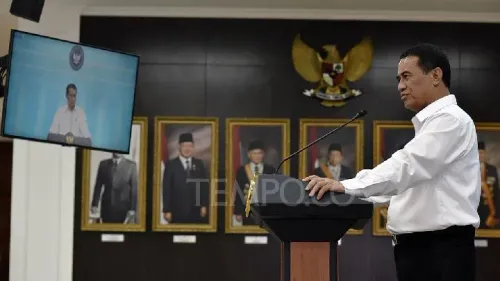
Domestic politics is another focus for investors. On November 23, Prabowo submitted two vice presidential candidates to the People's Consultative Assembly, known as the MPR: Gerindra Party Secretary-General Sugiono and Agriculture Minister Andi Amran Sulaiman.
The assembly has appointed a 36-member team to verify the candidates. It plans to hold a plenary session on December 11, 2026, to elect and inaugurate a replacement for Gibran Rakabuming Raka, who submitted his resignation to the MPR on November 12.