Tax support for consolidation and investment
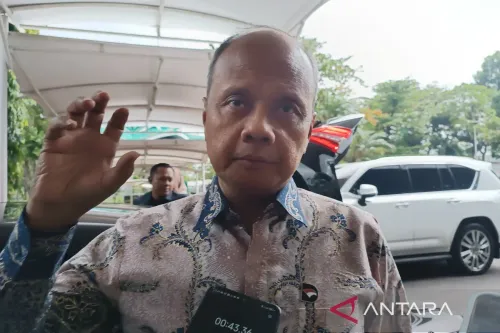
At the 2027 Economic Outlook event in Jakarta on November 24, 2026, Suahasil said companies with outstanding tax obligations would be allowed to proceed with restructuring without paying taxes upfront. He described the deferral of advance payments as a way to support Danantara during the consolidation.
The government classifies the facility as a tax expenditure, a category covering revenue forgone through incentives and preferential tax treatment.
Suahasil said Danantara must then work to help investment grow by 7 percent. He called for large-scale projects, downstream processing and industrial development that could draw private-sector participation. The government expects future tax receipts from those activities, along with job creation and new infrastructure.
Hundreds of companies slated for consolidation or closure
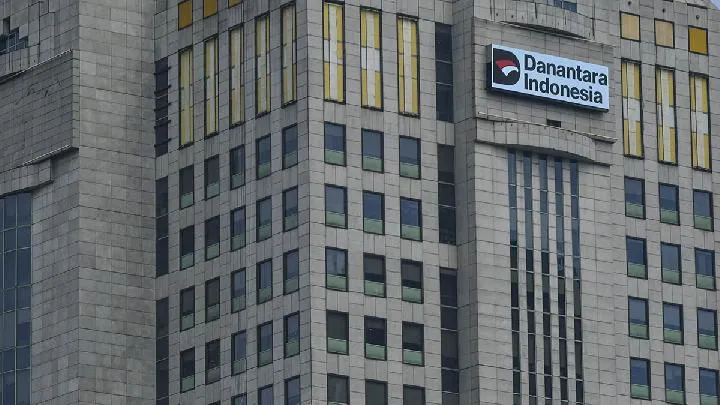
Launched in February 2025, Danantara Indonesia is formally known as Badan Pengelola Investasi Daya Anagata Nusantara. The agency says in a press release that it manages about 1,044 state-owned enterprises and $1 trillion in assets, and plans to reduce the company count gradually to around 300. Chief Operating Officer Dony Oskaria said its funding comes from SOE dividends, rather than state fiscal revenues or commodity surpluses as with many sovereign wealth funds elsewhere.
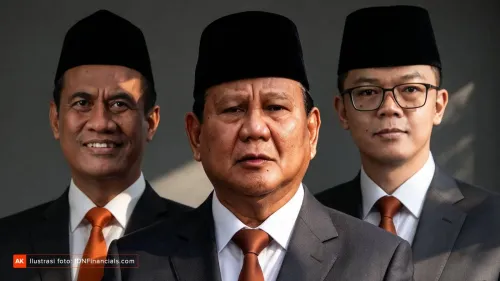
President Prabowo Subianto put the broader count of state-owned enterprises, subsidiaries and lower-tier subsidiaries at 1,074, with more than 750 entities ultimately to be eliminated. "This may be the largest corporate restructuring in the world," he said.
According to Oskaria, 364 companies had undergone streamlining by October 2026 through restructuring, mergers, divestments and liquidations. He said the target was to close at least 750 companies by the end of 2026.
Oskaria outlined four groups in the overhaul. About 200 companies were ready for consolidation, including five asset managers to be combined into one, 60 hospitals into a single entity and 120 hotels into one company. Around 15 companies, among them Krakatau Steel, Kimia Farma and Garuda Indonesia, were designated for financial restructuring. Another 213 were marked for liquidation or closure, while 208 were slated for divestment.
He projected roughly Rp 70 trillion, or about $3.9 billion, in savings by the end of 2026. Eliminating annual losses and inefficiencies at shuttered companies was expected to account for about Rp 50 trillion. Cuts to salaries, commissioner and director remuneration, and other executive benefits were expected to save more than Rp 15 trillion.
Oskaria also reported that SOEs' combined net profit reached Rp 214.9 trillion in January-August 2026, an 18.4 percent year-over-year increase. That was Rp 33.4 trillion above the previous Rp 181.5 trillion. Their annualized combined return on equity increased from 7.4 percent to 8 percent, a gain of 0.6 percentage points.
Four categories of tax relief
The legal basis is Government Regulation No. 41 of 2026 on the Tax Treatment of Transactions Involving Danantara, Investment Holding Companies, Operational Holding Companies, and Their Subsidiaries. Prabowo signed the regulation on October 19, 2026, and it took effect upon promulgation that day. It covers transactions including mergers, consolidations, business spin-offs and acquisitions, with the aim of accelerating the restructuring of SOEs and their subsidiaries.
Tax consultancy Ideatax identifies four categories of facilities under the regulation. One applies a 0% final income tax rate, using fiscal book value, to transfers of Series A Dwiwarna and Series B shares for ownership-structure administration.
A second category simplifies corporate restructuring. Companies can use book value by notifying the Directorate General of Taxes, without seeking approval or undergoing a business-purpose test. This category includes a 0% final income tax on certain corporate actions, non-collection of VAT and luxury-goods tax without a Non-Collection Certificate, and exemptions from sectoral final taxes when land, buildings or listed shares are transferred.
The remaining categories provide special treatment for transfer-pricing documentation and related-party reporting through tax year 2029, and adjustments to Global Minimum Tax (GloBE) obligations.
Eligibility requirements and a 2028 review
Ideatax says access to the regulation's facilities is conditional, not automatic. An entity must be on an official list issued by the Head of the SOE Regulatory Agency, known as BP BUMN, using data supplied by Danantara.
The consultancy's analysis also lists requirements to qualify for a Tax Clearance Certificate (SKF) and settle outstanding tax liabilities. Entities must notify the Directorate General of Taxes within six months of the transaction and include it in their annual income tax return. The regulation limits fiscal loss carryforwards and bars reductions in total Article 25 income tax installments after restructuring.
The government must evaluate the facilities within two years of the regulation taking effect, setting an October 19, 2028, deadline for the review, according to Ideatax.