From paddy sales to branded rice
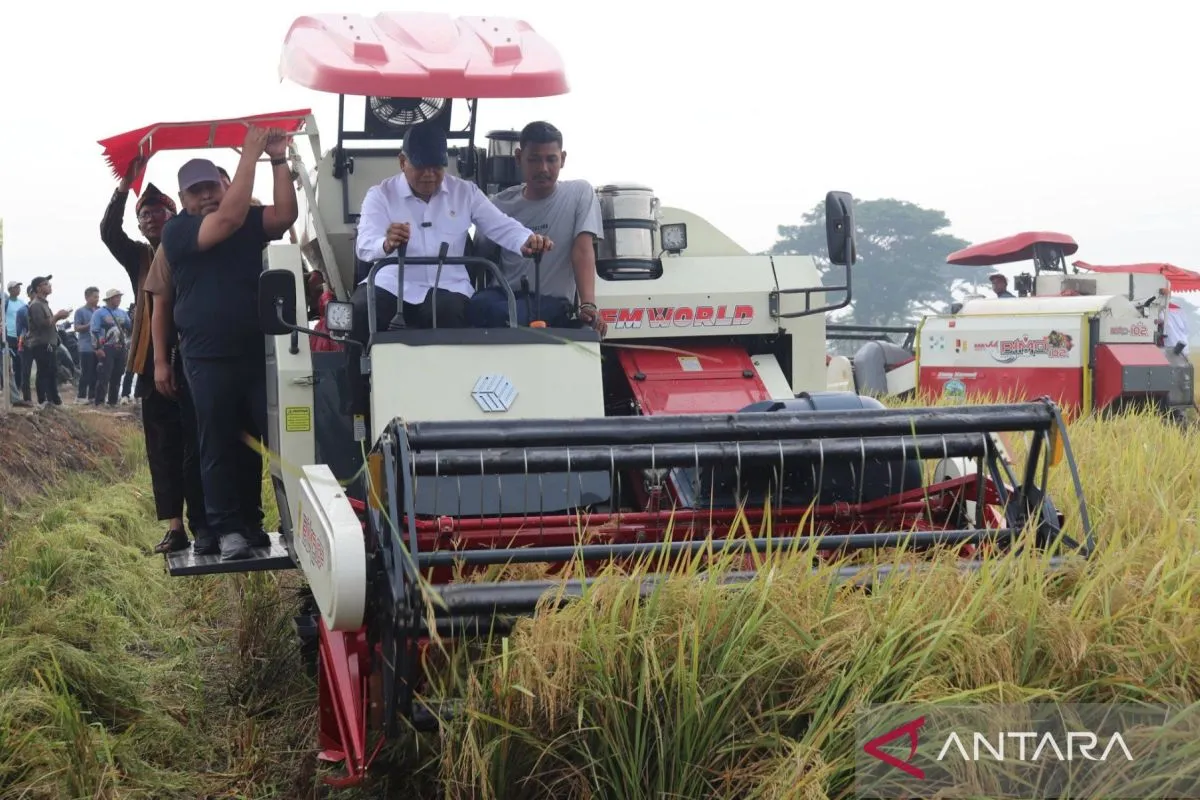
Mustafa attended the harvest on land belonging to the Sri Pohaci Farmer Groups Association in Kertasari, Pebayuran Sub-district, Bekasi District. The locally grown basmati has the long, slender grains, distinctive aroma and firm, non-sticky texture sought by Middle Eastern markets.
He praised farmers for successfully harvesting a rice variety associated with imports, but urged them to look beyond selling unhusked paddy. Reaching overseas buyers, he said, would require better productivity, post-harvest processing, packaging and assured market access.
"I encourage farmers to start building a branded product, Kertasari Basmati Rice. We will connect you with exporters and the Saudi market," he said.
Basmati yields at the November 22 harvest reached 8 tons of paddy per hectare. The ministry plans to increase that to 10-12 tons using the Modern Agriculture-Advanced Agricultural System (PM-AAS), which combines global farming technology with the local "jajar legowo" planting technique.
Sri Pohaci association head H. Sardi reported a wet paddy price of about Rp9,000 per kilogram. He called for price protection alongside higher yields so farmers could remain profitable during the main harvest.
Supplying Indonesian pilgrims
Mustafa identified Indonesian hajj pilgrims in Saudi Arabia as a potential market for Kertasari's basmati. He questioned why their rice should come from other countries and said supplying them with Bekasi-grown rice would be a source of pride.
Indonesia had already launched its first premium rice export to Saudi Arabia earlier in 2026, according to the Agriculture Ministry. On March 4, the government released about 2,280 tons of Premium Government Rice Reserve (CBP Premium), valued at around Rp38 billion. Shipments were scheduled to begin March 7, with the initial shipment intended to serve roughly 215,000 Indonesian hajj pilgrims.
Agriculture Minister Andi Amran Sulaiman estimated in March that Indonesian hajj pilgrims alone require about 20,000 to 50,000 tons of rice annually in Saudi Arabia. He said the potential market extends to Indonesian umrah pilgrims and residents, or mukimin, estimated at around 2 million people per year.
Infrastructure and farmland protection
Mustafa said Bekasi could become an export-oriented food-producing hub, pointing to its extensive farmland, the Jatiluhur irrigation system and strategic access to an international port. He described agricultural exports as a way to earn foreign exchange for Indonesia.
The ministry's promised productivity support includes farm roads at four locations, tractors and other agricultural machinery, superior seeds and fertilizer supplies. It also plans to build an 8,000-square-meter reservoir in 2027 to provide irrigation for at least 200 hectares.
Mustafa also called on the Bekasi District government to safeguard about 36,000 hectares designated as Sustainable Food Agricultural Land (LP2B) against conversion to other uses and pollution from industrial waste. Rice grown in contaminated fields would not be eligible for export, he warned.