
Execution deadlines and prisoners' rights
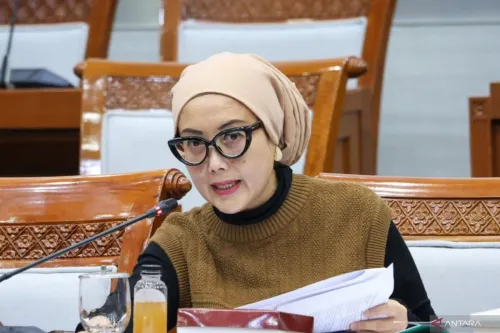
The government submitted its proposed provisions to the House commission responsible for law enforcement on Tuesday, November 24, 2026. The commission established a drafting committee headed by NasDem Party lawmaker Ahmad Sahroni.
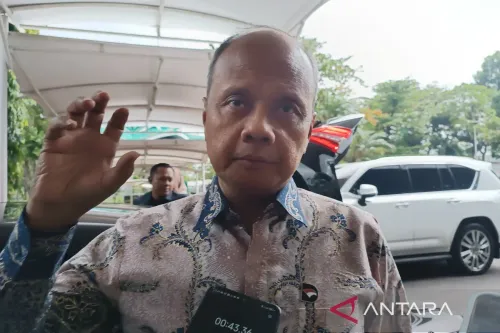
Deputy Law Minister Edward "Eddy" O.S. Hiariej, who presented the government's position, said the legislation is required by Article 102 of Law No. 1/2023, Indonesia's revised Criminal Code, or KUHP. RRI (Voice of Indonesia) reported that he outlined the proposed 30-day limit between an execution order and the execution itself.
The draft also addresses how long prisoners may be incarcerated before execution and requires procedures covering medical examinations, access to lawyers and family visits. Other provisions concern clemency applications, when and how the attorney general must inform relatives and lawyers of an execution date, and the return and burial of the prisoner's remains.
Golkar Party lawmaker Rikwanto described capital punishment as the most severe criminal penalty. "Therefore, executions must follow clear procedures to ensure the protection of prisoners' rights," he said.
Commission III member Soedeson Tandra urged lawmakers to establish objective criteria for handling special circumstances, according to E-Media DPR RI (Parlementaria). His examples included pregnant women, women who have recently given birth and are still breastfeeding, prisoners with terminal illnesses such as stage-four cancer, and those with mental disorders.
Sahroni, the commission's deputy chair, said its list of issues submitted to the government includes 200 items concerning the bill's main text: 113 retained items, 63 substantive items, 17 editorial items and seven new substantive items. A further 66 concern the explanatory section, RRI reported.
How the revised Criminal Code treats death sentences
The KUHP took effect on January 2, 2026, according to a 2026 fact-finding report by ECPM and KontraS. It treats the death penalty as a special punishment, to be imposed as an alternative and a last resort.
Every death sentence includes a 10-year probationary period. If the prisoner demonstrates praiseworthy conduct during that period, the sentence is commuted to life imprisonment through a presidential decree after consideration by the Supreme Court.
A separate provision addresses prolonged delays after clemency is denied. Law No. 1/2026 on Criminal Adjustment, which took effect alongside the KUHP, revised Article 101 to make commutation automatic when an execution has not occurred within 10 years of a clemency rejection, unless the delay results from the prisoner's escape. In those circumstances, the death sentence becomes life imprisonment by operation of law, the report says.
A decade without executions
Capital punishment remains legal in Indonesia, although the country has carried out no executions since July 29, 2016. On that date, four people convicted of drug-related crimes were executed by firing squad on Nusakambangan Island: Indonesian Freddy Budiman, Nigerians Humphrey Ejike and Michael Titus, and Senegalese national Seck Osmane.
The absence of executions does not constitute a formal moratorium. Indonesia has never declared one, and the suspension remains informal and reversible, according to the ECPM/KontraS report.
The report also cites Directorate General of Corrections figures showing that Indonesian detention facilities held 639 people under death sentences in April 2026, more than double the 268 recorded in July 2019.