Who bears the cost
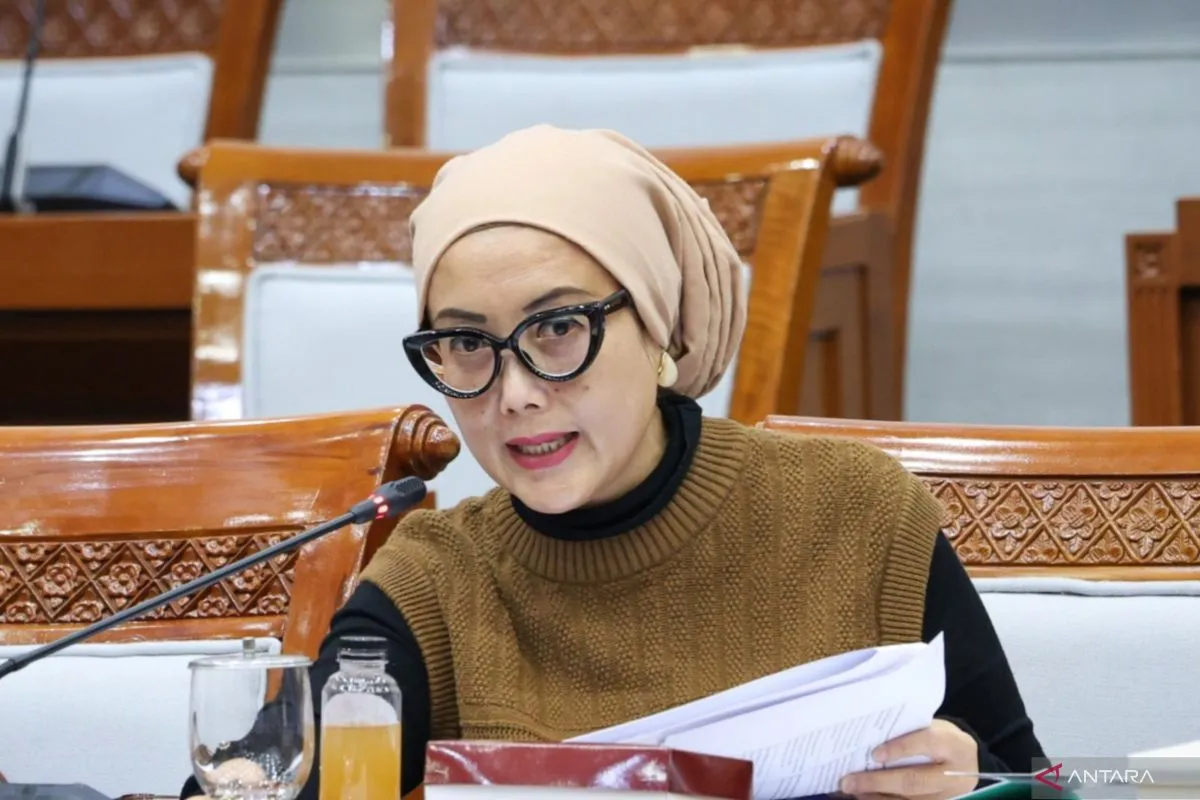
Selly, a member of the House of Representatives' Commission VIII, outlined her proposals on Tuesday, according to Antara. She said the government should account for differences in people's needs and economic circumstances when assessing the burden of taxation.
"Menstruation is neither a choice nor a lifestyle or a discretionary expense that can be postponed. It is a biological process that women cannot avoid," she said.
Because menstrual products must be purchased repeatedly, Selly argued, higher costs leave low-income women especially exposed. Whether a tax explicitly targets women is not the only question policymakers should consider, she said: "The issue is not simply whether the tax specifically targets women. The more fundamental question is who actually bears its burden."
House Speaker Puan Maharani also requested a review on November 5, 2026. She described sanitary pads as a primary biological and health necessity, not a secondary product, and said the 11 percent VAT burdens low-income women and vulnerable families.
An effective tax rate of 11 percent
Sanitary pads remain subject to an effective VAT rate of 11 percent of their selling price in Indonesia as of late 2026. The Directorate General of Taxes (DGT) classifies them as taxable goods, with no applicable VAT exemption.
The effective rate reflects the calculation prescribed by Minister of Finance Regulation (PMK) No. 131 of 2024. For non-luxury taxable goods, a 12 percent rate applies to a tax base equal to 11/12 of the selling price, resulting in an 11 percent burden, according to Ideatax's analysis and a Komnas Perempuan press release.
The DGT has defended the levy as part of the general VAT system for consumer goods, rather than a tax directed at women or menstruation. Inge Diana Rismawanti, its director of extension, services and public relations, stated that position on October 29, 2026. She also said no official study proposing a sanitary-pad VAT exemption had been submitted to the government as of that date.
Rights commission and consumers group press for relief
Selly cited the National Commission on Violence Against Women, known as Komnas Perempuan, in support of reconsidering the tax. The commission said the policy did not sufficiently recognize women's specific needs in exercising their reproductive health rights.
In its October 30, 2026, press release, No. 76/HM.02.03/X/2026, the commission, through Vice Chair Dahlia Madanih, characterized VAT on menstrual products as gender-biased. It asked the Finance Ministry to consider removing the products from the VAT base or adopting a government-borne VAT scheme.
Komnas Perempuan also reported submitting a written amicus curiae brief in Constitutional Court case No. 11/PUU-XXIII/2025, which concerns VAT on menstrual products. Its argument emphasized the added economic burden on women, particularly those with low incomes who also manage household needs.
Niti Emiliana, chair of the Indonesian Consumers Foundation (YLKI), urged the government to eliminate VAT on feminine hygiene products and review taxation of other menstrual necessities. The foundation said the levy adds to women's financial burden, with low-income women particularly affected.
International comparisons compiled by Komnas Perempuan from official government sources and reported by Kompas.com on October 30, 2026, identified tax exemptions for feminine hygiene products in Australia, Canada, the United Kingdom and Malta, where the exemption began in 2025. The data also cited rate cuts from 10 percent to 7 percent in Austria and from 10 percent to 4 percent in Spain.
Access beyond tax policy
Selly's proposals also addressed access to adequate menstrual products for women in low-income households, informal workers, people with disabilities and schoolgirls. She said those efforts should be linked to sanitation facilities, clean water, reproductive health services and menstrual health education.
She acknowledged that tax revenue is essential to development and public services, while arguing that fiscal decisions must also protect social justice and vulnerable groups. In her view, assessing taxes requires attention to women's basic needs and quality of life, not revenue alone.
Selly urged the Ministry of Women's Empowerment and Child Protection to work more closely with the Finance Ministry and other relevant agencies to ensure national policymaking accounts for women's needs.