Leadership change and ethics rulings
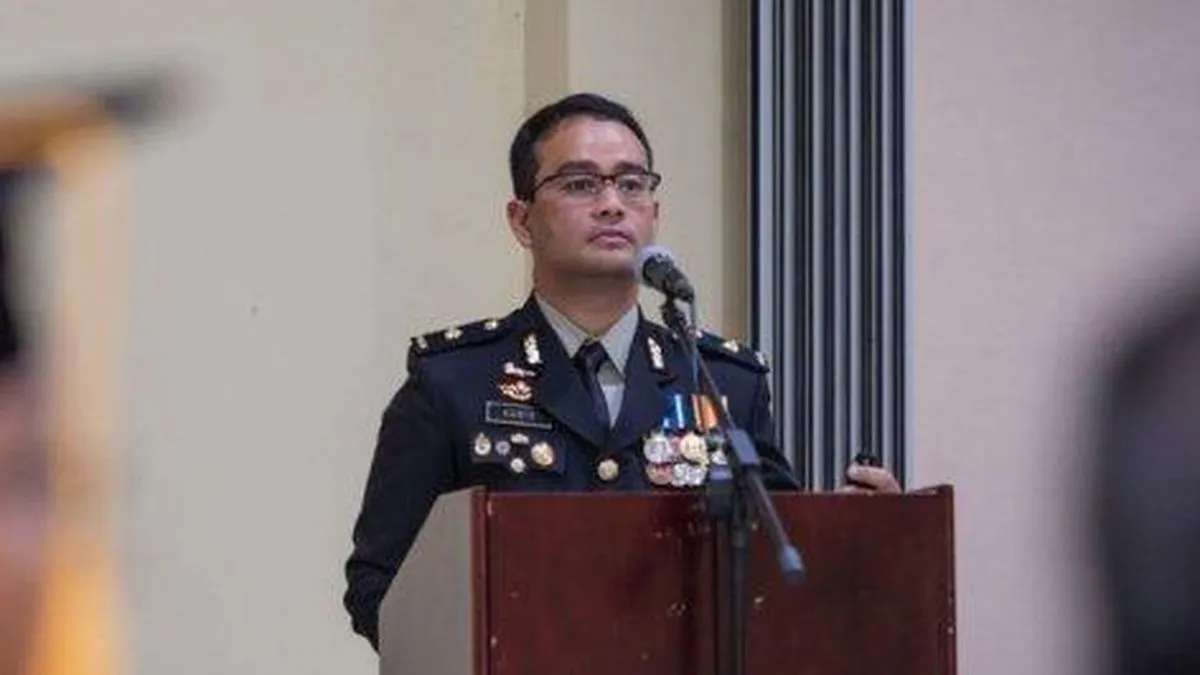
Kompas.com reported that a confidential police telegram dated November 20, 2026, assigns Ahrie to a high-officer position in the National Police's Headquarters Service, known as Pati Yanma. The order, numbered ST/2598/XI/KEP/2026, was signed by the National Police chief on behalf of human resources head Inspector General Deni Dharmapala.
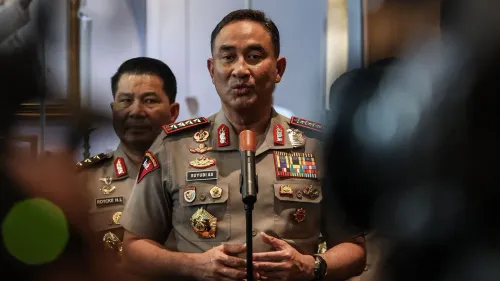
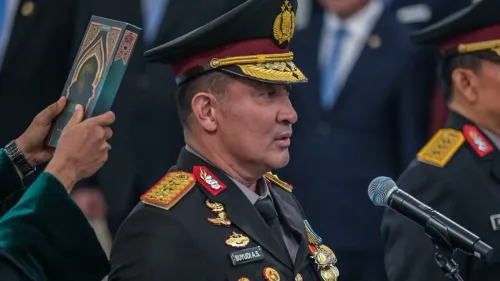
National Police Chief General Suyudi appointed Iksantyo to lead the Legal Division, a position known as Kadivkum. Iksantyo previously led the division's Legal Information Bureau, or Karosundokinfokum.
Two other wiretapping suspects also received Pati Yanma assignments: Inspector General Eko Hadi Santoso, previously a Level I senior police instructor at the Police Academy, and Inspector General Slamet Uliandi, who had been a high-ranking officer in the Criminal Investigation Unit, Bareskrim, on an assignment outside its organizational structure.
The personnel changes follow ethics rulings against Ahrie and Eko. On November 10, the Police Code of Ethics Commission, or KKEP, ordered Ahrie's dishonorable dismissal from the force, making him the first of the four suspects to receive a sanction. The panel deemed his conduct reprehensible. Ahrie appealed the ruling.
The commission also ordered Eko's dishonorable discharge on November 17 after finding that he had committed ethics violations involving a conspiracy related to illegal access using police technology. He immediately appealed.
Four suspects and the alleged wiretapping operation
The case surfaced on October 30, 2026, after a police member spotted irregularities and filed a report. Investigators say the unlawful interceptions occurred during 2025 and 2026, with target phone numbers entered into the police's Lawful Interception Management System, or LIMS, without verification. They also allege that the suspects ordered interception data and logs deleted from LIMS in October 2026.
Bareskrim publicly named its first three suspects on November 3: former National Police Chief General Listyo Sigit Prabowo, Ahrie and Eko, a former director of narcotics criminal investigation. Slamet, a former chief of the police's information and communications technology division, was initially a witness. Investigators designated him a suspect on November 5 following a case review.
Police allege that the targets extended beyond President Prabowo to state officials, political figures, media representatives, civil society leaders, nongovernmental organizations and businesspeople.
At a November 12 working meeting with House Commission III, Suyudi described Listyo as the "end user" of the wiretapping. According to the police chief's account, Listyo issued instructions and selected targets both orally and through WhatsApp, while Slamet approved interceptions and passed along monitoring reports.
Suyudi said Eko received instructions while serving as acting head of monitoring. Ahrie allegedly relayed orders to operators and directed the deletion of wiretap data.
Criminal charges and detention
Listyo, Eko and Ahrie were held at the Mako Brimob detention facility. Slamet was placed under house arrest for health reasons.
Slamet faces charges under Article 332, paragraph (1) and/or paragraph (2), of the Criminal Code concerning illegal access; Article 258, paragraph (1), of Law No. 1 of 2023 on the Criminal Code; and Article 32, paragraph (1), of the Electronic Information and Transactions Law, or ITE Law. The ITE provision is applied in conjunction with Article 20, letter j, of the Criminal Code.
The charges against the other three suspects cite Article 258 and Article 332, paragraph (1) and/or paragraph (2), of Law No. 1 of 2023 on the Criminal Code, along with Article 32, paragraph (1), of the ITE Law.
Kompas.com reported that the overlapping charges concern illegal wiretapping, unauthorized access and electronic data deletion, and carry a maximum penalty of up to 10 years in prison.
Related treason investigation
As of November 17, police said they had identified elements of alleged treason, or makar, linked to the wiretapping case. They described the allegation as a conspiracy aimed at overthrowing the government.
Police had moved that inquiry to the formal investigation stage and sent a Notice of Commencement of Investigation, known as an SPDP, to the prosecutor's office. No suspect had been named in the treason case as of that date.
Push for wiretapping legislation
The case has renewed calls for legislation governing interceptions. House Commission III member Hinca Panjaitan said lawmakers should prioritize the Wiretapping Bill, known as RUU Penyadapan, with a target of completing it before the end of 2026.
The National Police's Intelligence and Security Agency, Baintelkam, proposed six strict rules for the bill. Among them are written authorization, time limits, separation of roles and mandatory records that can be audited.