News content and AI protections
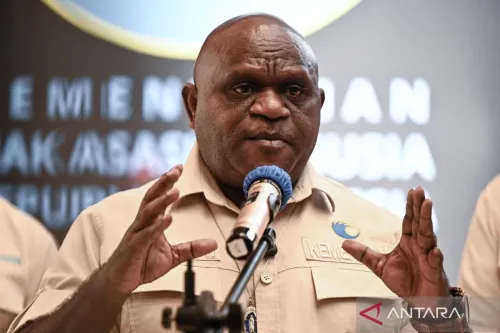
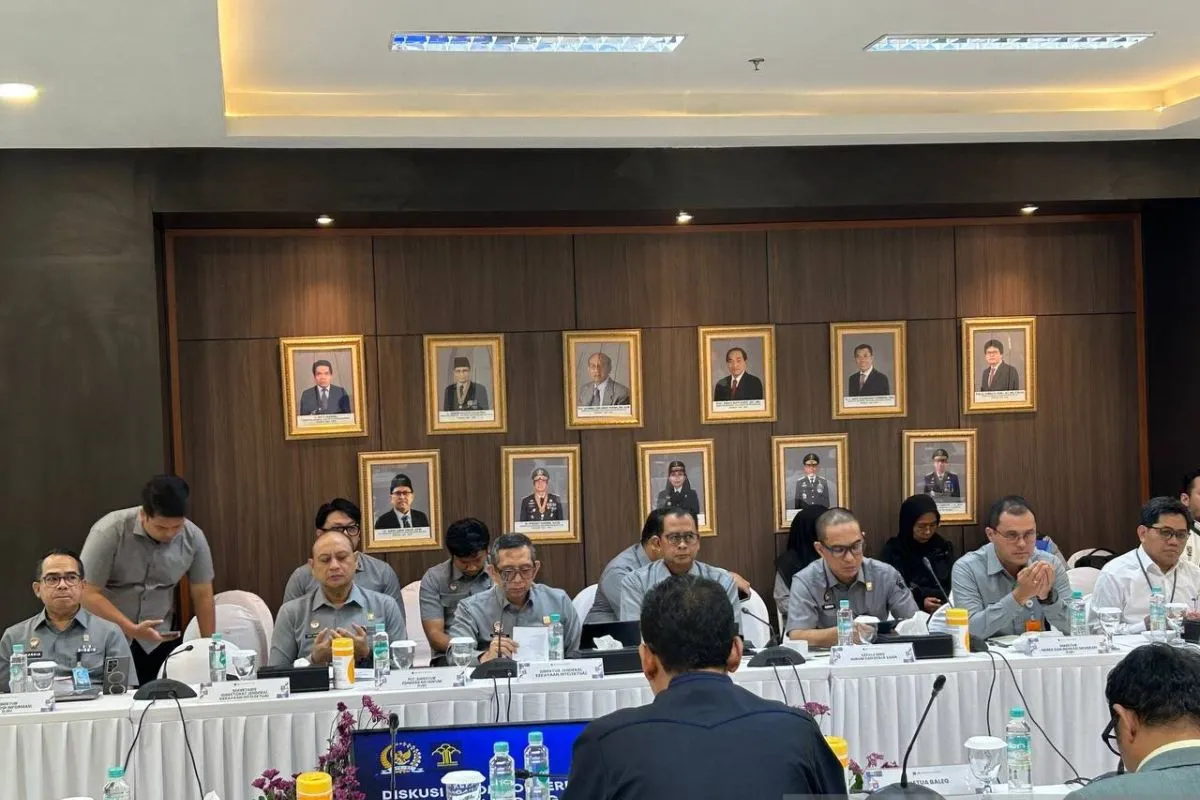
Hermansyah outlined the proposals during a meeting with the House of Representatives' Legislative Body, known as Baleg, at the Law Ministry's Directorate General of Intellectual Property in Jakarta. He called for stronger economic rights for creators and related rights holders, with protections that cover digital uses and technological developments.
"Journalistic works produced by press companies must be protected. Otherwise, press businesses and journalism could face decline, while the use of AI could undermine their economic rights," he said.
Some proposed obligations for platforms appeared in a July 2026 draft reviewed by Reuters, according to Asia IP. That version would require payments for news aggregation, republication, link previews and AI training using news content. State-supervised collective management organizations would handle those payments.
The July draft also would prohibit AI from imitating a creator's "distinctive style" and require users to disclose AI involvement. Copyright protection for AI-assisted works would depend on sufficient human participation, while noncompliant platforms could lose their local business permits.
Journalism's place in the copyright overhaul was also on the agenda at the ASEAN Forum on the Protection of Journalistic Works in the Copyright Regime in the Digital Era. The Law Ministry's Directorate General of Intellectual Property and the Press Council jointly organized the October 9-11, 2026, gathering at The Patra Bali Resort and Villas in Badung, Bali. Its closing "Bali Joint Statement" recognized the economic value of journalistic works as intellectual creations.
Indonesia also plans to put forward a proposal for global royalty standards at the 49th session of the World Intellectual Property Organization's Standing Committee on Copyright and Related Rights. That session is scheduled for November 30-December 4, 2026.
Payment for library lending
The proposed public lending right would compensate creators when libraries or other public lending institutions lend their works. Hermansyah described it as a way to recognize economic rights when copyrighted material is used through public facilities, including continued remuneration for creators and publishers when public libraries lend literary works.
Such systems have a long history but uneven geographic reach. WIPO Magazine reported that 33 countries operated public lending right systems as of 2018. Only four were outside Europe: Australia, Canada, Israel and New Zealand. At that time, none existed in Africa, South America or Asia.
Denmark introduced the first system in 1946. According to WIPO Magazine, most systems stem from the EU's Rental and Lending Right Directive (2006/115/EC), which requires member states to grant authors an exclusive lending right or, at minimum, remuneration for library lending.
Artists' rights after the first sale
For certain artworks, the government wants creators to receive a portion of the proceeds from later resales. The proposal would allow visual artists to keep benefiting financially after their work changes owners.
"Visual artists should retain not only their moral rights but also their economic rights when their works are resold, allowing them to benefit from subsequent transactions," Hermansyah said.
The resale right, also called droit de suite, is recognized in Article 14ter of the Berne Convention, but countries are not obliged to adopt it. WIPO Magazine puts the number of countries recognizing the right at around 80; the United States and China are among the major art markets that do not.
The EU's Resale Rights Directive (2001/84/EC) provides one existing model. It covers professional resales above EUR 3,000, with a declining royalty scale ranging from 4% for sales up to EUR 50,000 to 0.25% for sales above EUR 500,000. The maximum royalty is EUR 12,500 for a single sale. Payments apply during an artist's lifetime and for up to 70 years after death.
Legislative process and timetable
The bill would amend Law No. 28 of 2014 on Copyright. Deputy Minister of Law Edward Omar Sharif Hiariej said the law needed updating after more than a decade in force, Kompas.com reported.
The House adopted the bill as its initiative on March 12, 2026. It then moved to deliberations with the government under Presidential Letter R-21/Pres/05/2026. On October 6, the House's Legislative Body established a working committee led by its deputy chair, Martin Manurung, a NasDem member, according to Asia IP.
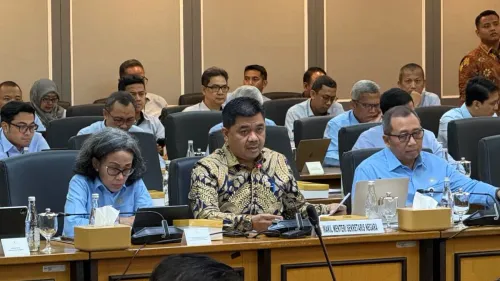
Hermansyah said Monday that the government had prepared 1,117 entries in its problem inventory, known as DIM, for discussion. A breakdown presented at the October 6 government-Baleg meeting classified 558 as unchanged, 91 as changes or substantive matters, 143 as proposed deletions, 181 as new substantive provisions and 144 as editorial matters, according to Kompas.com.
At the October meeting, lawmakers and the government agreed to finish deliberations by December 17, 2026, with discussions to start after the legislative recess running from October 10 through November 10. Baleg chair Bob Hasan said the schedule remained tentative and could be adjusted, but completion should be no later than December 17.