Two failed votes and an expired mandate
The Security Council rejected the U.S. draft, document S/2026/868, on October 30. Eleven members voted for it, three abstained and Russia cast a veto, according to UN Meetings Coverage and Press Releases. The proposal would have renewed MINURSO's mandate for 12 months.
The draft also sought changes beyond an extension. According to BBC News and analysis from the Carnegie Endowment for International Peace, it would have dropped "referendum" from the mission's name, changing its acronym to MINUSO, and designated Morocco's autonomy proposal as the sole basis for further negotiations. Waltz said the text affirmed self-determination twice.
Waltz said Russia vetoed the proposal on the final day of negotiations despite weeks of circulation, revisions and efforts to incorporate members' views. He also challenged Russia's description of its competing draft as a "technical rollover," saying it would have reversed the Council's earlier position by deleting every reference to Morocco's autonomy proposal.
Russia's draft, S/2026/870, proposed extending MINURSO through October 31, 2027. Only China, Somalia and Russia supported it; the United States voted against it and 11 members abstained.
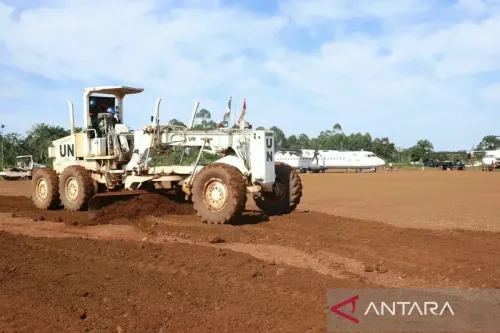
With neither proposal adopted, the mandate expired on October 31, 2026. The BBC reported that the UN announced the next day that MINURSO had entered liquidation, leaving a reduced team to oversee transfers of military equipment and other assets. A UN report cited by the BBC put the mission's military personnel at 155 and its expected cost at $62 million for the financial year beginning in June.
The autonomy proposal and recent diplomacy
Waltz presented Resolution 2797 as the turning point in the Council's approach, saying it established Morocco's autonomy proposal as a basis for negotiations. Adopted at the Council's 10030th meeting on October 31, 2025, the resolution renewed MINURSO through October 31, 2026, and requested a strategic review of its future mandate within six months.
Following that resolution, Waltz said, the United States worked alongside UN Personal Envoy Staffan de Mistura on three rounds of foreign-minister-level talks: one in Madrid and two in Washington. The parties met for the first time in nearly a decade, with Algeria and Mauritania participating as observers.
Those discussions addressed self-government, political representation and resource sharing, as well as demobilization, transition arrangements, security, and international and constitutional guarantees, according to Waltz.
Washington's backing for Morocco predates those talks. Carnegie traces the U.S. recognition of Moroccan sovereignty over Western Sahara to December 2020, a decision tied to Morocco's normalization with Israel under the Abraham Accords. Spain backed Morocco's autonomy plan in 2022, followed by France in 2024 and the United Kingdom in 2025.
The unresolved referendum
MINURSO originated in a different settlement framework. Security Council Resolution 690 established the mission in 1991 under UN-Organization of African Unity proposals accepted by Morocco and the Polisario Front in 1988. A referendum planned for 1992 never happened because the parties could not agree on voter eligibility, with identification of voters becoming a major obstacle.
Waltz argued that repeated mandate renewals and expectations of an eventual referendum had failed to advance a settlement. He cited former UN secretaries-general, personal envoys, MINURSO leaders and a former peacekeeping chief as having warned that the original referendum framework could not realistically be implemented. He also said MINURSO's website acknowledged that the mission had not been preparing for a referendum for more than two decades.
The United States supports self-determination, Waltz said, but does not view a referendum as its only possible form. As he put it, "a referendum that can never be held serves no one."
The mission's loss of its mandate does not alter Western Sahara's legal status or constitute international recognition of Moroccan sovereignty, the BBC reported. The territory remains on the UN list of non-self-governing territories. The African Union officially recognizes its independence as the Sahrawi Arab Democratic Republic.
Refugees and concerns about the mission's departure
Waltz centered his humanitarian argument on Sahrawi families in refugee camps near Tindouf, where he said people had endured 50 years of displacement. Tens of thousands remain in the camps, he said, with anemia affecting nearly two-thirds of children under five and only one in ten children in that age group receiving a minimally acceptable diet.
He cited UN High Commissioner for Refugees Barham Salih's description of the status quo to the Security Council a few months earlier as "untenable, unsustainable, and genuinely, truly inhumane." Waltz argued that Russia's veto had preserved those conditions rather than advanced a settlement.
Carnegie's analysis also identifies concerns surrounding MINURSO's departure. The mission was among the few modern UN peacekeeping operations without a human rights monitoring mechanism. Its exit raises questions about unfinished demining along the roughly 2,700-kilometer berm, described as the world's longest continuous minefield.
U.S. diplomacy to continue
Waltz thanked MINURSO's observers and staff for 35 years of service and said the United States would continue working under President Trump's leadership with the parties and the UN toward a lasting settlement.
He endorsed UNHCR's efforts to secure durable solutions for Sahrawi refugees, welcomed Morocco's commitment to maintain the ceasefire and called on the Polisario to do the same. "The door to peace remains open to all parties—and to all observers," he said.