Reserve cuts to take effect in two stages
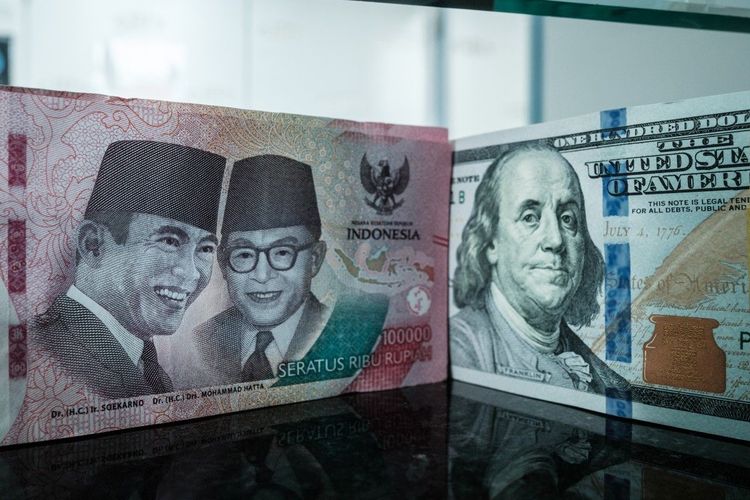
Bank Indonesia (BI) paired an unchanged benchmark interest rate with lower bank reserve requirements and extensions of its loan-to-value (LTV) and financing-to-value (FTV) policies. Permata Bank Chief Economist Josua Pardede linked the rupiah's movement to those measures, while saying the decision to hold the benchmark rate at 5.75 percent limited the currency's movement.
"BI is continuing its macroprudential policies to support rupiah liquidity, including lowering the reserve requirement ratio and extending the LTV/FTV policies," Josua told state news agency Antara in Jakarta on Thursday.
The reserve reductions average 2 percentage points and are intended to strengthen rupiah liquidity in the banking system. They will take effect in November and December rather than immediately, according to BI's October 21 policy statement. Conventional commercial banks' average rupiah reserve requirement will drop from 9 percent to 8 percent on November 1, 2026, then to 7 percent on December 1. For Islamic commercial banks and Islamic business units, the requirement will fall from 7.5 percent to 6.5 percent on November 1, then to 5.5 percent on December 1.
Kiwoom Sekuritas Indonesia estimated in its October 22 market report that the conventional banks' phased reduction from 9 percent to 7 percent would add about Rp190 trillion in banking-system liquidity.
At its October 20-21 Board of Governors meeting, BI also left the Lending Facility rate at 6.50 percent while raising the Deposit Facility rate to 5.00 percent.
Reference exchange rate and bond yields decline
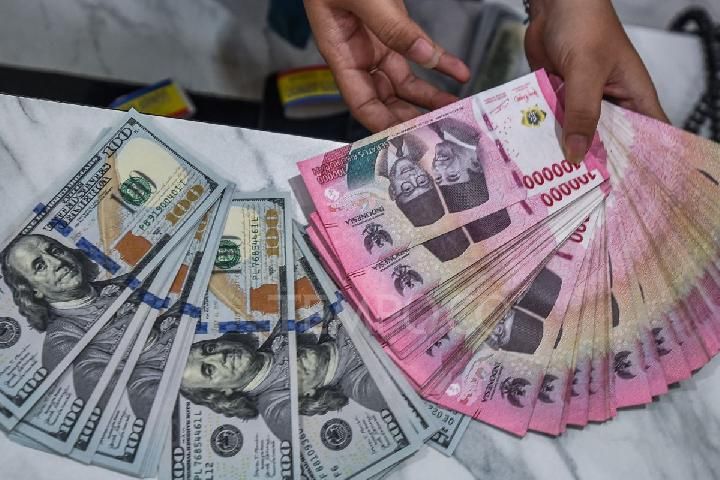
The weaker currency was also reflected in BI's Jakarta Interbank Spot Dollar Rate (JISDOR). That reference exchange rate moved to Rp18,047 per dollar on Thursday, compared with Rp17,986 previously.
Government bond yields fell across maturities following the benchmark-rate decision. The five-year benchmark yield declined one basis point to 7.21 percent, while the 10-year yield dropped two basis points to 7.43 percent. The 15-year yield fell one basis point to 7.42 percent, and the 20-year yield decreased two basis points to 7.41 percent.
Government bonds worth Rp24.39 trillion changed hands on Wednesday, October 21, compared with Rp15.71 trillion on Tuesday, October 20. As of October 20, foreign investors' holdings of Indonesian government bonds had declined by Rp2.37 trillion to Rp918 trillion, representing 13.07 percent of the outstanding total.
Separately, BI reported that its swap and Domestic Non-Deliverable Forward (DNDF) hedging instruments had attracted $9.9 billion in foreign capital inflows as of October 20, 2026, since incentives were introduced in June.
Inflation and MSCI consultation provide policy backdrop
BI's policy statement put September 2026 consumer price inflation at 3.28 percent year over year, up from 3.19 percent in August. Inflation remained within the central bank's target range of 2.5 percent, plus or minus 1 percentage point, for 2026-2027.
EBC Financial Group's October 21 report placed the market volatility surrounding BI's decision after MSCI's October 15 launch of a consultation on reclassifying Indonesia from Emerging Market to Standalone Market status. The proposal has not been implemented. Comments are being accepted through April 30, 2027, with a final classification decision due by June 30, 2027.
BI's next monetary policy meeting is scheduled for November 17-18, 2026, according to the EBC report.