
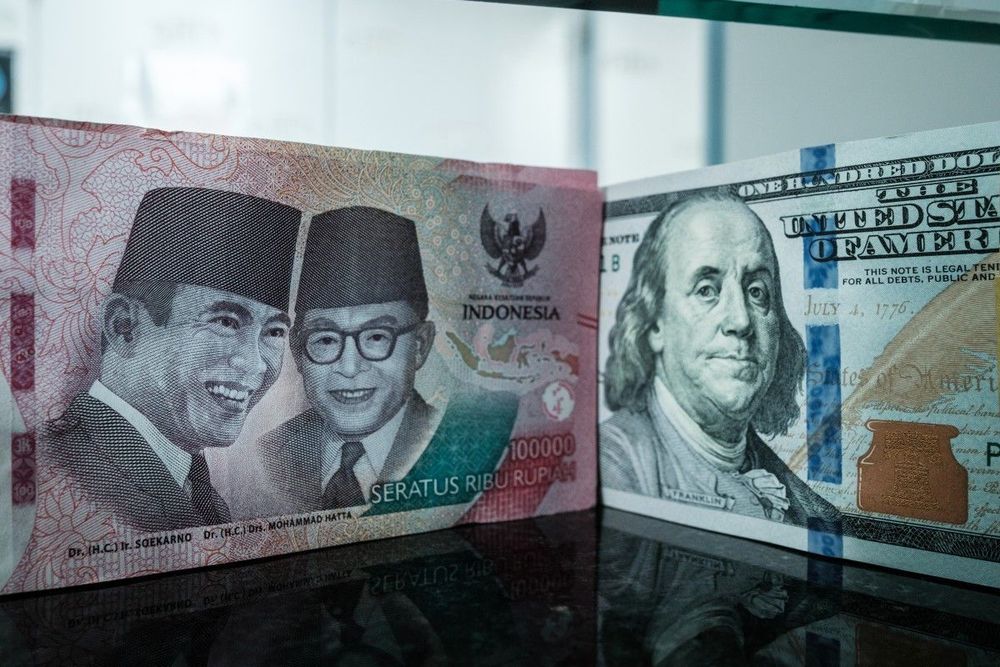
Dollar Strengthens on Fed Chair's Hawkish Signals
The US dollar maintained strength near a two-week high on Monday as markets increased bets on a September interest rate hike following hawkish remarks from Federal Reserve Chair Kevin Warsh. Meanwhile, the Japanese yen weakened past the closely monitored 160-per-dollar level, raising concerns about potential currency intervention.
Speaking on Friday, Warsh indicated the central bank would "have work to do" if policymakers don't gain confidence that inflation is moving toward the Fed's 2 percent target—a goal formally adopted in January 2012 as the central bank's explicit long-term objective for price stability. His comments marked the clearest signal yet that additional monetary tightening may be necessary to contain price pressures.
Market reaction and rate expectations
Warsh's statements, coming from the Fed Chair who assumed the position in early 2025 after Jerome Powell's term concluded in February, fueled significant market movement. Traders raised the implied probability of a September rate increase to 57 percent. Two-year US Treasury yields, which are particularly sensitive to near-term Federal Reserve policy expectations due to their short maturity aligning with typical rate cycle durations, climbed to 4.33 percent—their highest level in more than a month.
"Warsh's defense of the inflation target has reduced a major drag on the US dollar and shifted the focus back to economic fundamentals," said OCBC FX strategist Sim Moh Siong. He noted the comments helped rebuild the Fed's credibility and eased concerns about currency debasement.
The dollar index, which tracks the US currency against six major peers—including the euro at 57.6 percent weight, Japanese yen at 13.6 percent, and British pound at 11.9 percent—edged down slightly to 99.6 after jumping 0.6 percent Friday to its strongest level since August 17. Despite the modest decline, the index remained on track for a second consecutive monthly drop, influenced by earlier US Treasury bond-buyback plans that had revived debasement concerns.
Currency movements and upcoming data
The euro gained 0.1 percent to $1.1591, while sterling held steady at $1.3539. Both currencies were positioned for their second consecutive monthly gains. Investors now await critical US economic data, particularly Friday's nonfarm payrolls report and next week's consumer inflation figures, both of which could shape expectations ahead of the September Federal Reserve meeting.
Dollar demand received additional support from rising oil prices on Monday. Brent crude jumped nearly 2 percent after US forces struck Iran's Larak Island on Sunday, according to a US official. The island is located in the strategically vital Strait of Hormuz, through which approximately 21 percent of global petroleum consumption passes, making it one of the world's most critical energy chokepoints. The strikes marked the first known American military action against Iran since late July.
Yen under pressure amid intervention concerns
The Japanese currency drew particular attention as renewed dollar strength added pressure following the yen's surrender of gains made after previous intervention. The yen traded slightly weaker at 160.01 per dollar after sliding beyond the 160 threshold on Friday—a level widely viewed as increasing the risk of official intervention. The move puts renewed focus on whether Tokyo and Washington may coordinate action to support the currency, especially given Japan's history of market intervention. In July 2024, Japanese authorities spent approximately 5.53 trillion yen ($36.8 billion) to prop up the weakening currency when it fell to 38-year lows near 162 per dollar.
US Treasury Secretary Scott Bessent, who joined the administration in 2025 after serving as Chief Investment Officer of Soros Fund Management, commented Sunday that recent yen movements had been "pretty well contained." He expressed confidence that Bank of Japan Governor Kazuo Ueda would "do the right thing" on monetary policy.
However, analysts remain cautious about the yen's outlook. "Historically, interventions have only held when fundamentals moved in the same direction," said Carlos Casanova, senior economist for Asia at UBP. "The yen remains under pressure from a still-wide rate gap, negative real rates, and the Bank of Japan's cautious pace." The Bank of Japan ended the world's last negative rate policy in March 2024, raising rates to a range of 0 to 0.1 percent after maintaining negative rates since January 2016, but the gap with US rates remains substantial.
G20 meeting and broader outlook
Market attention will turn to a US-hosted meeting of G20 finance ministers and central bank governors on Monday and Tuesday. The G20, comprising 19 countries plus the European Union and African Union, represents approximately 85 percent of global GDP and over 75 percent of global trade. Observers will watch for signs of coordinated efforts regarding Iran sanctions and measures to address concerns over rising US debt and bond yields.
In other currency trading, the New Zealand dollar held steady at $0.5916, while the Australian dollar edged up 0.1 percent to $0.7163.