BYD is deepening its manufacturing presence in Indonesia. The Chinese carmaker has inaugurated a plant in Subang, West Java, with annual capacity of up to 150,000 vehicles, as the government pushes to build up the domestic electric vehicle industry and raise local content. The company says it is on track to meet the 60 percent domestic component requirement that takes effect in January 2027.
The launch marks a shift in BYD's strategy in Indonesia, from mainly selling imported vehicles to building a local manufacturing and supply-chain base. It comes as the minimum local content level (TKDN) for locally made EVs rises from 40 percent this year to 60 percent in 2027-2029 and 80 percent in 2030.
BYD sees an export hub
BYD Indonesia president director Eagle Zhao said at the inauguration on Thursday that the company was confident about meeting the threshold.
"With the current preparations, we are very optimistic to see our TKDN fulfillment can be realized from January 2027 to 60 percent. BYD will also further enlarge our investment in Indonesia. We are trying to bring more and more ecosystem to be happening in Indonesia,"
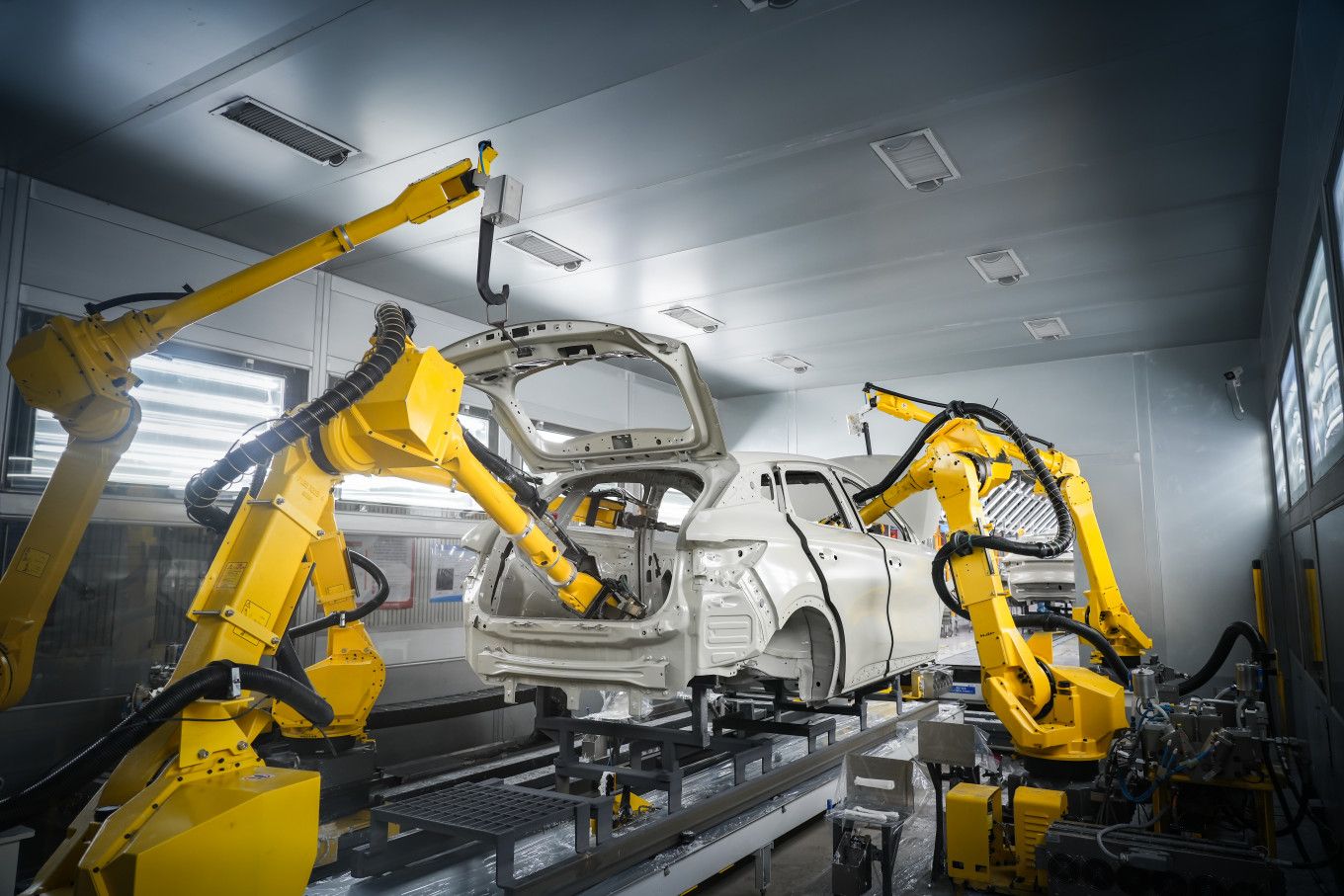
The company said operations at the 126-hectare site would go beyond vehicle assembly to include stamping, welding and painting. It is also preparing battery-related assembly activities in Indonesia.
Zhao said BYD also intended to use the facility as an export hub for Southeast Asia, though the company gave no timeline or targets for regional export volumes.
"We are also willing to use this facility as our exportation hub as well. Building in Indonesia for Indonesia, exporting for Indonesia as well,"
Investment, jobs and models
Antara reported the investment in the plant at Rp11.7 trillion, although reported figures vary slightly between outlets. BYD vice president Liu Xueliang said the plant employs 5,000 local workers and plans to expand the workforce to 20,000 at full capacity.
The first model to come off the line was the M6 DM plug-in hybrid MPV. CNN Indonesia reported that it carries local content above 40 percent. Tempo lists the plant's models as the Atto 1, M6, M6 DM and the premium Denza D9.
Policy shift behind the move
The move follows a change in Indonesian incentive policy. Until 31 December 2025, imported fully built-up battery EVs were exempt from import duty, which is normally 50 percent, according to the Coordinating Minister for Economic Affairs as cited by the Institute for Essential Services Reform (IESR). Companies received the benefit by committing to produce locally the same number of vehicles they imported. Six firms, including BYD and VinFast, took part in the scheme.
The Industry Ministry stopped issuing import permits under the scheme from 2026, and participating automakers must fulfil their local production commitments between 1 January 2026 and 31 December 2027.
At the Subang inauguration, Industry Minister Agus Gumiwang Kartasasmita said the government had begun studying a plan to link EV incentives to the TKDN level.
A fast-growing market
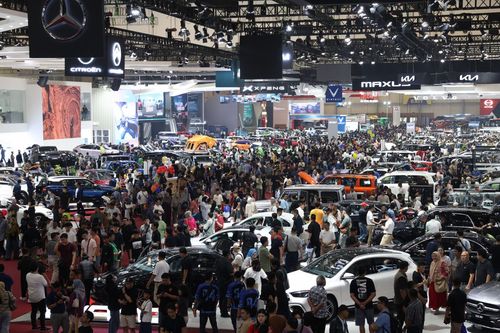
Demand has grown quickly. Data from the Indonesian Automobile Industry Association (Gaikindo) show EV sales rising from 10,327 units in 2022 to 17,051 in 2023, 43,188 in 2024 and 103,931 in 2025.
BYD led the battery-electric car market in the first quarter of 2026 with 12,473 wholesale units, or 38 percent of the 33,150 battery EVs sold at wholesale, according to Gaikindo data compiled by Databoks Katadata. Jaecoo was second with 24 percent. These figures cover factory-to-dealer shipments rather than retail sales.
BYD said its Indonesian EV sales for January to September 2026 reached 46,700 units. Gaikindo recorded 679,020 total vehicle sales in the period, of which 16.8 percent were pure battery EVs.
Wider localisation and industry concerns
BYD is not the only foreign EV maker building in Subang. VinFast opened its own plant there on 15 December 2025, on a 171-hectare site being developed in phases with total investment the company puts at more than US$1 billion.
The rising local content requirement has drawn concern from some industry players. In September 2026, Japanese automakers and suppliers, including Toyota Motor Manufacturing Indonesia, Denso, Aisin and Advics, raised worries about the rules, according to The Star of Malaysia. The report cited a source as saying integration of EV makers with local supply chains remains limited, even though many companies report reaching the mandated levels.