Inflation will shape the path after December
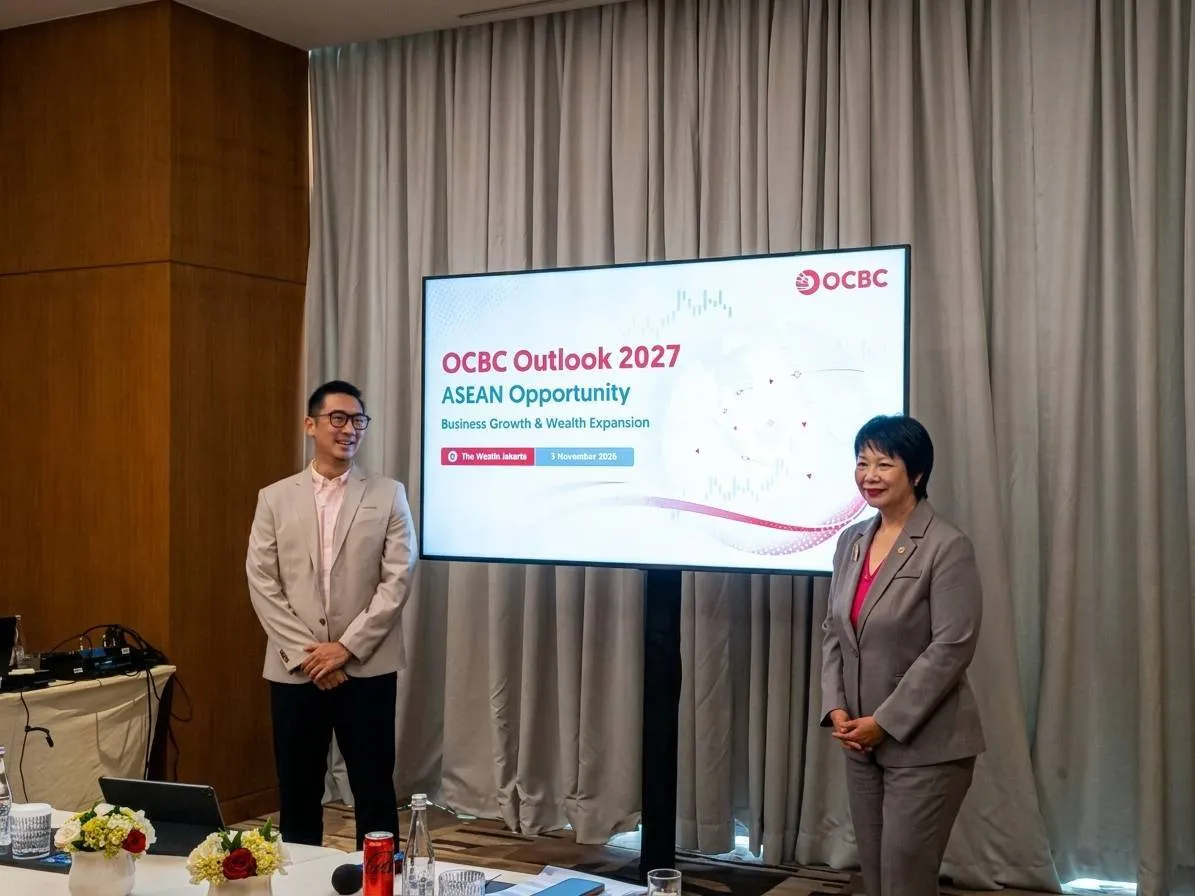
Speaking at an OCBC media briefing on Tuesday, November 3, Ling urged investors to track US inflation. She said it would determine how long rates remain high, with implications for capital flows, currencies such as the rupiah, and borrowing costs for households and businesses.
Ling said markets see a possible quarter-point increase at the Fed's December meeting, but subsequent decisions will depend on inflation. OCBC Group Research's October 15 US CPI review forecast one more 25-basis-point hike in December, taking the federal funds rate to 4.00%-4.25%. At the time of that report, the research team also expected the Fed to leave rates unchanged at its October meeting.
The December forecast would follow a September increase. According to OCBC's October 2026 Global Outlook, the Federal Open Market Committee raised its target range by 25 basis points to 3.75%-4.00% that month.
The same outlook described revisions to the Fed's September projections: median US GDP growth for 2026 rose from 2.2% to 2.3%, while projected unemployment fell from 4.3% to 4.1%. The Fed raised its headline PCE inflation forecast to 3.7% and its core PCE forecast to 3.4%, alongside a median year-end policy rate projection of 4.1%.
Indonesia's reserves, currency and capital flows
For Indonesia, Ling cited adequate foreign exchange reserves as a source of economic resilience. She also said fiscal discipline and the government's ability to preserve macroeconomic stability were essential to investor confidence during periods of global volatility.
Bank Indonesia's October 7 report put reserves at $146.3 billion at the end of September 2026, little changed from $146.5 billion a month earlier. The September total covered 5.3 months of imports, or 5.2 months when government external debt servicing was included.
The central bank said government foreign loan withdrawals and tax and services receipts were the main contributors to the reserve position, alongside payments on maturing government external debt and measures to stabilize the rupiah.
On October 20, the rupiah stood at Rp17,985 per US dollar, a point-to-point depreciation of 0.61% from the end of September, Bank Indonesia reported. It attributed the movement to escalating Middle East tensions, tighter US monetary policy and foreign investor sentiment in the stock market.
Portfolio flows differed across asset types. Bank Indonesia reported fourth-quarter net foreign portfolio inflows of $0.66 billion through October 19, following net outflows of $0.08 billion in the third quarter. Foreign investors continued to withdraw from equities in October, while Bank Indonesia Rupiah Securities, or SRBI, and government securities attracted inflows.
At its October 20-21 meeting, the central bank's Board of Governors kept the BI-Rate at 5.75% and the Lending Facility rate at 6.50%, but increased the Deposit Facility rate to 5.00%. It also announced a two-step reduction in the reserve requirement for conventional commercial banks, from 9% to 7%, with effective dates of November 1 and December 1, 2026.
Bank Indonesia forecasts Indonesian economic growth of 4.9%-5.7% in 2026. Its global outlook is for growth to remain weak at around 3.0%, with inflation of approximately 4.6%.
Managing overlapping investment risks
Interest rates are not the only concern Ling identified. She said investors should monitor conflicts in the Middle East and Ukraine, where prolonged fighting could sustain high energy prices and add uncertainty to global supply chains. Investors need to prepare for several risks materializing together, she said, describing that situation as a polycrisis.
Her advice was to retain enough liquidity for future needs and spread investments across asset classes, sectors, markets and currencies to limit concentration risk while preserving flexibility.
"Investors need to remain flexible, maintain sufficient liquidity for future needs, while continuing to invest and seek opportunities," she said.
Ling cautioned against letting short-term market swings drive investment decisions. Instead, she said, investors should maintain a long-term strategy and set portfolio allocations according to their financial goals, tolerance for risk and investment horizon.
Business preparations and exposure to AI investment
Ling also called on businesses to review their suppliers, sales markets and business partners as part of efforts to make supply chains more resilient. In her view, relying only on just-in-time delivery is no longer sufficient: companies also need just-in-case arrangements that provide alternative sources of supply if disruptions occur.
Another issue she highlighted was whether the artificial intelligence investment cycle can be sustained. Several Asian economies participate in the semiconductor, data center and cloud computing supply chains serving the global AI industry. Ling warned that slower investment in those sectors could affect growth, revenue and job creation in countries that depend on those supply chains.