Airport corridor targeted for congestion relief
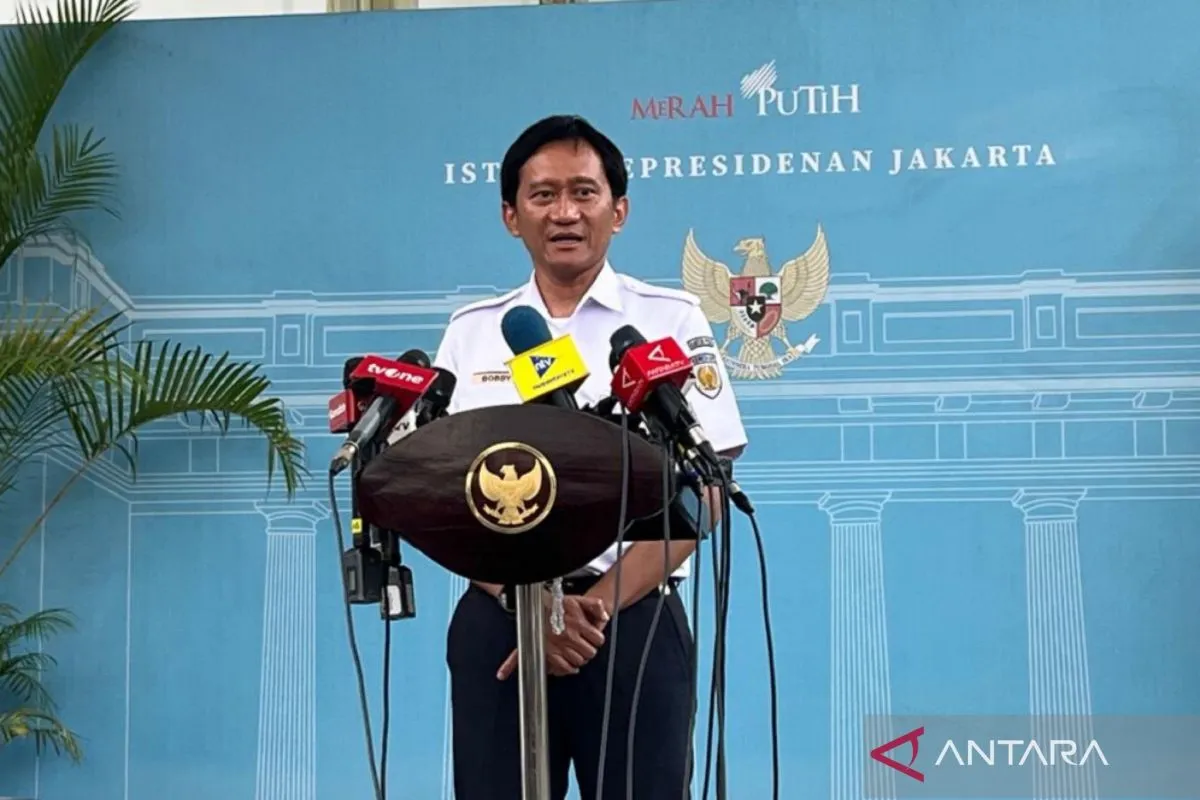
Rasyidin outlined the allocation after meeting President Prabowo Subianto at the Presidential Palace Complex in Jakarta on November 5. The two-stage route would start at I Gusti Ngurah Rai International Airport, reach Legian and then continue to Canggu.
The Bali provincial government, Badung Regency Government and KAI signed an agreement on September 1 to develop the battery-powered tram. They intend it to relieve congestion and support tourism on a corridor that handles as many as 150,000 people and 80,000 vehicles a day.
At the signing in Bali, Governor Wayan Koster described a 12-kilometer line whose planning would account for tourists, hotels and other accommodations, attractions, residential areas, local communities and environmental concerns. "Tourist comfort must be maintained. This tram is expected to become a new attraction for Bali tourism," he said.
Koster also said Bali's ecosystem must not be sacrificed for infrastructure. "Transport infrastructure development must respect Bali's unique character, preserve its natural beauty, support tourism, and avoid disrupting local communities," he said.
How the project and funding plans developed
The tram follows an earlier mass rapid transit (MRT) proposal that broke ground in 2024 but did not draw sufficient investor interest. In an August 11 report by The Star, carrying The Jakarta Post/ANN reporting, Koster described its replacement as an autonomous rail rapid transit (ART) system that would fit into existing road networks rather than require extensive underground tunneling.
Koster's August cost estimate was Rp2.2 trillion (about US$123 million), comprising Rp1.2 trillion for the first phase and Rp1 trillion for the second. That estimate preceded Rasyidin's November announcement of an approximately Rp2 trillion government allocation.
Financing was still unresolved in August, when Bali Transportation Agency head Kadek Mudarta said the feasibility study had not begun. According to Mudarta, the study would establish the investment required for rolling stock, infrastructure and operating costs.
Earlier schedules and operating projections
Before Rasyidin's two-year construction estimate, published plans had set out different route lengths and opening dates. Badung Regency planning reported by KF Map on September 1 described a 13.1-kilometer line: a 6.6-kilometer airport-Legian section, designated Phase 1A, and a 6.5-kilometer Legian-Canggu extension, Phase 1B. Those figures differed from Koster's description of a 12-kilometer line.
The Badung plan targeted service on Phase 1A in the fourth quarter of 2028 and Phase 1B in the first quarter of 2031, with the feasibility study due by March 2027. A separate September 23 report by TravelDailyNews Asia-Pacific cited the provincial government's preliminary March 2027 groundbreaking target, a first-section opening in 2028 and completion and operation of the full route to Canggu in 2029.
Preliminary projections reported in September by TravelDailyNews Asia-Pacific put potential ridership at about 60,000 passengers a day once the system is fully operating. The service was being designed for roughly 10-minute intervals and an airport-to-Canggu trip of about 30 minutes.
Road widening and a parallel sea route
Badung's preparations also include plans to widen key roads to 24 meters and reserve lanes for trams traveling at up to 40 kilometers per hour. The Star's August 11 report said the administration had allocated Rp980 billion for land acquisition along a proposed 20-kilometer corridor over 2027-2029.
Bali is also planning an airport-Canggu water taxi, according to the same report. Officials said a sea connection could shorten a road journey of one to two hours to about 30 minutes. The construction schedule cited at the time ran from August 2026 through July 2027.
Gambir Station also discussed at palace meeting
Rasyidin and Prabowo also discussed accelerating a separate Rp2 trillion project to revitalize Jakarta's Gambir Station, with completion targeted for 2028. The work would encompass both the station and Monas Park as part of an integrated National Monument area.
The Gambir project also aims to improve connections with other transportation modes, including a link between the eastern corridor around the station and the Jakarta MRT network in the western corridor.