Economic secrets and digital surveillance
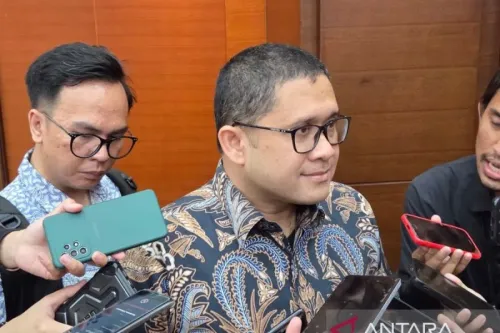
Speaking in Jakarta on November 4, Edy Prasetyono, executive director of the University of Indonesia's ASEAN Study Center, said Indonesia's geography and valuable economic information make it a target for espionage. Access to its commercial and industrial secrets could give foreign countries a strategic or economic advantage, he said, according to ANTARA.
"Indonesia is highly vulnerable to espionage because of its strategic geographic position. Trade and industrial secrets that give a country an advantage will certainly be targets. We therefore need a more comprehensive framework," he said.
Edy called for rules that clearly define espionage involving military, political and economic information. Ardi Sutedja, chairman of the Indonesia Cyber Security Forum, said the Criminal Code's definition should also account for digital technology, which has changed surveillance tools and accelerated data collection.
Ardi said the digitization of critical economic, social and cultural information makes it easier to acquire while making theft harder to detect. He called for stronger cybersecurity capabilities and laws that keep pace with technological advances. In the broader debate over espionage and cyber resilience, he has cited the National Cyber and Crypto Agency's report of more than 5.5 billion cyber attacks or anomalies in Indonesia in 2025.
Police allegations in the wiretapping case
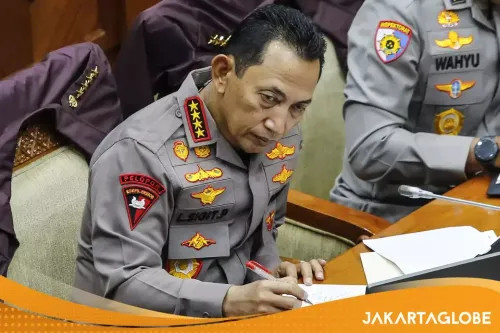
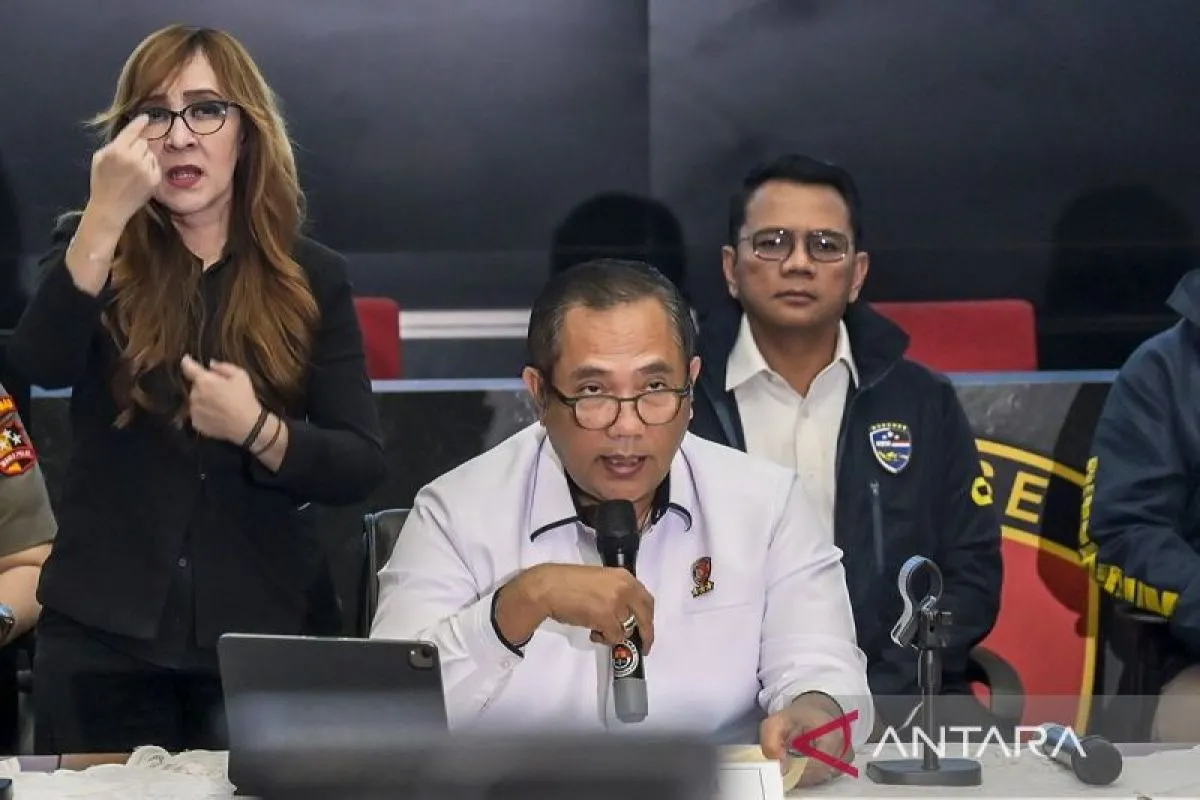
The National Police named three suspects, identified as LSP, ASN and EH, on November 3, 2026. Police accused them of intercepting numbers belonging to Prabowo, state officials, political figures, media representatives, civic group leaders, nongovernmental organizations and businesspeople.
According to police, the suspects ordered interceptions during 2025 and 2026 without formal requests from investigators. Numbers were entered into the Lawful Interception Management System, or LIMS, without verification. Police also alleged that the suspects deleted intercepted-communication files from the system in October 2026 to hide evidence.
The suspects face charges under Articles 258 and 332 of Law No. 1/2023, the Criminal Code, as well as Article 32(1) of the Electronic Information and Transactions Law. The Article 258 charge carries a maximum prison term of 10 years; the electronic-information charge carries up to eight years.
Enforcement powers and gaps in the law
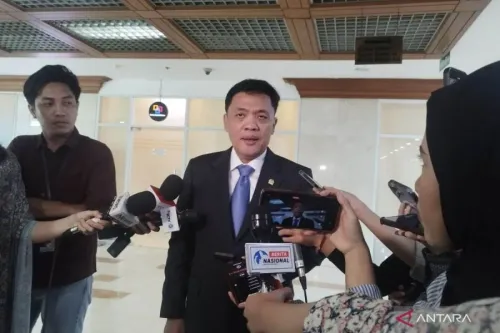
TB Hasanuddin, a member of the House of Representatives' Commission I, outlined two possible responses: enforce current laws more effectively or create a dedicated anti-espionage law. He said espionage encompasses the collection of ideological, political and economic information, and noted that Indonesia also carries out intelligence operations overseas.
Hasanuddin said the State Intelligence Agency, known as BIN, has restricted powers: it cannot pursue further criminal investigations or make arrests.
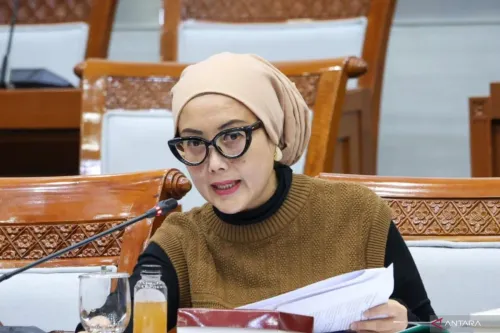
Commission I member Nurul Qomaril Arifin has described the existing legal provisions as fragmented across sectors. According to Nurul, the Criminal Code, Law No. 17 of 2011 on State Intelligence and the Electronic Information and Transactions Law No. 1/2024 do not comprehensively define espionage, counter-espionage, foreign agents, cyber espionage or foreign interference.
Calls for new regulation predate the wiretapping case. On August 27, 2026, BIN chief M. Herindra said Indonesia had become a target of foreign espionage and described such operations as taking place in a "gray area." He urged new rules at a Jakarta seminar organized by the ASEAN Study Center at the University of Indonesia's Faculty of Social and Political Sciences. The seminar was titled "Sovereignty on the Front Line: Strengthening National Strategies to Counter Espionage and Foreign Interventions."
Intelligence and strategic affairs analyst Muhammad Arbani argued on September 1 that Indonesia may need a dedicated law on espionage and foreign interference. He said it should address unlawful collection of strategic information, recruitment of agents, ties to foreign principals, influence operations and digital espionage, while safeguarding democracy, civil liberties, journalism and legitimate academic work.
Legislative discussions and foreign examples
In August 2026, Nurul said a bill on espionage and foreign intervention was under discussion as a proposal, but the House would first need to coordinate to secure its consideration in 2027. At the time, proposals for the 2027 National Legislation Program were due to be finalized in October 2026.
Nurul said at least 14 countries already had anti-espionage laws. Potential examples for Indonesia included the United States' Espionage Act of 1917, the United Kingdom's National Security Act 2023 and Australia's Espionage and Foreign Interference Act 2018. Any lessons drawn from those laws would need to be adapted to Indonesia's national interests, Nurul said.
Japan has also featured as a comparison in the Indonesian debate. It approved a new National Intelligence Bureau at the end of July 2026, with an initial staff of 730 and accountability to a National Intelligence Council chaired by the prime minister. The enabling bill was introduced in March 2026 and passed within about two months.