Minister highlights BPSDM role in Golden Indonesia push
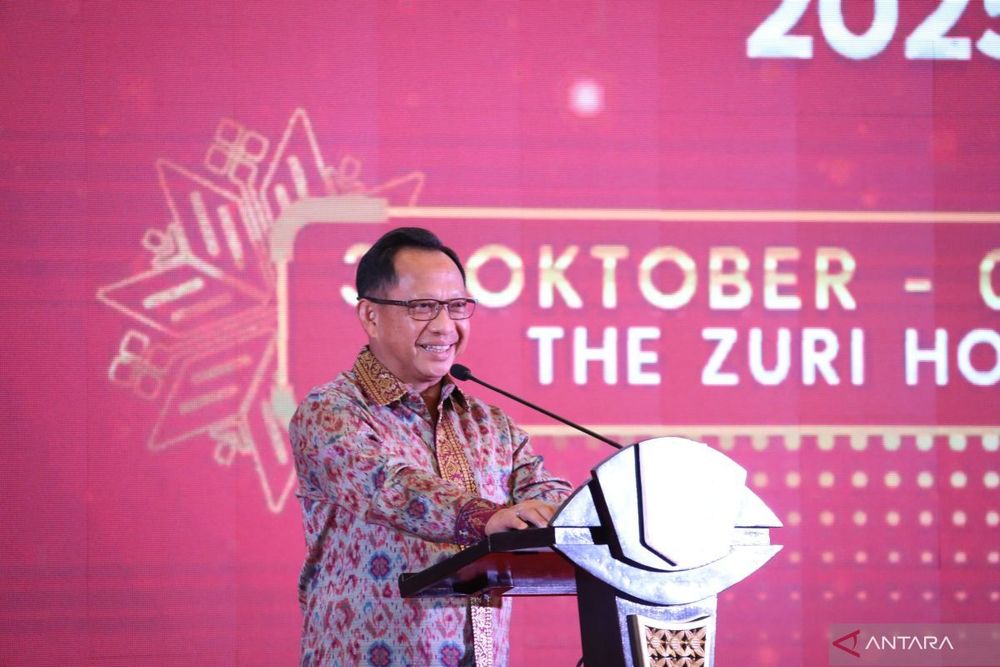
Home Affairs Minister Tito Karnavian addressed the crucial role of human resource development agencies across Indonesia's government ministries in achieving the country's ambitious Golden Indonesia 2045 vision during a national coordination meeting in Palembang, South Sumatra, on Friday.
Speaking at the gathering themed "Collaboration of Quality State Civil Apparatus in Realizing National and Regional Visions," Karnavian instructed civil servants to deepen their understanding of the national development plan and actively contribute to its realization through improved workforce quality and sector-wide innovation.
"Golden Indonesia is possible to achieve. The population will be dominated by the middle class. Thus, I want to highlight the significant role of human resources in achieving the Golden Indonesia vision," the minister stated.
The Golden Indonesia 2045 Vision
The Golden Indonesia 2045 Vision, formally established through Law No. 59 of 2024 concerning the National Long-Term Development Plan for 2025-2045, sets forth an ambitious roadmap for the nation's transformation. Formulated by the Ministry of National Development Planning (Bappenas), the vision rests on four foundational pillars:
- human development and mastery of science and technology
- sustainable economic development
- equitable development
- strengthened national resilience and governance
International financial institutions including the World Bank, International Monetary Fund, McKinsey, and Global Insight project Indonesia could rank as the world's fourth or fifth largest economy by 2045, potentially surpassing developed nations such as Japan, Russia, Germany, the United Kingdom, Italy, and France. Some projections suggest Indonesia could join the elite tier of global economic powers alongside China, India, and the United States.
"Golden Indonesia is projected by futurists who look at the development trends in Indonesia as well as the existing global developments," Karnavian explained.
Middle class expansion targets
The vision envisions Indonesia as a developed nation where a prosperous middle class forms the demographic majority. According to Bappenas, achieving high-income country status by 2045 requires growing the middle class to comprise 70 percent of the population. This represents a substantial challenge, as current statistics show the middle class comprises only 17.1 percent of the population, having declined from 22.5 percent in 2018.
To realize these ambitious goals, Indonesia aims to raise its gross national income per capita to between USD 23,000 and USD 30,300 by 2045, which would qualify the nation as a high-income country by World Bank standards. The government targets an annual GDP growth rate of 8 percent by 2028 to maintain the trajectory toward this milestone. Currently, Indonesia's economy stands at approximately USD 1.54 trillion, ranking 17th globally, with growth of 5.0 percent recorded in the first half of 2025.
Under the Golden Indonesia framework, citizens are expected to enjoy comfortable living standards with access to housing, vehicles, quality education for their children, and opportunities for international travel.
Human resource development as key driver
Karnavian, who has served as Home Affairs Minister since October 2019 and previously led the Indonesian National Police from 2016 to 2019, expressed confidence in achieving the vision through systematic and sustained efforts to enhance human resource quality.
The minister emphasized that agents of change within government ministries and educational institutions, spanning from basic education through higher learning, serve as primary drivers in elevating Indonesia's human capital. The Human Resources Development Agency (BPSDM), which operates across multiple government ministries including Energy and Mineral Resources, Public Works, and Home Affairs, coordinates these efforts at both national and provincial levels.
The national coordination meeting brought together heads of BPSDMs from all provinces to align strategies and strengthen collaborative approaches in developing the state civil apparatus needed to implement both national and regional development visions.