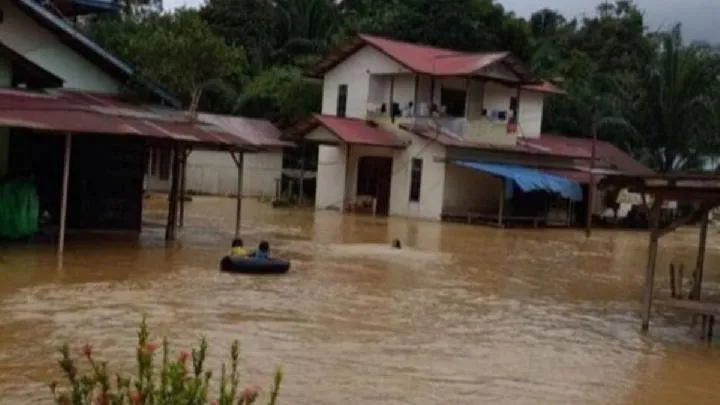
Floodwaters recede as response post is established
A gubernatorial decree formalized the alert, Berton Panjaitan, acting head of BNPB's Disaster Data, Information, and Communication Center, said in Jakarta on November 23, 2026. Authorities are also establishing a command post for a disaster response task force.
BNPB's Directorate of Operations Control attributed the flooding to heavy rain on November 21. Its assessment counted 33 inundated villages in four subdistricts, with 11,113 families affected.
By November 23, water levels were falling and vehicles could again use major roads, Panjaitan said. He did not say whether residents had left their homes. He urged them to remain ready to evacuate, put their safety first and leave immediately if the water rose again.
AHA Centre reports damage to homes
The AHA Centre's ASEAN Disaster Information Network (ADINet) also counted 11,113 affected houses, alongside 11,113 families totaling 28,875 people. Its report, dated November 19, 2026, recorded no deaths, missing people, injuries or internally displaced people.
A separate AHA Centre publication, the ASEAN Weekly Disaster Update for November 16-22, described rivers overflowing across seven districts in Kapuas Hulu. Its figures, current as of 12:30 a.m. UTC+7 on November 23, put the toll at about 11,100 families, 28,900 people and 11,100 houses. It also identified West Kalimantan as one of the provinces under alert for hydrometeorological disasters.
Recurring floods and heavier rain ahead
BNPB had called on West Kalimantan to bolster preparations after a November 19 warning of possible heavy to extreme rainfall. The agency links the province's recurring November floods to intense rain and deteriorating water catchment areas.
For 2021-2025, BNPB reported an annual average of three to four flood events in the province. Kapuas Hulu, Bengkayang, Ketapang, Landak, Melawi and Sambas are among the districts most frequently affected in November.
A broader tally of rain-related disasters, cited by ANTARA from BNPB data, averaged 47 events a year over the same period, including floods, landslides and extreme weather. Annual totals reached 59 in 2024 before dropping to 27 in 2025. Floods accounted for 203 incidents, or 86 percent of the total, and occurred mainly in the first and fourth quarters.
Panjaitan also cautioned that recent forest and land fires may have left soil less able to absorb and hold water, raising flood risks in the affected areas.
More heavy rain is forecast for December. Indonesia's Meteorology, Climatology and Geophysics Agency (BMKG) projects that the proportion of Indonesian regions receiving high to very high rainfall will increase from 22.48 percent in November 2026 to 57.56 percent in December. According to Kompas.com, the agency expects parts of West Kalimantan to receive more than 500 millimeters of rain during December, a level classified as extremely high.