More flights planned as heavy rain threatens
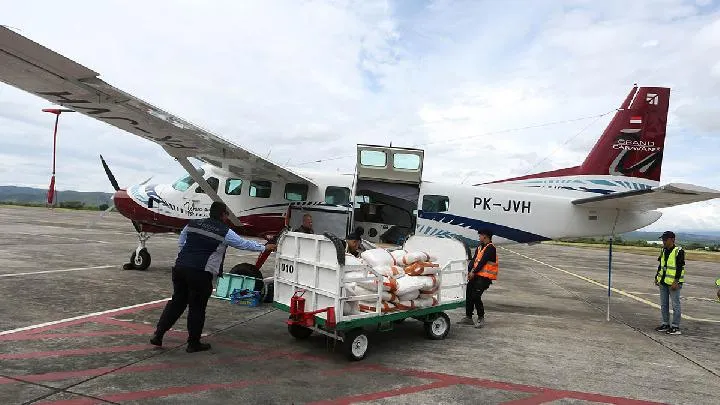
The Aceh operation began Thursday with a Cessna Caravan PK-SNK flying from Sultan Iskandar Muda Airport. Berton Panjaitan, acting head of BNPB's disaster data, information and communication center, announced the planned military reinforcement Friday, according to Antara.
Saturday's early warning forecast rainfall ranging from moderate to very heavy in six districts: Southwest Aceh, Aceh Besar, Central Aceh, Southeast Aceh, Gayo Lues, and Nagan Raya. The warning identified a risk of weather-related disasters.
Panjaitan said the flights were expected to substantially reduce heavy rainfall and the danger of additional flooding. He also said the operation's prospects were improving as Tropical Cyclone Avkan and Cyclone 96S moved away from Indonesian waters near Aceh.
The deployment follows requests from regional leaders. On Nov. 16, 2026, BNPB chief Lieutenant General Kristomei Sianturi said the agency had proposed weather modification in three Sumatra provinces, with Aceh's administration submitting the first request. President Prabowo Subianto had instructed BMKG, BNPB, and other relevant agencies to carry out operations in disaster-affected parts of Sumatra.
Flooding compounds an unfinished recovery
By Monday, flooding had affected about 10,000 families in Aceh Tamiang, Aceh Singkil, South Aceh, and Subulussalam, according to BNPB. Prolonged, extremely heavy rain in mid-November pushed rivers over their banks.
The latest flooding has drawn central government attention while Aceh is still rebuilding homes and infrastructure damaged by the flash floods and landslides that Cyclone Senyar triggered in November 2025.
Across Aceh, North Sumatra, and West Sumatra, the late-November 2025 floods and landslides killed 1,200 people, left 143 missing, and displaced approximately 113,900, according to BNPB's records as of Jan. 21, 2026.
Disasters continued in the affected areas during the following year. Home Affairs Minister Tito Karnavian, who leads the Sumatra Post-Disaster Rehabilitation and Reconstruction Acceleration Task Force, reported 41 subsequent disasters across the three provinces between April and November 2026.
Cloud seeding reduces rainfall rather than stopping it
Weather modification depends on clouds already being present; it cannot produce rain from a cloudless sky, according to the National Research and Innovation Agency (BRIN). Aircraft seed existing rain clouds with salt, or sodium chloride (NaCl), to prompt rainfall outside the area being protected, reducing the intensity of rain over that area.
BNPB has stressed that the process "does not mean stopping rainfall altogether." Its aim is to redistribute rainfall, bringing moderate or heavy rain down to light or moderate levels.
The agency also said it was speeding up river rehabilitation in flood-prone parts of Aceh. Accumulating sediment and shallow riverbeds can allow rivers to overflow even when rainfall is only light to moderate.
Earlier operations and the program's origins
BNPB's figures as of Jan. 20, 2026, show the scale of earlier cloud-seeding operations in Sumatra. Aceh had logged 507 sorties and used 484,600 kilograms of seeding material. North Sumatra had flown 390 sorties using 342,600 kilograms, while West Sumatra had recorded 407 sorties using 404,325 kilograms.
Indonesia's program began as an artificial-rain pilot in 1977, BRIN says. Then-President Soeharto sent B.J. Habibie to study the technology, and Thailand's Royal Rainmaking program assisted the pilot.
The Agency for the Assessment and Application of Technology (BPPT) was established in 1978 to house the project. In 2015, the program formally adopted the term "Weather Modification Technology," or TMC, according to BRIN.