Trump unveils unprecedented deal granting US majority control of Venezuelan oil reserves
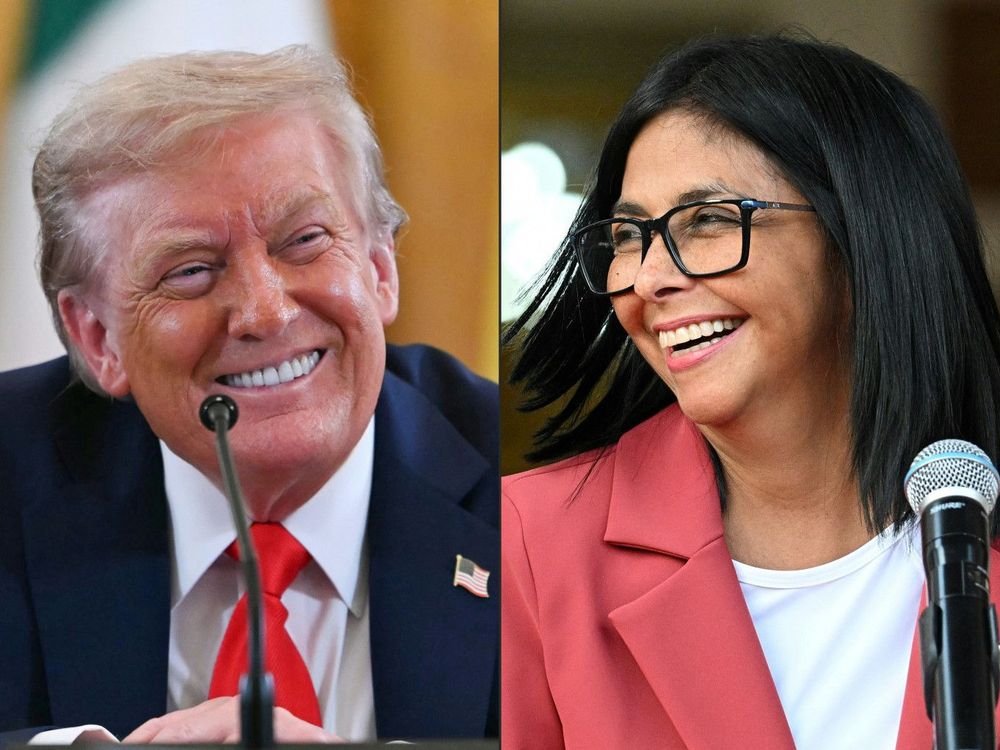
President Donald Trump announced Friday that his administration has secured an unprecedented oil agreement with Venezuela, granting the United States majority control of 65 billion barrels of proven petroleum reserves in what Trump described as "the biggest oil deal in world history."
The agreement will attract nearly $100 billion in private investment to Venezuela, according to US and Venezuelan officials, and represents an unconventional transfer of sovereign oil assets from one nation to another.
Venezuela possesses the world's largest proven oil reserves, estimated at approximately 303.8 billion barrels. The country's interim leader, Delcy Rodriguez, who has governed under close US supervision since the Trump administration ousted longtime ruler Nicolas Maduro in January, confirmed the "historic agreement" would "have a significant impact on the rebirth of our nation."
Writing on social media, Rodriguez highlighted potential investment exceeding $100 billion and more than $209 billion in tax revenue for the Venezuelan state. Trump emphasized that Secretary of State Marco Rubio and Defense Secretary Pete Hegseth negotiated the deal "through a partnership with private business," adding that the transaction would "greatly strengthen the already growing relationship between Venezuela and the United States."
Strategic implications for US energy security
The deal addresses a key Trump administration priority as the US Strategic Petroleum Reserve currently sits at approximately 363 million barrels, down from its historical peak of 726.6 million barrels in 2009—representing roughly a 50 percent decline. Trump stated the agreement will more than double US oil reserves at a time when high gasoline prices remain a major political concern ahead of November's midterm elections.
Rubio characterized the agreement as demonstrating "how President Trump's bold foreign policy is driving America First wins: securing stable reserves and low-cost oil in our Hemisphere and lowering gas prices here at home." For Venezuela, he said, the deal "will bring nearly $100 billion in private investment, support thousands of high-paying jobs, and drive the reconstruction of Venezuela's economy."
Unprecedented structure raises questions
Jorge Pinon, a senior researcher at the Energy Institute at the University of Texas at Austin, noted the agreement's unconventional nature, with many questions remaining about how oil assets would be transferred "not to a private enterprise, but to another country." He questioned whether the arrangement constitutes a sale, title transfer, or conditional ownership tied to actual production.
The news site Axios reported Thursday that negotiations centered on a dozen productive oil fields containing 90 billion barrels of proven reserves—approximately one-third of Venezuela's total 300 billion barrel reserve base, much of it concentrated in the vast Orinoco Oil Belt. In exchange for US ownership stakes, private companies, including American firms, would develop the fields and return increased oil revenue to Venezuela.
Rebuilding a collapsed industry
Venezuela's oil sector has experienced catastrophic decline, with production plummeting from over 3 million barrels per day in the late 1990s to around 700,000-800,000 barrels per day by 2020-2021—a roughly 75 percent collapse attributed to underinvestment, mismanagement, and sanctions. The state oil company PDVSA, once ranked among the world's most powerful petroleum producers, saw its operations deteriorate dramatically.
The Trump administration has actively encouraged US companies to invest in Venezuela, though firms remain cautious due to dilapidated infrastructure and the history of asset expropriation. Between 2007 and 2009, major oil companies including ExxonMobil and ConocoPhillips had their Venezuelan assets seized under the Chávez government, leading to billions of dollars in unresolved arbitration claims that continue to make investors wary.
Chevron, which received a limited license from the US Treasury Department in November 2022 to resume operations as the only major US oil company still active in Venezuela, reported in July that it had increased daily crude production to 280,000 barrels and plans to boost output by 50 percent by the end of 2028.
Technical and security challenges ahead
Venezuela's petroleum reserves consist predominantly of heavy and extra-heavy crude grades, particularly from the Orinoco Oil Belt, which requires specialized refining infrastructure and is more expensive to process than lighter crude oils. This technical reality adds complexity and cost to development plans.
John Kilduff, an energy expert at Again Capital, identified the safety and security of investments as the primary obstacle for companies operating in Venezuela. He suggested that if the US now controls or owns the oil fields, the goal would be "to establish a sort of state zone where US companies can go in, operate, and not be impacted, and hopefully eliminate the political risk that otherwise goes with investing in Venezuela."
The agreement marks a historic reversal of the wave of oil nationalizations that swept through OPEC countries, including Venezuela, during the 1970s, when producer nations asserted sovereign control over petroleum resources within their borders.