Indonesia's rush to become AI data center hub threatens power grid and water supply without stricter safeguards
Indonesia's bid to establish itself as a major artificial intelligence data center hub in Asia is accelerating rapidly, but the nation's infrastructure faces mounting pressure from power demands, water consumption, and regulatory enforcement gaps that threaten to derail sustainable growth.
The expansion is dramatic: Indonesia's data center capacity is projected to reach between 1.65 and 1.7 gigawatts by the end of 2026, nearly tripling from approximately 600-650 megawatts in the first half of the year. As of September 2026, 159 data center customers were already consuming 2,378 gigawatt-hours of electricity, with 99 percent of that capacity concentrated in the Java-Madura-Bali electricity system.
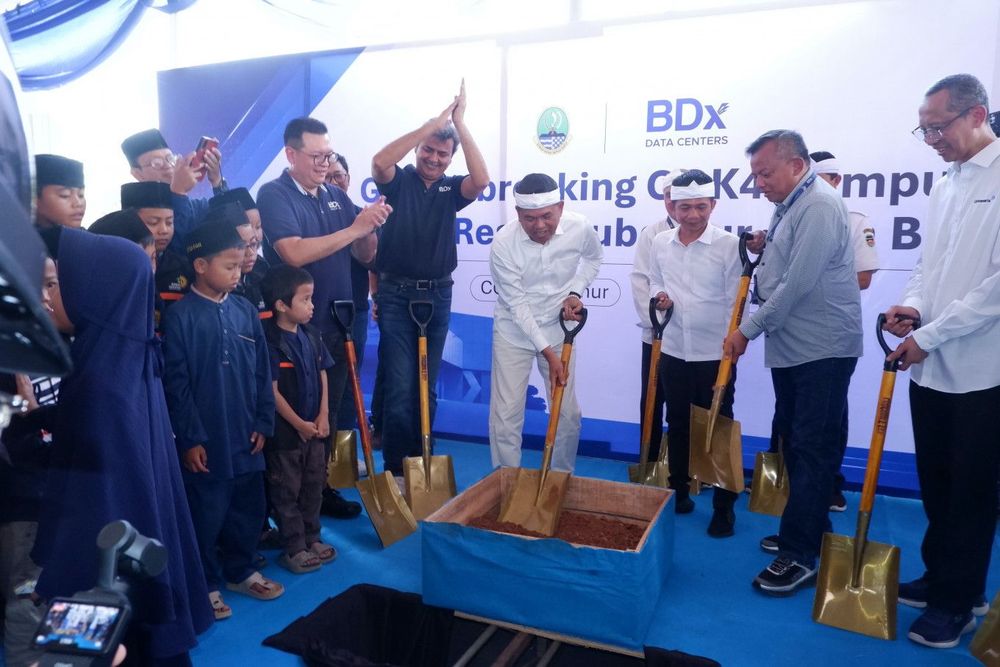
On Sept. 22, Singapore-based BDx Data Centers broke ground on a planned 640-megawatt AI campus in Jatiluhur, West Java, after securing 845 megavolt-amperes of grid capacity. The company's initial 120 MW facility is scheduled to go online in early 2027. Separately, CoreWeave announced on Aug. 4 three Indonesian facilities totaling 360 MW of contracted power, marking the company's first Asia-Pacific presence with sites expected online in 2028.
Other major players are following suit. Princeton Digital Group is investing USD 1 billion in a 120-240MW campus near Jakarta with its first phase targeted for Q4 2026, while EDGNEX is developing a 144MW AI-powered facility backed by USD 2.3 billion in investment.
The government continues to incentivize development outside Java under the 2026-2030 digital infrastructure road map led by the National Development Planning Agency. Yet the reality on the ground reveals significant obstacles to achieving these ambitions sustainably.
Coal dependency undermines clean energy claims
Indonesia's power grid remains heavily dependent on coal, which supplied approximately 65-68 percent of electricity generation as of 2026. This means data centers connecting to the national grid are primarily powered by coal, despite industry claims about pursuing renewable energy.
While Indonesia's renewable energy share in electricity generation reached 17.89-18.19 percent by April-December 2026, up from 15.75 percent in 2025, these gains remain heavily concentrated outside Java, where most data centers are located. In the Java-Bali system, renewables account for only 10.01 percent of generation compared to 70.99 percent from coal.
Second Deputy Higher Education Minister Stella Christie has highlighted Indonesia's substantial renewable energy potential as an engine for sustainable economic growth. However, theoretical capacity differs significantly from clean, reliable power delivered at competitive rates to operational sites.
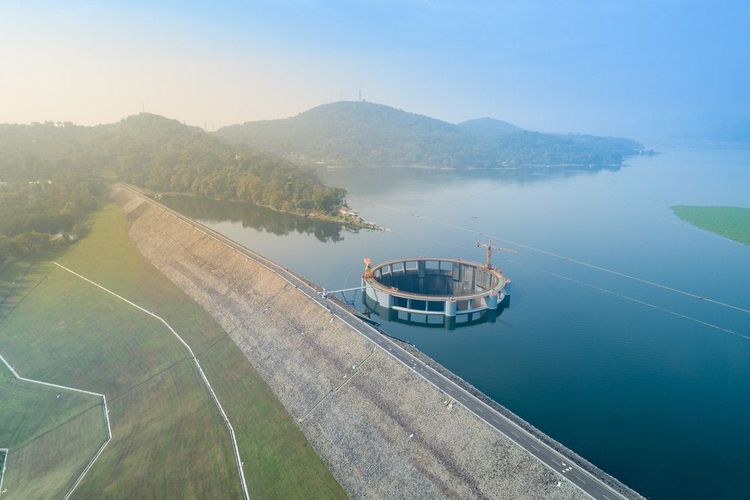
BDx's CGK4 campus, located approximately 5 kilometers from Jatiluhur Dam, represents one attempt to address this gap. The company announced plans to pursue a hydroelectric power arrangement with Perum Jasa Tirta for cleaner energy supply, though implementation timelines remain unclear.
Water consumption poses hidden threat
Beyond electricity, AI data centers present unprecedented water demands that have received less public scrutiny. A medium-sized data center consumes approximately 110 million gallons of water annually, equivalent to 300,000 gallons per day, while large hyperscale facilities can consume 1-5 million gallons daily for cooling purposes.
AI data centers intensify these demands further. These facilities typically support rack densities of 120-500 kilowatts per rack and use liquid cooling systems that can consume 0.26-2.4 gallons of water per kilowatt-hour of server energy for cooling, significantly higher than traditional data centers.
With Indonesia's data center capacity set to triple by year-end, the cumulative water footprint could strain local supplies, particularly in West Java where infrastructure is concentrating.
Regulatory enforcement gaps emerge
Recent developments have exposed weaknesses in regulatory oversight. On Sept. 30, West Java Governor Dedi Mulyadi ordered a halt to BDx's construction at the CGK4 campus, citing missing environmental impact assessment (AMDAL) and building approval (PBG) permits. This came despite the governor attending the project's groundbreaking ceremony on July 28.
The regulatory reversal highlights a critical gap between promotional enthusiasm for foreign investment and systematic enforcement of environmental and planning requirements before construction begins.
Path forward requires comprehensive framework
Expanding into AI-grade infrastructure introduces systemic demands that extend well beyond direct investment yields: regulatory readiness, grid decarbonization commitments, local technical capacity, and mitigation of unintended consequences from a resource-intensive industry.
The ambition to become an Asian digital hub remains credible. Expanding domestic compute capacity lowers latency, strengthens digital sovereignty, and directly underpins enterprise cloud adoption, academic research, and indigenous AI development. It can also catalyze capital inflows, cultivate specialized technical labor, and mature domestic supply chains.
However, given prevailing geopolitical and supply chain realities, the government must look beyond headline resource potential and address operational bottlenecks. Indonesia is no longer deciding whether to enter the data center market; it is already in it. The real decision is whether to scale into a regional AI hub, and on whose terms.
A comprehensive resource management framework is essential to ensure that rapid expansion does not compromise power grid stability, water security, or local communities. Without such safeguards, Indonesia risks building an industry that drains critical resources faster than it generates sustainable value.