Agencies press for coordinated monitoring
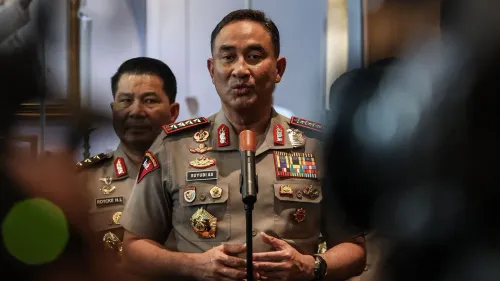
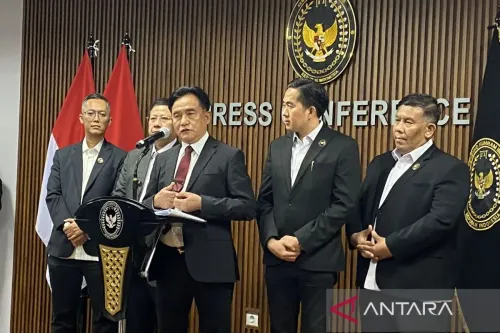
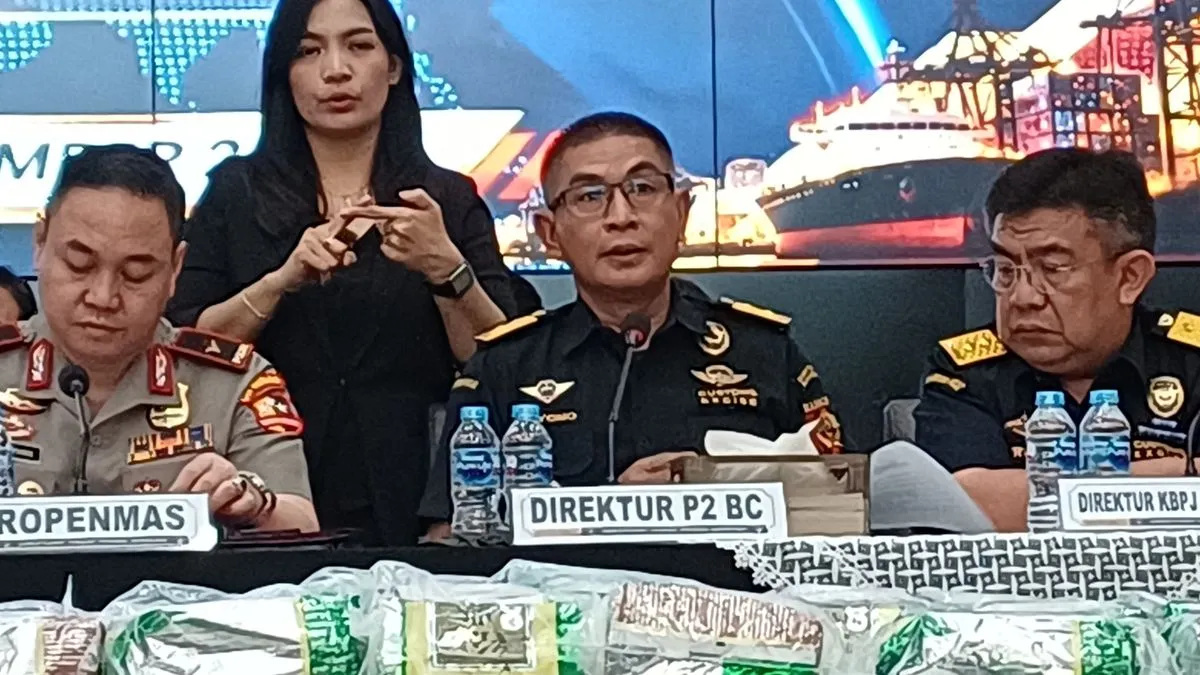
"The maritime routes are still one of the key entry points that are exploited by drug smuggling networks," said Priyono Triatmojo, Director of P2 at the Directorate General of Customs and Excise, during Monday's press conference at the National Police Criminal Investigation Agency, known as Bareskrim Polri.
Priyono said customs combines monitoring of sea and land routes as the scale of drug trafficking grows and smugglers diversify their methods. Effective oversight depends on coordination among agencies, he said, adding that Customs and Excise is ready to cooperate with the National Police, the National Narcotics Agency (BNN) and other relevant bodies.
BNN's Director of Narcotics, Brigadier General Robby Karya Adi, described narcotics offenses as extraordinary crimes committed by organized, transnational networks that continually adapt their methods. He called for intelligence sharing, joint operations and stronger monitoring of vulnerable locations on land, at sea and in the air to disrupt supply chains.
Robby said BNN continues to work with Bareskrim Polri and Customs and Excise against drug trafficking, with particular attention to the approaching year-end period.
Sumatra investigation yields five arrests
The Indonesia-Malaysia syndicate case announced on November 23 followed an investigation by Bareskrim Polri's Narcotics Crime Directorate into a network operating in Sumatra. According to RRI, investigators began work in early November, focusing on smuggling aboard vessels crossing international borders, and took enforcement action on November 13.
The case fell under the third target of Operation Sarang Narkoba, or Drug Nest Operation, a nationwide effort involving the National Police, BNN and other agencies.
Authorities arrested five men identified as RR, RA, AT, AN and SBD. Investigators identified RR, a former road racer from Pekanbaru in Riau, as a courier and trusted aide to A, a fugitive who controlled drug trafficking in Riau. AT allegedly received and counted items at a warehouse, AN coordinated land operations, and SBD served as the driver.
The Indonesian National Police's official news portal reported that officers recovered 378 packages totaling 378 kilograms of crystal methamphetamine, along with 200,252 ecstasy pills and 11,752 cartridges of etomidate liquid. They also seized eight mobile phones and two vehicles: a black Mitsubishi Pajero Sport and a black Daihatsu Terios.
Police put the narcotics' value at approximately 1 trillion rupiah, or about $61 million, and estimated that the seizure could spare around 2,689,358 people from drug abuse.
The five suspects face charges under Indonesia's Law Number 35 of 2009 on Narcotics: Article 114, Paragraph (2), read in conjunction with Article 132, Paragraph (1), and/or Article 119, Paragraph (2), read in conjunction with Article 132, Paragraph (1). Possible additional charges fall under Article 609, Paragraph (2), letters a and b, of Law Number 1 of 2023 on the Criminal Code, in conjunction with Law Number 1 of 2026 on Penal Adjustments. The potential penalties are death, life imprisonment or a prison term ranging from six to 20 years.
Earlier operations at sea and in Aceh
Other large seizures preceded the November case. In an operation announced on August 19, 2026, Indonesian authorities intercepted a ship off Sumatra carrying about 2.6 tons of liquid methamphetamine. They detained 10 Myanmar nationals suspected of links to an international trafficking network. Officials called it one of Indonesia's largest drug busts, AP News reported.
On October 20, police and customs intercepted the tanker MT Global 168 off Sumatra, according to The Diplomat. Officers found 1.16 tons of ketamine hydrochloride packed in 58 sacks, with an estimated value of 3.48 trillion rupiah, or about $210 million. The tanker sailed under Mongolia's flag and belonged to a company based in Johor Bahru, Malaysia.
A day later, Indonesian authorities working with China's National Narcotics Control Commission raided a clandestine laboratory in Pidie regency, Aceh. That operation resulted in the seizure of about 1.2 tons of liquid and crystal methamphetamine valued at roughly 2.16 trillion rupiah, or about $119 million. Eleven suspects were arrested, including two Chinese nationals.
Regional seizures and Indonesia's reported totals
The UN Office on Drugs and Crime noted growing use of maritime trafficking routes in its June 2026 annual report on Asia's synthetic drug market. It reported that East and Southeast Asian methamphetamine seizures reached a record 349 tons in 2025, up 48 percent from the previous record of 236 tons. Southeast Asia accounted for about 94 percent of those seizures. Ketamine seizures totaled 52.5 tons, an increase of 185 percent over 2024.
In Indonesia, the recorded high before the 2026 figures covered January through October 2025, Kompas.com reported. During that period, Bareskrim Polri and BNN seized 197 tons of narcotics evidence across 38,934 cases. The period's largest single methamphetamine seizure was a 2-ton shipment aboard the Sea Dragon Tawara, which was transporting drugs from the Golden Triangle region.
National Police Chief General Suyudi Ario Seto said on November 21, 2026, that police had seized more than 600 tons of various drugs during his nearly two months in office. He described the total as a possible national and world record and estimated its economic value at hundreds of trillions of rupiah.
Suyudi said President Prabowo Subianto was scheduled to attend an event on November 25 to destroy the 600 tons of seized drugs.