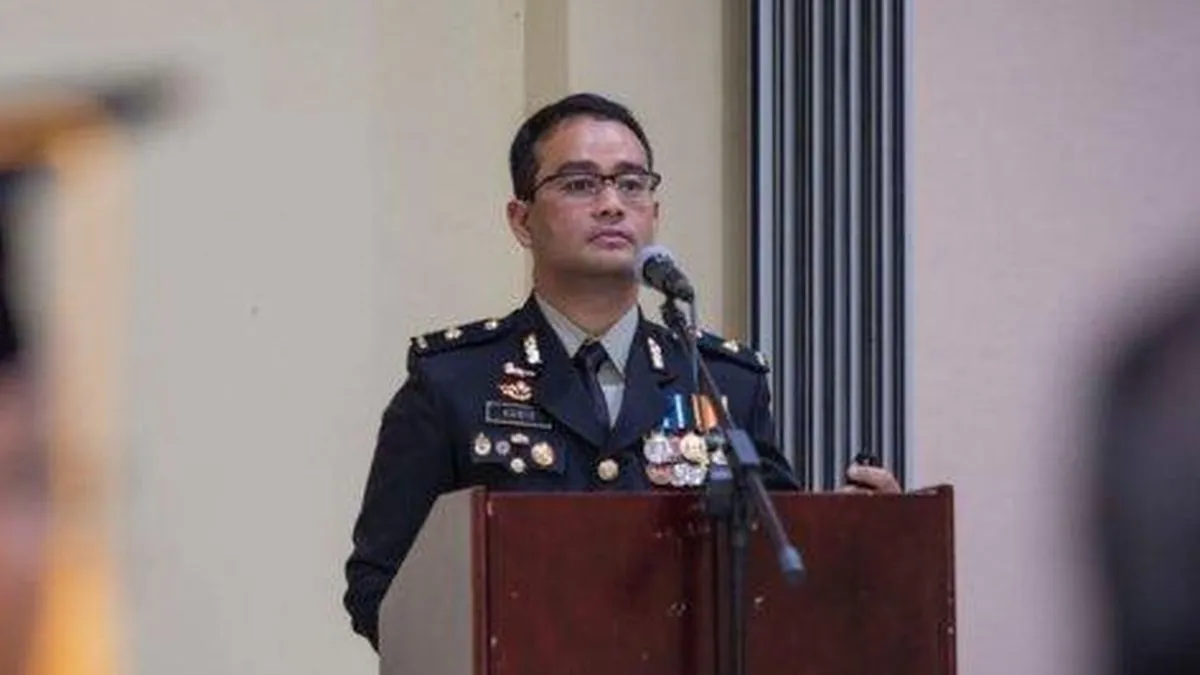
Ethics ruling and appeal
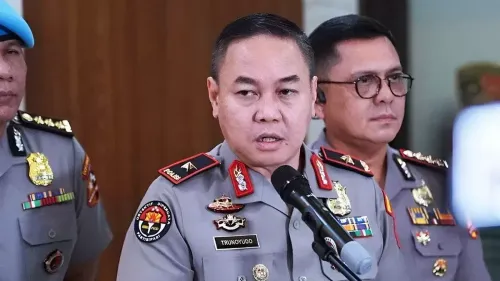
Police public relations chief Irjen Pol Johnny Eddizon Isir announced the decision at the Propam building in South Jakarta. He said the National Police Code of Ethics Commission (KKEP) had imposed an ethical sanction declaring Ahrie's conduct disgraceful, as well as dishonorable dismissal, known as PTDH. Isir also confirmed Ahrie's intention to challenge the verdict.
The panel found that Ahrie breached Article 13(1) of Government Regulation No. 1 of 2003 on the Dismissal of Police Members, together with provisions of Police Regulation No. 7 of 2022 on the Code of Professional Ethics and the Police Ethics Committee.
The violations under the 2022 regulation covered institutional ethics obligations in Article 5(1)(c) and (g), personal ethics obligations in Article 8(c)(1), and institutional ethics prohibitions in Article 11(1)(a) and (b).
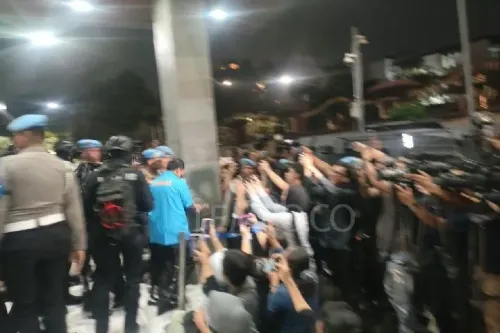
Ahrie was the first of the case's four suspects to appear before the KKEP, according to JawaPos.com. His hearing took place at National Police Headquarters in South Jakarta on November 10, with the suspects' ethics proceedings being held in stages.
Allegations examined at the hearing
Liputan6.com reported that the hearing concerned conduct allegedly committed while Ahrie was acting head of the Monitoring Section, or Pelaksana Tugas Kabagmon, in Bareskrim Polri's Operations and Narcotics Division, known as Robinopsnal. According to facts presented at the hearing, he allegedly accessed technological equipment to conduct illegal wiretapping.
Komjen Pol Rudy Darmoko chaired the panel, assisted by deputy chair Irjen Pol Roma Hutajulu. The other members were Irjen Pol M Zulkarnain, Irjen Pol Jayadi and Irjen Pol Rahmat Setyadi.
Liputan6.com described the hearing as lasting about eight hours and gave its start and end times as 9 a.m. and 8:10 p.m. Western Indonesia Time (WIB).
Four suspects in the criminal investigation
The Cyber Crime Directorate of the National Police's Criminal Investigation Agency, Bareskrim, named Ahrie and three other high-ranking officers as suspects in the alleged illegal interception of Prabowo's mobile phone. The others are former National Police Chief General Pol Listyo Sigit Prabowo, former IT division chief Irjen Pol Slamet Uliandi, and former Bareskrim narcotics crime director Irjen Pol Eko Hadi Santoso.
Investigators say the wiretapping also targeted state officials, political figures, media personnel, leaders of community organizations and nongovernmental organizations, and businesspeople.
According to Wikipedia's account of the 2026 Indonesian wiretapping affair, the alleged interceptions took place in 2025 and 2026, when Listyo Sigit was still police chief. The account cites Bareskrim as alleging that the suspects ordered wiretaps outside the procedures established by National Police Regulation No. 5 of 2010. Some phone numbers were allegedly added to the Lawful Interception Management System (LIMS) server without verification and monitored despite having no connection to an investigation.
The same account says the suspects allegedly ordered wiretap files deleted from LIMS computers around October 2026. On October 1, Listyo Sigit was removed as police chief and inaugurated as head of the Presidential Staff (KSP). General Suyudi Ario Seto took over the police leadership. Officers who learned of the alleged violations filed a police report on October 30, under the new leadership.
Bareskrim examined 10 witnesses and three expert witnesses during the investigation, according to the account. Investigators also seized 11 mobile phones, an iPad and four flash drives.
Criminal charges
Slamet faces charges of illegal access under Article 332(1) and/or (2) of the Penal Code, as well as Article 258(1) of Law No. 1 of 2023 on the Penal Code. Investigators also charged him under Article 32(1) of the Electronic Information and Transactions Law, known as the ITE Law, in conjunction with Article 20(j) of the Penal Code.
For Ahrie, Listyo Sigit and Eko Hadi, investigators cited Article 258 and Article 332(1) and/or (2) of Law No. 1 of 2023 on the Penal Code, along with Article 32(1) of the ITE Law.