Departure and passport checks
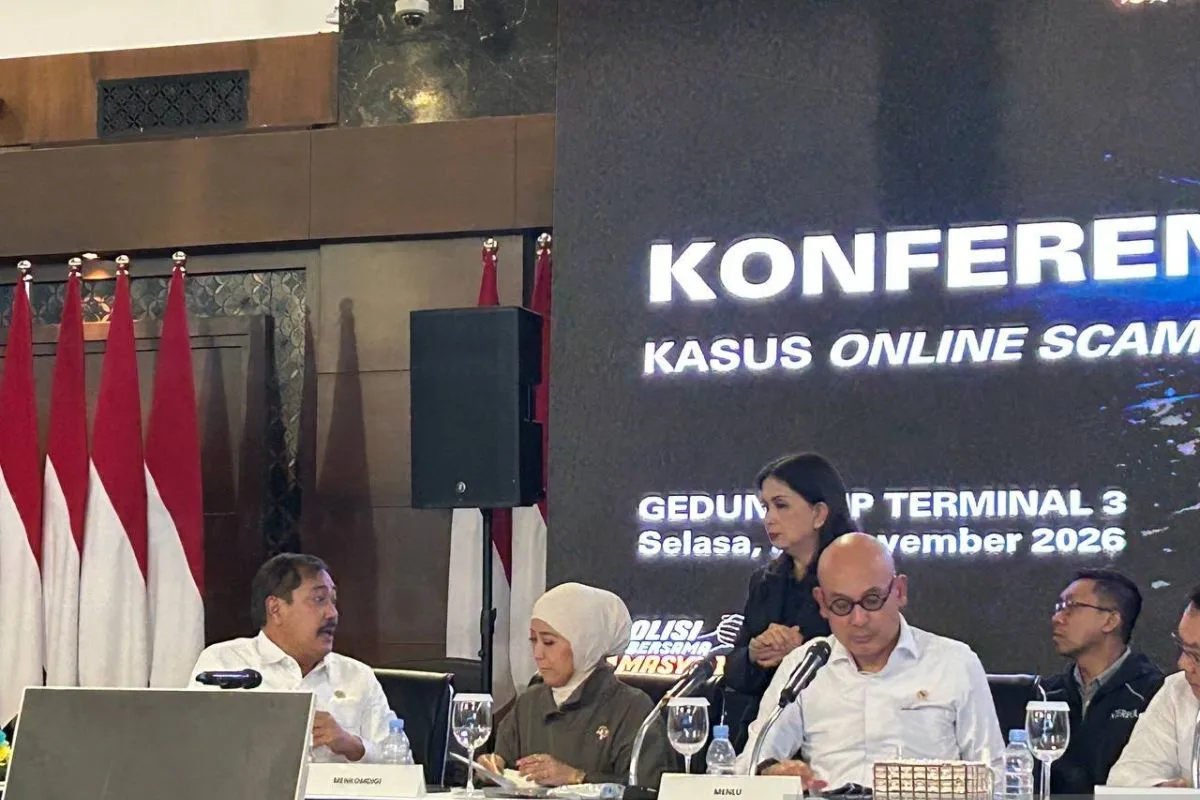
At the November 24, 2026, press conference, Andrianto said investigators had identified the network recruiting the 21 citizens. He described the intervention and work to dismantle the network as measures to protect Indonesians from human trafficking and human smuggling.
The 21 were among 1,502 Indonesian citizens whose departures authorities had blocked as of November 2026, according to the minister. That total included 1,339 people attempting to leave through non-procedural channels. Immigration officials had also rejected 94 passport applications submitted during 2026.
One passport case announced November 24 involved a 34-year-old man identified as DA. According to the Jakarta Globe, the Depok Immigration Office stopped his application because officials suspected he intended to join Russian forces. Immigration intelligence head Shalahuddin Al Ayubi said Telegram exchanges revealed an offer of $50,000 upfront, equivalent to about Rp 900 million, plus monthly pay of $3,000 to $6,000 depending on rank and service length.
The alleged offer to DA also included compensation of $50,000 for combat wounds and $167,000 in the event of death. DA told officials he had found the opportunity through a TikTok advertisement.
Job advertisements and combat contracts
A November 23 analysis in The Jakarta Post described recruitment pitches for construction, logistics and border-security work distributed through TikTok, Facebook, Instagram and job apps. Those advertisements offered signing bonuses as high as $35,000 and monthly pay of about $3,000.
The analysis reported that recruits traveled to Russia through hubs including Dubai, then faced restrictions on access to their phones and documents. They were pressured into signing contracts in Russian that committed them to front-line fighting until the war ended or they died. Recruiters also offered bounties for shooting Ukrainian soldiers, according to the analysis.
Investigations identify recruiters and a training site
Police had outlined another recruitment investigation at a November 11 press conference in Jakarta. West Jakarta Metro Police Chief Senior Superintendent Nasriadi said six people had been named as suspects: four Indonesians, a Russian and a Ukrainian. According to the Indonesian National Police, the two foreign nationals worked together inside Indonesia to recruit fighters for Russia, despite the war between their home countries.
Police said at least 23 Indonesians had already traveled through that network to join the Russian army. Family accounts indicated that one had died and several others had sustained serious injuries from landmines.
Reporting on the broader crackdown, The Jakarta Post's November 23 analysis put the number of suspects at 13, with 12 detained and one wanted. Investigators were pursuing the cases under the human trafficking law, No. 21/2007, and the migrant worker protection law, No. 18/2017.
That group comprised 10 Indonesian brokers, two Russians and a Ukrainian based in Central Java. Investigators found a house in Pemalang, Central Java, that had served as an improvised semi-military training facility. The analysis also reported that authorities had stopped at least 11 prospective recruits at airports before they boarded Russia-bound flights.
Separate cases in Bogor and Yogyakarta
In an operation announced the weekend before November 24, police in Bogor, West Java, stopped 22 Indonesian men from allegedly being sent to Russia as mercenaries, the Jakarta Globe reported. Officers arrested two suspected coordinators: FIK, 37, of Sukabumi, and STH, 38, of Medan.
Bogor Police Chief Arfan Zulkan Sipayung said the men had been offered a $10,000 signing bonus and $3,000 a month. Suspects' statements suggested the network might already have sent around 200 Indonesians to Russia, but Sipayung stressed that investigators had not verified that figure. Police suspected the recruits traveled through Thailand.
In Yogyakarta, regional police arrested KRF, a 27-year-old resident of Ciamis, West Java, on November 16. According to Tempo English, police suspect he connected recruiting agents in Russia with prospective combatants in Indonesia and sent about 17 Indonesians to fight in the Russia-Ukraine war.
Police said KRF recruited between July and November 2026 in Yogyakarta, Banten, Cirebon, Kalimantan and Jakarta, earning roughly $1,000 for each person dispatched. The recruits traveled separately on tourist visas, with flights transiting Kuala Lumpur or Singapore.
Ukrainian reports and Indonesia's diplomatic request
Ukraine has announced what it described as the capture of the first Indonesian prisoner of war on the Zaporizhzhia front. The Jakarta Post identified him only as "AS," from East Java. According to Ukraine's state project "I Want to Live," cited by Babel.ua, the 49-year-old was captured in the Zaporizhzhia region after drones attacked his group.
The Ukrainian project also reported that Russia recruited about 283 Indonesian citizens to fight against Ukraine during the first nine months of 2026. It put the number of such cases over the preceding three years at no more than 10.
Indonesia had raised the recruitment issue with Moscow before the latest announcement. The Jakarta Post analysis said the Foreign Ministry sent a diplomatic note in late October 2026 requesting an end to the enlistment of Indonesians in Russia's armed forces and affiliated mercenary formations.
Jakarta also sought inclusion on Russia's military "exclusion list," which instructs recruitment centers to turn away applicants from designated countries. It asked Moscow to review contracts signed by Indonesians who had been deceived, allowing them to be discharged and returned home. As of November 23, neither the Russian Embassy in Jakarta nor Russia's Foreign Ministry had responded, according to the analysis.
Village outreach and tighter departure controls
Andrianto said his ministry would give Village Guidance Immigration Officers, known as Pimpasa, a stronger role in warning residents about illegal recruiters. The planned village-level education is intended to help residents avoid trafficking and smuggling, while discouraging involvement in criminal activity both within Indonesia and abroad.
He also announced plans for stricter oversight at every departure Immigration Checkpoint, or TPI. Praising police action against recruitment-network members in Indonesia and overseas, he said it demonstrated the state's commitment to protecting citizens.
The minister pledged closer cooperation with law enforcement agencies and continued support for operations against illegal migrant worker recruitment networks nationwide.