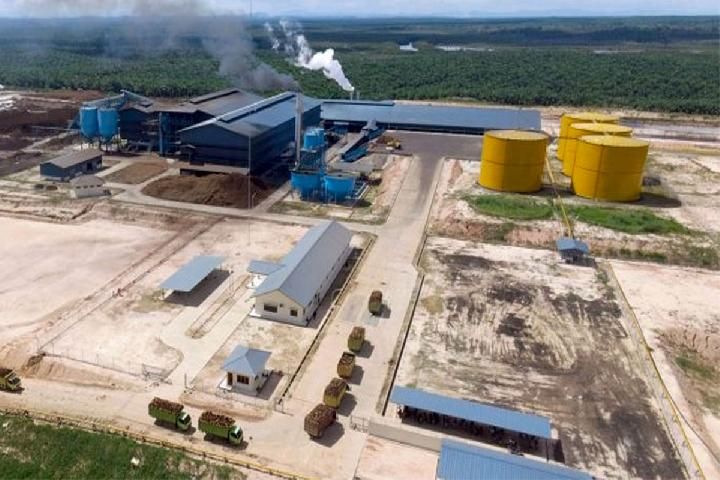
Haji Isam-Affiliated Palm Oil Firm Continues Operations Amid Wildfires
PT Pradiksi Gunatama Tbk (PGUN), a palm oil plantation company affiliated with Indonesian businessman Andi Syamsuddin Arsyad, known as Haji Isam, is maintaining normal operations despite forest and land fires near its concession area in East Kalimantan.
The company, founded in 1995, operates approximately 12,800 hectares of palm oil plantations and processing facilities with a mill capacity of 60 to 90 tonnes per hour in Batu Engau District, Paser Regency. Haji Isam owns the Jhonlin Group, a diversified business empire spanning coal, biodiesel, plantations, logistics, shipping, and aviation across Kalimantan.
PGUN President Director Jonet Budiarto said on Wednesday, October 14, 2026, that the fires had not disrupted core operations.
"Harvesting activities and palm oil mill operations continue as normal,"
Unprecedented Fire Season in East Kalimantan
The statement comes as East Kalimantan faces an unprecedented fire season. As of October 1, 2026, the province recorded 8,019.63 hectares of affected area, the largest among Indonesian provinces. In August alone, over 1,027 hectares burned within the first three weeks, more than four times the total area burned during the previous seven months combined.
PGUN stated it was not facing, nor did it anticipate facing, severe administrative sanctions or civil or criminal lawsuits related to the fires. Potential administrative sanctions include land sealing by authorities and the suspension or revocation of business licenses.
Broader Enforcement Actions
The company's position contrasts with broader enforcement trends across the archipelago. Indonesian police have named nine palm oil companies as suspects in forest and land fire cases affecting Sumatra and Kalimantan as of October 15, 2026, with investigations covering 25,600 hectares of burned land. An additional 223 individuals have been named as suspects.
Indonesia's Ministry of Environment and Forestry is pursuing enforcement actions against 57 corporate entities linked to 34,636 hectares of forest and land fires, with approximately 95 percent of the affected land consisting of oil palm plantations. The Ministry of Forestry has already imposed administrative sanctions on six companies holding Forest Utilization Business Permits after fires totaling 1,511.55 hectares across West Kalimantan, Central Kalimantan, and East Kalimantan.
According to environmental group Walhi, 74 percent of hotspots in Kalimantan were located within corporate concession areas, specifically 10,739 hotspots in oil palm plantation areas, 7,880 hotspots in mining concessions, and 6,905 hotspots in Forest Utilization Business Permits areas.
Financial Impact
Jonet said the fires' financial impact was relatively contained and immaterial to the company's overall revenue and net profit.
"There has been no material asset damage requiring large-scale asset write-offs,"
The company posted a net profit of IDR 159.3 billion in 2025, representing a 101.2 percent year-on-year increase compared with IDR 79.18 billion profit in 2024, with sales rising 7.33 percent to IDR 792.7 billion.
PGUN operates in Paser Regency, home to over 52,000 palm oil farmers working across 253,000 hectares of palm oil plantations, making the sector a critical part of the local economy.
Fire Mitigation Measures
Jonet said the company had implemented several short-term measures to mitigate the impact of the fires. These include establishing a forest and land fire task force during the dry season, monitoring hotspots, and preparing equipment and infrastructure such as portable water pumps and water trucks.
The company coordinates with local disaster management agencies, the Indonesian Military, the National Police, forestry agencies, and Manggala Agni, Indonesia's forest and land fire control brigade.
For the long term, PGUN said it had prepared water management systems, adopted a zero-burning policy, and introduced community-based fire prevention initiatives. The company also works with communities in villages surrounding its concession areas through collaborative fire prevention programs and public education on the dangers of forest and land fires, Jonet said.