Airlines express conditional interest
Malaysia's government has initiated discussions with Malaysia Airlines and Batik Air regarding the potential absorption of AirAsia's domestic market operations, as authorities closely monitor the financial health of Southeast Asia's largest low-cost carrier.
The conversations, which have intensified in recent weeks, form part of scenario planning exercises led by the finance ministry and state-linked airport operator Malaysia Airports Holdings Berhad (MAHB), according to two people familiar with the matter. The discussions reflect growing concerns over financial pressures facing the budget airline.
AirAsia has been severely impacted by surging jet fuel costs stemming from the US-Israeli conflict with Iran, with prices jumping 66 percent in the second quarter to an average of $183 per barrel compared to the previous quarter.
Both Malaysia Airlines and Batik Air have indicated to the government that any large-scale takeover of AirAsia's operations would require assuming its aircraft leases, one source revealed. The carriers stated that absorbing routes and passenger volumes without the accompanying aircraft would prove significantly more challenging.
The two airlines have expressed willingness to expand organically to capture AirAsia's routes and passengers rather than acquire the entire business, according to people interviewed.
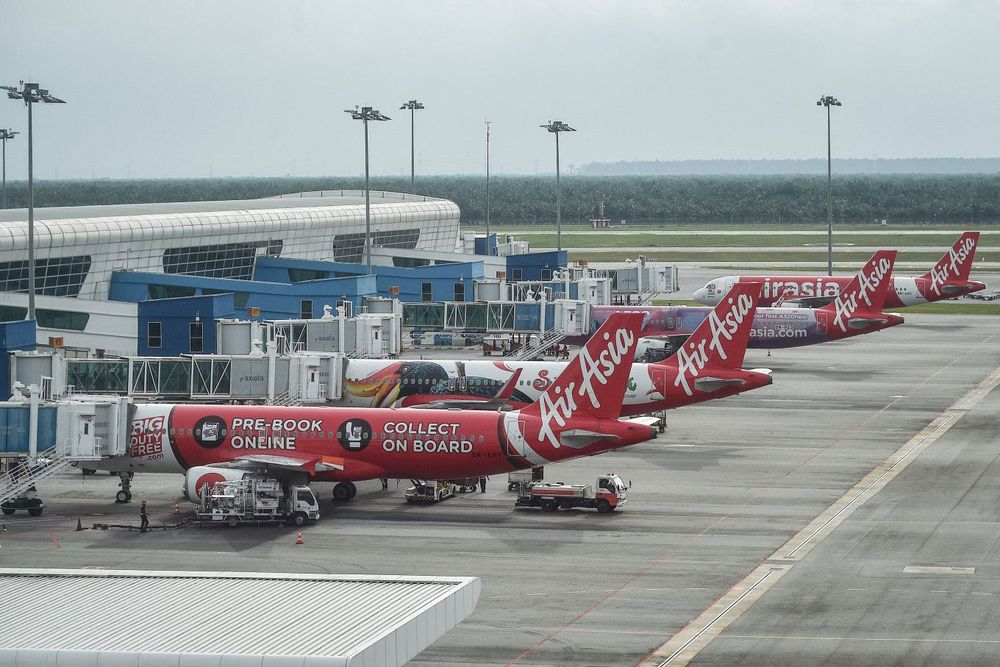
AirAsia commands approximately 40 percent of Malaysia's overall aviation market and 60 percent of domestic flying, making its financial difficulties a significant concern for the government.
Debt burden and repayment challenges
The airline owes MAHB at least 500 million ringgit ($123.6 million) for services including landing and parking fees, according to multiple sources. The airport operator has already granted repayment extensions to the carrier.
As of June 30, AirAsia reported current liabilities totaling 18.4 billion ringgit ($4.51 billion). The airline held cash and bank balances of 954 million ringgit at the same date.
Two sources estimated that AirAsia requires at least $3 billion in fresh capital to address its financial position, though the airline maintains that its current financing targets are sufficient.
Seeking emergency funding
AirAsia announced this month it is advancing discussions with financial institutions, targeting up to $1 billion from international debt markets plus 700 million ringgit in local credit facilities, primarily for debt restructuring purposes.
Other options under discussion include the government providing endorsement to support the airline's capital-raising efforts from external investors, though the exact nature of any potential support remains unclear.
The finance ministry has reportedly hired Alton Aviation Consultancy to assess AirAsia's funding needs as it considers whether to provide support, given the airline's importance as a major employer and provider of affordable air connectivity across the region.
Heavy losses and restructuring efforts
AirAsia reported a net loss of 831 million ringgit for the second quarter ended June 30, driven by rising jet fuel costs and substantial foreign-exchange losses of 331 million ringgit.
The carrier has implemented aggressive restructuring measures, including cutting underperforming routes, returning 25 older aircraft to lessors, and renegotiating vendor contracts to reduce costs.
Farouk Kamal, deputy group CEO of AirAsia Group, stated that the airline does not comment on operational or financial speculation.
All material updates regarding our business and fleet strategy are disclosed transparently through official exchange filings and corporate announcements at the appropriate time.
He emphasized that AirAsia remains focused on maintaining business continuity and stable operations across all markets, with strong underlying demand continuing across its network. The airline is working closely with stakeholders to manage financial and operational requirements.
MAHB declined to comment on AirAsia's financial outlook but stated it regularly engages with all airline partners on network and route development, including
potential capacity and route opportunities where there are gaps in the market or unmet demand.
Malaysia's finance ministry, Batik Air, and Malaysia Airlines all declined to comment on the discussions.