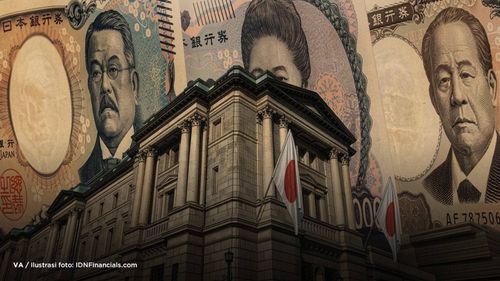
Inflation test follows strong jobs report
The dollar's pause followed several volatile sessions. Friday's US employment report showed October job gains exceeding twice the market forecast, lifting the currency and leaving traders pricing in an 85% chance of a rate increase in December.
Expectations had shifted from Fed cuts to increases after the US-Israeli war against Iran raised energy costs and inflation pressures. The dollar index had gained earlier in the year, and markets now anticipate two US rate increases by the middle of 2027. Morningstar reported on November 6 that the federal funds rate target range was 3.75%-4.00%.
The next focus is October's Consumer Price Index. Economists polled by Reuters forecast annual headline inflation of 3.9% and core inflation of 2.8%. Separately, FactSet's consensus, reported by Morningstar, calls for monthly increases of 0.24% in headline CPI and 0.2% in core CPI, down from September's respective gains of 0.60% and 0.3%.
An inflation reading above forecasts could increase expectations for Fed tightening and support the dollar. Imre Speizer, a Westpac strategist in Auckland, said the scope for further repricing may lie beyond the next meeting.
"There is limited room to price in another modest increase for December, but expectations for subsequent meetings could still rise," Speizer said.
Lower oil prices and stronger stocks weigh on the dollar
Before Tuesday's lull, falling oil prices and rising global stocks had encouraged investors to move back into riskier assets after seeking safety in the US currency. The Australian dollar climbed nearly 1% on Monday and traded near $0.6921 on Tuesday morning. The New Zealand dollar extended its advance to $0.5624; both currencies were relatively steady during Asian trading.
The euro reached $1.1220 after a 0.7% gain in the preceding session. Those advances reversed the currencies' Friday losses following the strong US jobs report.
The retreat in oil prices followed the earlier war-driven increase. On November 5, Bank of England Governor Andrew Bailey said oil had fallen to a two-month low, with Brent down around 15% since the start of that week to about $95 a barrel. Traders were betting that the US midterm election results could bring an end to, or a de-escalation of, the war with Iran.
Volatility in artificial intelligence stocks has also introduced uncertainty into the rate outlook. Investors have raised concerns that a major Democratic victory in the congressional elections could bring tighter regulation and slow the AI industry's development. In a client note, Macquarie strategists Thierry Wizman and Gareth Berry said those conditions could weaken US growth in 2027 and constrain the dollar's gains.
Sterling supported by Bank of England increase
The pound traded at $1.3441, supported by the Bank of England's rate increase the previous week. On November 5, the bank lifted its key rate from 3.75% to 4%, its first increase since August 2023. The Monetary Policy Committee voted 8-1, with the dissenter favoring a larger half-point increase to 4.25%.
The bank's November Monetary Policy Report forecast that UK inflation would peak at 4.9% in 2027. Under an adverse scenario involving oil at $130 a barrel, inflation could reach 6.2%.
BBC economics editor Faisal Islam reported on November 5 that sterling, measured against a basket of currencies, had reached its highest level since the 2016 Brexit referendum. A stronger pound can help curb UK inflation by lowering import costs.
Intervention warnings underpin the yen
The yen traded at 157.97 per dollar. Warnings of Japanese government intervention continued to support the currency, even as expectations for a Bank of Japan rate increase in December faded.
Figures released Monday showed that Japan had sold $97 billion in foreign exchange reserves to support the yen during late July and August, when it briefly hit a four-decade low against the dollar.
In an earlier disclosure reported by The Japan Times, citing Bloomberg, Japan's Ministry of Finance confirmed spending a record ¥15.4 trillion, about $98.6 billion, on yen purchases in the month through August 26, 2026. Part of that operation, the largest monthly intervention on record, was conducted jointly with the United States. Tokyo's foreign securities holdings fell by $87.8 billion at the end of August.