Climate bill and institutional plans
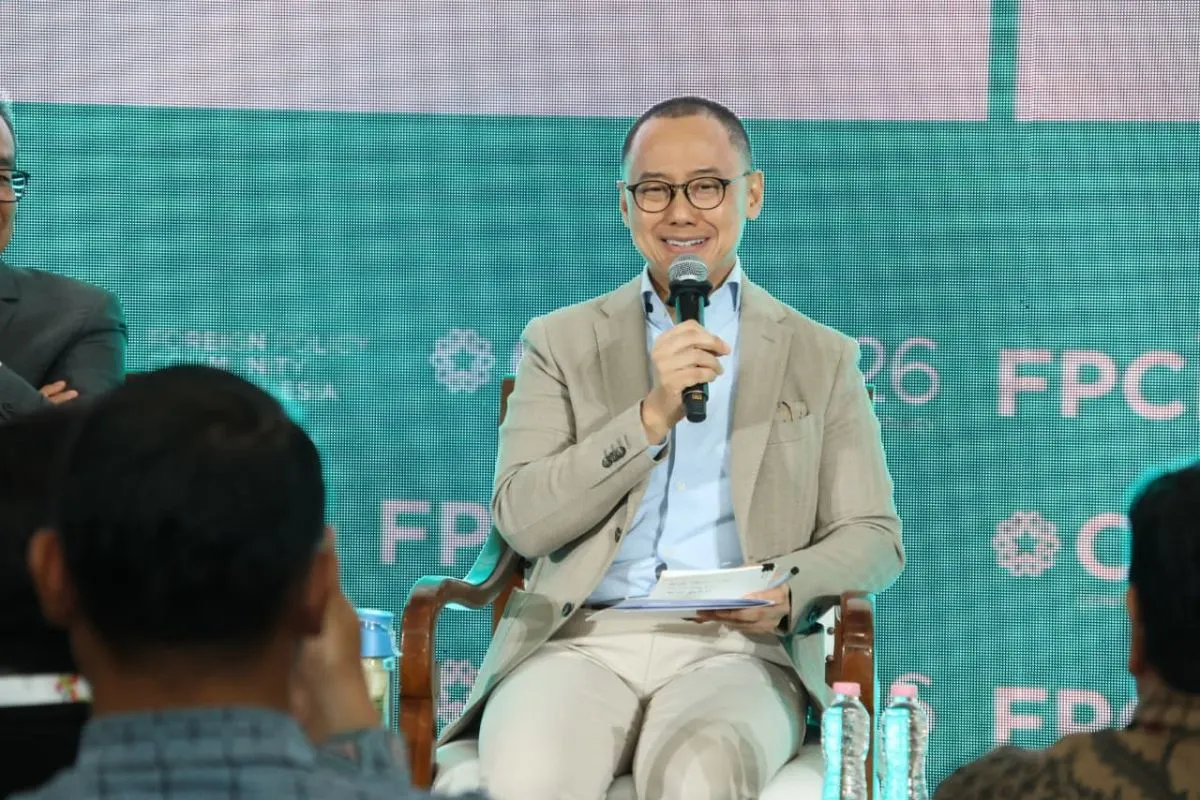
Speaking at the 2026 Conference on Indonesian Foreign Policy in Jakarta on November 22, Soeparno called for coordinated domestic policies and international cooperation to address climate risks. His remarks were detailed in a written statement received that Sunday.
He welcomed the addition of the Just Climate Change Control Bill to the National Legislation Program. In his view, the legislation needs to cover both emissions mitigation and adaptation, along with loss and damage, climate finance and carbon economic value. He also called for clear institutional responsibilities, measurable emissions-reduction obligations introduced in stages, and safeguards for communities most affected by climate change.
"Climate change regulations must provide certainty to the business sector, drive green investment, and ensure justice for the public," he said.
The proposal is part of a broader legislative agenda. Environment Minister Jumhur Hidayat said in November that lawmakers were discussing three climate-related measures: the Just Climate Change Control Bill, the New and Renewable Energy Bill, and amendments to the Electricity Law.
At COP31 in Antalya on November 13, Jumhur outlined two bodies planned under the climate bill. A high-level council would set strategic direction and improve coordination among ministries, while an independent, science-based expert committee would provide scientific advice to the council.
Food supplies face production and safety risks
Soeparno described the government's 4.5 million tons of rice reserves as a valuable resource, but said stocks alone were not enough without stronger production and distribution. He warned that drought linked to El Niño could reduce food output, interrupt hydropower generation and energy distribution, and push commodity prices higher. Those pressures could develop into wider food crises and prompt people to migrate between regions, he said.
The Statistics Agency (BPS) projects that Indonesia's 2026 rice production could reach approximately 57.45 million tons of milled dry paddy, down 4.57% from the previous year. It also expects El Niño to cause a substantial decline in harvested area during the year's final three months.
Reserve levels could also decline. The Indonesian Institute for Economic and Financial Development Research (Indef) warns that support and market-stabilization programs could draw rice stocks down from about 4.5 million tons to 3-3.5 million tons by early 2027. The Finance Ministry says the 2026 food security budget was increased to 210.4 trillion rupiah, approximately $11.6 billion, or 31.7% above the projected 2025 amount.
Food safety is another concern. In late October, Food and Drug Authority (BPOM) head Taruna Ikrar said El Niño was expected to last until early 2027. He called for preventive measures against contamination and the risk of counterfeit food arising from supply disruptions.
Turning energy investment into operating projects
Soeparno urged Indonesia to speed up its energy transition, including implementation of the 2025-2034 Electricity Supply Business Plan (RUPTL) and the 100 GW solar program. He identified the central challenge as moving beyond investor interest and commitments to projects that actually operate.
President Prabowo Subianto has set a 2029 target for the solar program. Launched in August 2026, its first phase comprises 14 projects with combined capacity of about 5.2 GW. Yet only 526 MW had target completion dates, according to Jakarta-based think tank IESR, as reported by pv magazine. Indonesia had 1.59 GW of installed solar capacity in the first quarter of 2026.
IESR also says the RUPTL provides for 42.6 GW of renewable energy and 10.3 GW of energy storage. Some transmission infrastructure required to connect solar generation, however, is scheduled for 2030-2034.
Indonesia's role in climate diplomacy
Alongside domestic preparations, Soeparno argued that Indonesia's resources give it a strategic role in international climate negotiations. He cited renewable energy potential of 3,687 GW, carbon storage capacity of nearly 600 gigatons, extensive mangrove forests and abundant critical minerals.
He said Indonesia could serve as a middle power connecting the interests of the Global North and Global South, with practical partnerships spanning renewable energy, carbon capture and storage, and the carbon economy.