Dispute over capacity-based location rules
A reported draft presidential regulation, known as a Perpres, covering submarine cable communication systems (SKKL) and data centers would establish three categories based on information technology (IT) load. Class A would start at 3 MW; Class B would cover 50 kilowatts to less than 3 MW; and Class C would cover facilities below 50 kW.
Only special economic zones (SEZs) and industrial estates would be open to Class A projects. Class B facilities would also be permitted in buildings outside residential areas, while Class C facilities could operate in residential areas.
IDPRO chairman Hendra Suryakusuma said the group backed government efforts to map facility locations, prepare supporting infrastructure and set proportionate standards. Its objection concerned the basis for the proposed thresholds.
"We believe the 3 MW threshold [requiring facilities to be built only in SEZs and industrial estates] needs further review in terms of its technical basis and relevance to industry developments," Hendra said Wednesday, as quoted by Bisnis.com.
Hendra said a classification based on IT load should help authorities plan and supervise the industry, not automatically restrict sites or business models. He also called for clarity on whether capacity means a facility's design capacity, installed capacity or actual operating load. Enterprise, colocation, hyperscale and artificial intelligence computing facilities have different requirements that the proposed categories may not capture, he said.
Rather than making SEZs and industrial estates the only options, IDPRO wants the government to make them preferred locations for digital infrastructure hubs by providing infrastructure and incentives. The group warned that rigid boundaries could exclude projects elsewhere that are technically and commercially viable, while creating uncertainty for investments already underway or being planned.
Energy and water requirements
The draft would also attach energy- and water-efficiency limits to the categories, according to the Communications and Digital Ministry's Digital Infrastructure Directorate General (DJID). For Class A facilities in SEZs, Power Usage Effectiveness (PUE) could not exceed 1.3, and water use would be capped at 2 liters per kilowatt-hour (kWh).
Class B facilities in commercial areas would face ceilings of 1.3 for PUE and 2.5 L/kWh for water use. Those in SEZs would have limits of 1.4 and 3 L/kWh, respectively. For Class C facilities in residential areas, the maximums would be 1.2 and 2.5 L/kWh.
Operators would also have to ensure energy efficiency across both their IT load and supporting systems, and report water efficiency (WUE) and carbon-emissions efficiency (CUE).
IDPRO argues that PUE and WUE need to be evaluated together: under some conditions, reducing PUE can mean consuming more water. The organization published its Green Data Center Whitepaper in 2022 and plans to build on it to develop an Indonesia Sustainable Data Center Standard.
Capacity estimates and expansion plans
Hendra put Indonesia's operational data center capacity at approximately 520 MW as of June 2026, with a projection of nearly 600 MW by year-end. He said IDPRO members accounted for more than 80 percent of national capacity, while cautioning that the projected expansion depended on available power, completed construction and customer demand.
IDPRO forecasts that national capacity could reach about 1.41 gigawatts (GW) by 2029. Citing the pace of expansion over the past two years, Hendra said he personally believed that level could be reached earlier.
In a separate assessment, Savills Research & Consultancy Indonesia reported 683.1 MW of existing IT capacity across Greater Jakarta and Batam as of June 2026. Its pipeline estimate put maximum potential capacity at 2.3 GW by 2030. Savills also reported that average project size had increased from roughly 4.8 MW before 2019 to 28.9 MW in the AI era.
Batam's place in the regional market
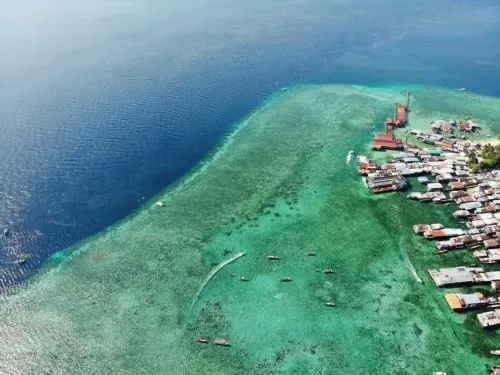
Savills identified tax incentives, duty exemptions and streamlined licensing as benefits of Batam's SEZ status. Its proximity to Singapore also supports ultra-low-latency connectivity, the consultancy said.
According to Savills, Singapore's 2019–2022 moratorium on data centers steered hyperscale investment toward Johor. With Johor now tightening approvals over water-scarcity and sustainability concerns, the consultancy sees Batam emerging as the region's next frontier for data center development.