Federal appeals court halts Minnesota's AI nudification ban in xAI challenge
A federal appeals court on Friday suspended enforcement of Minnesota's groundbreaking ban on AI-generated fake nude images, handing a preliminary victory to Elon Musk's xAI as the company challenges the law on constitutional grounds.
The 8th US Circuit Court of Appeals, which oversees federal cases across seven states in the Midwest including Minnesota, Missouri, and the Dakotas, issued an injunction halting the law while xAI's lawsuit proceeds. The decision reverses a lower court ruling last month that had allowed the measure to remain in effect.
Minnesota's pioneering legislation
Minnesota became the first state in the United States to ban nudification technology outright when Governor Tim Walz signed House File 1606 into law in May 2026. The legislation, which took effect on August 1, prohibits website operators, software developers and others from enabling users to create realistic images depicting intimate body parts not shown in original photographs of identifiable individuals.
xAI's constitutional challenge
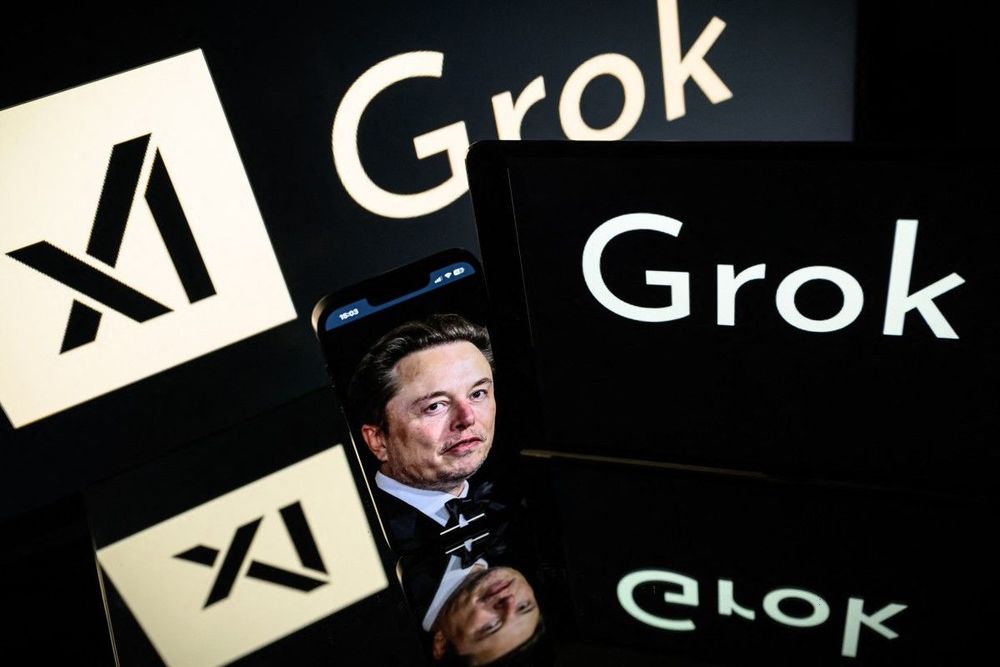
xAI, founded by Musk on March 9, 2023, and acquired by SpaceX in February 2026, operates Grok, an AI assistant with image generation capabilities. The company's Grok Imagine tool, powered by the Aurora model and integrated with the X platform, can create images from text prompts. The company maintains it has implemented rigorous protections against creating nudified or sexualized images of real people without consent.
In its constitutional challenge, xAI argues the Minnesota statute restricts free speech protected by the US Constitution. The company has disputed a district court finding that it delayed bringing suit and emphasized it has begun legal action against users attempting to evade Grok's technological blockers to generate non-consensual sexual images.
US District Judge Donovan Frank had rejected xAI's initial request for emergency relief last month, ruling the company failed to demonstrate irreparable harm and had waited too long to seek an injunction.
State officials defend the law
Minnesota Attorney General Keith Ellison expressed disappointment with the appeals court decision.
Minnesota's nudification ban outlaws AI technology products from generating sexual images that harm and harass people in the vilest way possible,
The Minnesota law carries significant enforcement provisions. It allows victims to sue violators for damages and empowers the state attorney general to collect civil penalties of up to $500,000 per violation. In defending the measure, Minnesota has cited what it calls a staggering volume of child sexual abuse material generated by AI products.
A global problem with staggering scale
The scale of the problem has drawn international attention. A UNICEF, ECPAT, and INTERPOL study across 11 countries found that at least 1.2 million children disclosed having their images manipulated into sexually explicit deepfakes in the past year, representing one in 25 children in some countries. Research by Home Security Heroes found that 99 percent of deepfake pornography victims are women or girls, with deepfake pornography accounting for over 98 percent of all deepfake videos.
AI nude generator websites collectively receive approximately 40 million unique visitors each month across 181 identified sites, according to a study by the Institute for Strategic Dialogue conducted with support from the AI Security Institute. A joint investigation by WIRED and Indicator uncovered nearly 90 schools and approximately 600 students worldwide targeted by AI-generated deepfake nude images.
Broader regulatory landscape
Minnesota is part of a broader national movement to regulate nudification technology. Other states including Texas and California have passed laws targeting operators of nudification services, while Florida and Utah have enacted requirements for platforms to remove nonconsensual intimate images upon request.
The 8th Circuit's jurisdiction over federal district courts in Arkansas, Iowa, Minnesota, Missouri, Nebraska, North Dakota, and South Dakota means its eventual ruling could have implications across the region. The St. Louis-based court's decision to grant the injunction keeps the law on hold while xAI's appeal proceeds through the judicial system.