Victim of Domestic Violence from Military Husband, Ex-Wife Challenges Domestic Violence Law in Constitutional Court
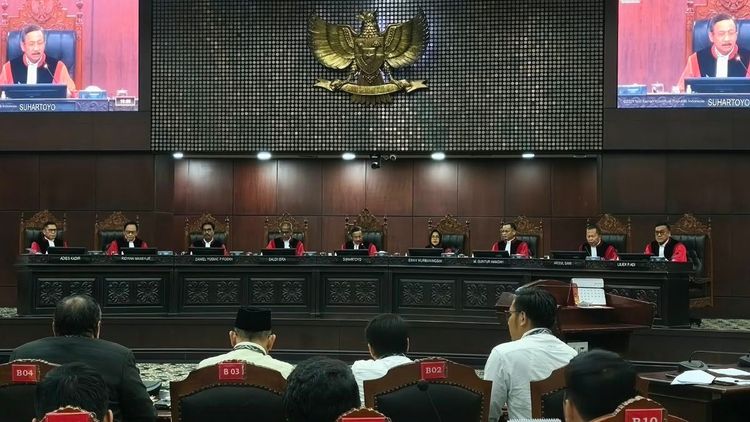
Nike Friscilia Santika is mounting a constitutional challenge against Indonesia's domestic violence legislation, arguing that current sentencing provisions inadequately address the lasting trauma experienced by survivors. The case, heard at the Constitutional Court on Monday, centers on Article 44 of Law No. 23 of 2004 on the Elimination of Domestic Violence.
Nike's legal challenge stems from her experience as a victim of physical violence perpetrated by her ex-husband, a military officer. Military Court II-08 Jakarta convicted him of domestic abuse and sentenced him to seven months imprisonment, a penalty Nike contends falls drastically short of addressing the psychological and physical impact she continues to endure.
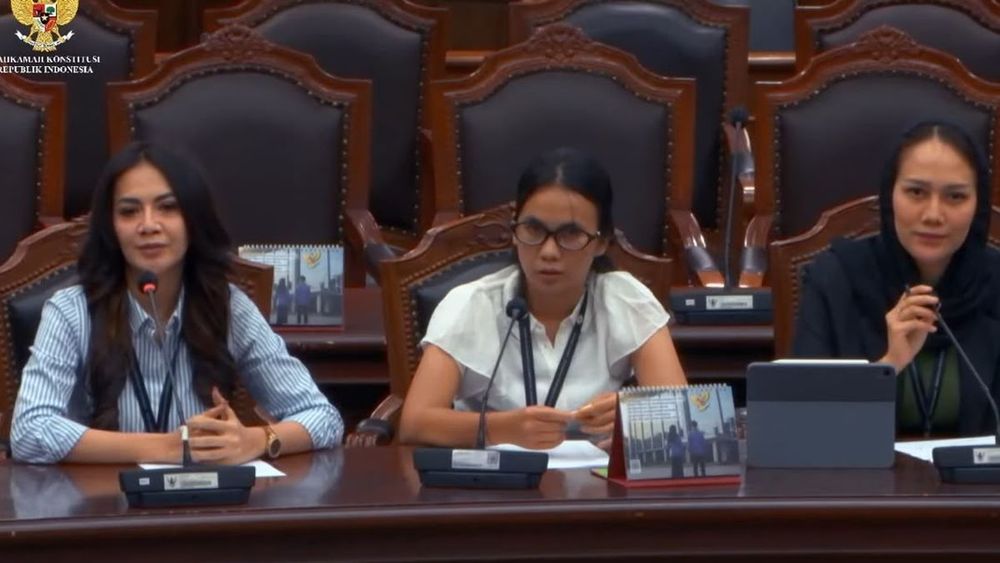
"The petitioner is a victim of physical violence inflicted by her husband. This case has been processed through Case No., which is deemed read, in the Military Court II-08 Jakarta," stated Nike's attorney, Bernita Matondang, during the preliminary examination of Case No. 376/PUU-XXIV/2026.
The case highlights broader concerns about domestic violence prosecution in Indonesia. According to the 2024 National Women's Life Experience Survey, an estimated 23.3 million women experienced physical, sexual, or psychological violence in the past year. However, official reporting captured only a fraction of these incidents, with the National Commission on Violence Against Women recording 330,097 cases and the SIMFONI PPA system documenting 27,658 cases, revealing a massive gap between occurrence and formal reporting.
The National Commission's 2024 Annual Report documented 477,127 cases of violence against women overall, with 61 percent occurring in domestic settings and physical violence accounting for 43 percent of incidents.
Military Jurisdiction Complicates Domestic Violence Cases
Nike's case involves additional complexity because her ex-husband's military status subjected the prosecution to military court jurisdiction. Under Indonesia's 1997 Law on Military Tribunals, military personnel accused of crimes including domestic violence are tried in military courts where prosecutors and judges report to commanding officers rather than independent civilian authorities.
Legal experts have identified significant barriers victims face when perpetrators are military personnel, including lack of transparency in proceedings, delayed legal responses, and historically lenient sentencing by military courts. Human Rights Watch and Indonesian civil society organizations have consistently criticized the military justice system for lacking independence and impartiality, with observers noting a pattern of short prison sentences in cases involving civilians.
A recent parallel case in June 2026 illustrated these concerns when Jakarta Military Court sentenced four military personnel to between 18 months and two years imprisonment for an acid attack on human rights activist Andrie Yunus, sentences widely criticized as disproportionate to the gravity of the assault.
Legal Arguments Challenge Sentencing Framework
Bernita Matondang explained that Law No. 23 of 2004 was enacted as a paradigm shift to recognize domestic violence as a criminal offense requiring state intervention, moving away from treating such incidents as private family matters. However, Nike argues this transformative intent is undermined by Article 44's sentencing structure.
Article 44, paragraph (1) establishes a maximum penalty of five years imprisonment or a fine of 15 million rupiah for physical violence in domestic settings. Critically, paragraph (4) reduces the maximum sentence to four months imprisonment or a fine of 5 million rupiah when spousal violence "does not result in illness or impede work, occupation, or daily activities."
"The petitioner is not stating that all violence should receive the maximum sentence. What is being questioned is whether the difference in penalties in paragraph (4) has sufficient justification when the impact on the victim's sense of safety and dignity is not always reflected in indicators of illness or activity impediment."
Legal scholars have previously criticized Article 44, paragraph (4) for potentially normalizing minor domestic violence through lenient sanctions and a complaint-based prosecution mechanism that weakens victim protection and may enable perpetrators to evade accountability.
Nike emphasizes the disconnect between her ongoing trauma and the brief imprisonment her ex-husband served. "The suffering and trauma she experiences last much longer than the prison term received by her ex-husband," Matondang noted, arguing this disparity reveals a fundamental mismatch between the law's stated protective goals and its sentencing design.
Constitutional Court Requests
Nike requests the Constitutional Court declare Article 44, paragraph (1) unconstitutional unless interpreted to impose a minimum sentence of two years and maximum of five years imprisonment for perpetrators of physical domestic violence. She further seeks a ruling that Article 44, paragraph (4) is entirely unconstitutional and without binding legal force.
The constitutional challenge arrives amid broader judicial scrutiny of military jurisdiction. The Constitutional Court recently ordered Parliament to reform the military justice system within two years, ruling that jurisdiction should be determined by the nature of offenses rather than perpetrator status, with crimes against civilians tried in ordinary courts.
Nike's case also highlights gaps in victim support within the existing legal framework. Law No. 23 of 2004 contains no provisions for compensation that victims can claim for personal injury, property damage, or financial loss, meaning criminal penalties remain the primary legal response regardless of lasting impact on survivors.
The Constitutional Court's decision in this case could have significant implications for how Indonesia's legal system addresses domestic violence and balances penalties with the long-term consequences survivors face.