Experts Say MK Ruling is a Momentum to Reform the Military Justice System
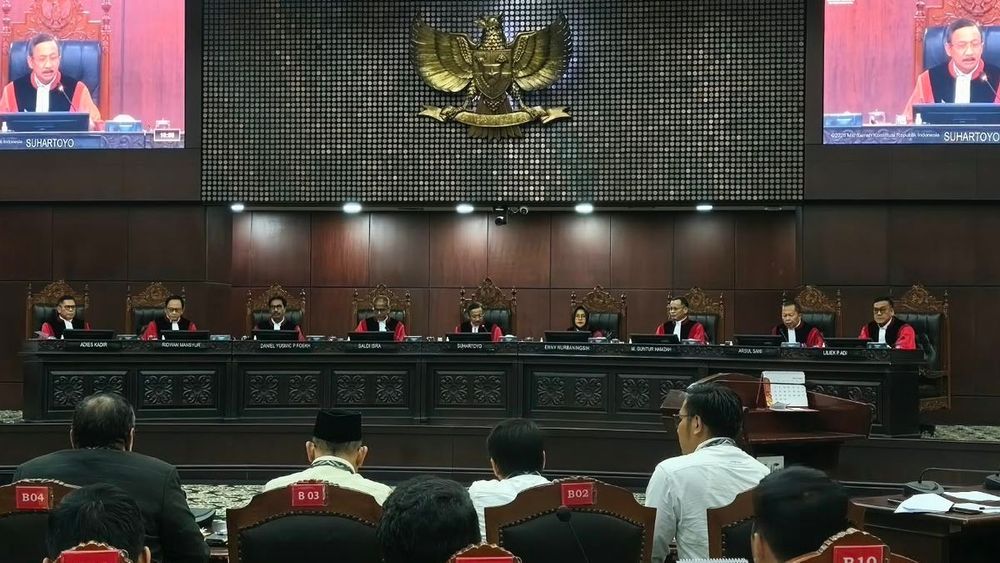
Indonesia's Constitutional Court has delivered a landmark ruling that legal experts describe as a critical opportunity to overhaul the military justice system, declaring Law Number 31 of 1997 on Military Courts conditionally unconstitutional and setting a two-year deadline for comprehensive reform.
The decision, announced Thursday in case Number 260/PUU-XXIII/2025, found the law inconsistent with Article 24(1) and Article 28D(1) of the 1945 Constitution, which guarantee an independent judiciary and equality before the law. Parliament now has until October 2028 to enact amendments, or the law will be deemed unconstitutional and cease to have legal effect.
Legal expert Abdul Fickar characterized the ruling as a pivotal moment for reforming how Indonesian National Armed Forces personnel are prosecuted for criminal offenses. He explained that the current system has allowed both military-related crimes and common offenses committed by TNI members to be adjudicated in military courts, drawing public criticism over questions of fairness and accountability.
"Yes, it is indeed a momentum. Because up until now, whether it's a military crime or a common crime like that of Andri Yunus and others, all have been tried in military courts. They should be tried in civilian courts," Abdul Fickar stated in an interview with Kompas.com on Friday.
A Two-Decade Legal Paradox
The Constitutional Court's intervention addresses a legal conflict that has persisted for more than 20 years. Under Law 31/1997, enacted during Indonesia's New Order era under Suharto, military court jurisdiction follows the status of the accused rather than the nature of the offense. This subject-based approach has meant that any crime committed by a TNI member, regardless of whether it involved military duties or was a common crime against civilians, fell under military jurisdiction.
Law No. 34 of 2004 on the TNI attempted to shift this paradigm through Article 65, which stipulates that soldiers involved in general criminal acts must be tried in civilian courts. However, Article 74 of the same law maintained the validity of the 1997 Military Justice Law until new legislation is enacted, effectively suspending the reform and creating contradictory legal provisions that have coexisted for over two decades.
The need for reform has been legally mandated since MPR Decree No. VII/MPR/2000 and the 2004 TNI Law, yet lawmakers have failed to implement this constitutional mandate, allowing the problematic system to continue operating.
Human Cost Behind the Legal Challenge
The Constitutional Court case was filed by Lenny Damanik and Eva Meliani Br. Pasaribu, two women whose family members died in alleged criminal acts by TNI personnel. Lenny's 15-year-old son, Michael Histon Sitanggang, died from abuse by Sergeant Reza Pahlivi in May 2024. The military court in Medan sentenced Pahlivi to just 10 months in prison.
Eva's father, journalist Rico Sempurna Pasaribu, died after his house was reportedly set on fire by TNI members in June 2024. Their petition illustrated the real-world consequences of a system that critics argue provides insufficient accountability for military personnel who commit crimes against civilians.
The pattern of lenient sentencing in military courts has been documented systematically. Human rights organization Kontras analyzed 131 verdicts from military courts against TNI personnel for murder, attempted murder, and assault from October 2024 to September 2025. The analysis found sentences ranging from one month and 20 days to six years for assault, and one year to life imprisonment for murder, with only five defendants receiving death sentences.
The case of human rights activist Andrie Yunus has also drawn attention to military justice concerns. Four TNI military intelligence officers were convicted in June 2026 for an acid attack on the KontraS activist that occurred in March 2026, receiving sentences of 1.5 to 3 years in prison despite the attack causing permanent injuries including damage to Yunus's right eye. The maximum penalty under Indonesia's Criminal Code for such an offense is 12 years. Two of the defendants were initially dismissed from service but were later reinstated on appeal in September 2026.
Comprehensive Reform Requirements
The Constitutional Court has mandated that the restructuring of the Military Justice Law must include integration of the military justice system under a single authority, the Supreme Court. Currently, military justice operates under the Supreme Court operationally but remains administratively within military organizations, creating an institutional separation that critics argue undermines judicial independence.
Abdul Fickar emphasized that implementing the Constitutional Court's ruling will require Parliament to swiftly amend the Military Justice Law to ensure it focuses solely on adjudicating military offenses committed by military personnel. The court has also called for clear definitions of military versus common crimes and the establishment of a mechanism for resolving jurisdictional disputes.
The ruling carries particular significance for regions like West Papua, where human rights organizations report that military personnel accused of human rights violations are routinely processed under military jurisdiction regardless of the crime and the civilian status of victims.
If Parliament fails to enact the required amendments within the two-year timeframe, the 1997 law will be declared unconstitutional and will no longer be in effect, potentially creating a legal vacuum in the prosecution of military personnel until new legislation is passed.