How payments work
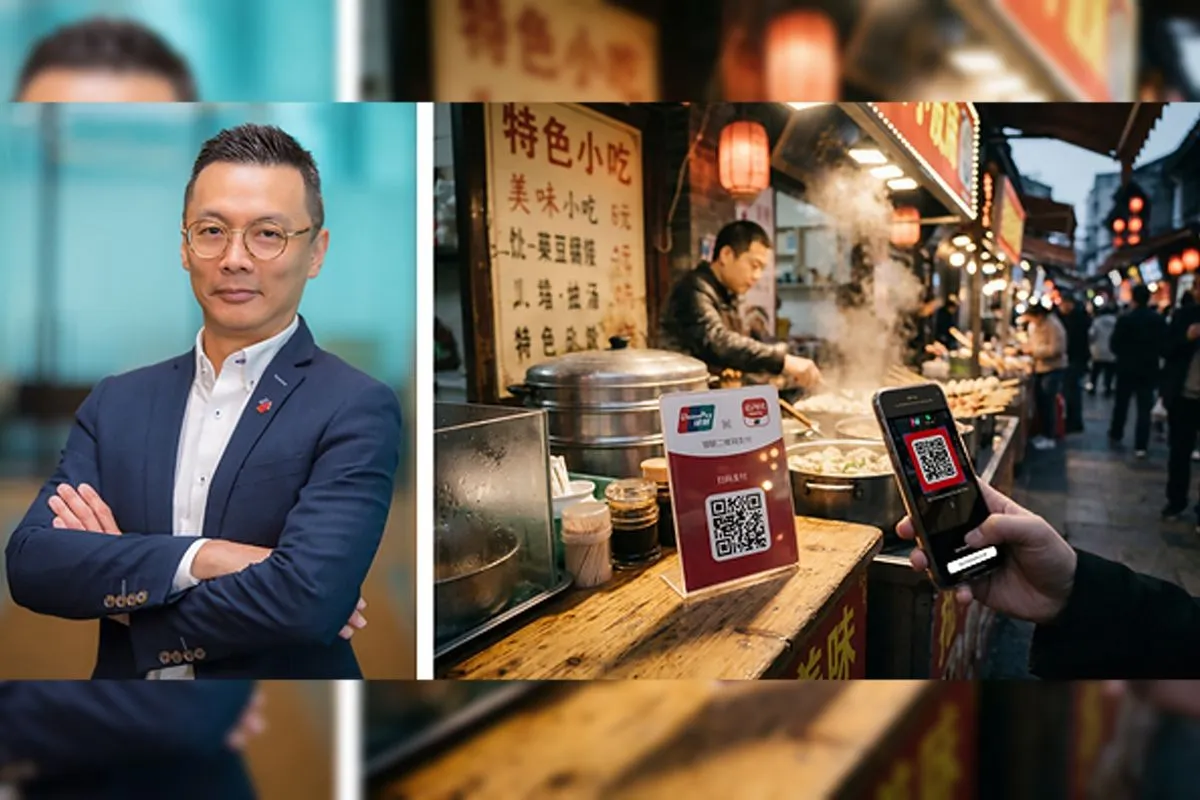
Through its partnership with UnionPay International (UPI), HLB offers direct account payments at businesses ranging from large retailers and restaurants to small shops and individual sellers. Customers do not need a separate third-party app or wallet top-up to use HLB QR Pay.
Customers can either scan a merchant's QR code or display a code in the app for the merchant to scan. These options, known as merchant presented mode and consumer presented mode, are both widely used in China, according to HLB.
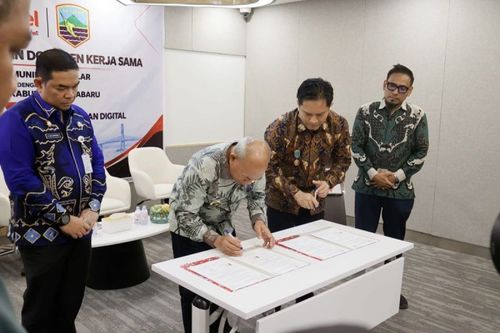
The partnership was marked at the "Ultimate Payment Passport with HLB" event in Kuala Lumpur on October 27, 2026, Bernama reported. HLB Group Managing Director and CEO Kevin Lam said the bank had spent the preceding month testing payments at various locations in China to ensure the service worked effectively.
Converting currency before departure
Customers with the Multi-Currency Feature on an HLB Pay&Save Account can exchange Malaysian ringgit (MYR) for offshore Chinese yuan (CNH), hold that balance and use it for HLB QR Pay purchases. HLB says this allows travelers to secure a favorable exchange rate before departure, unlike platforms and e-wallets that apply the prevailing rate to each transaction.
HLB says payments from the CNH balance carry no transaction fees or service charges. If that balance is insufficient, the payment is automatically debited from the customer's primary MYR account.
Andrew Jong, HLB's managing director of personal financial services, described QR payments as central to commerce and daily life in China, a key destination for Malaysian travelers, businesspeople, professionals and students. He said combining the multi-currency feature with QR payments was intended to help customers feel "more prepared when they travel, and more at ease when they arrive."
Spending limits and service restrictions
The bank's UnionPay QR Service FAQ, last updated October 30, 2026, sets a maximum of RM3,000 for each cross-border QR payment. Spending through UnionPay QR counts toward the same standard RM10,000 daily allowance as DuitNowQR.
Weixin Pay limits vary by merchant type. Payments to Personal Seller QR codes have ceilings of CNY 500 per transaction, CNY 2,000 per day and CNY 50,000 per year. For small and medium enterprises using Business QR codes, the limits are RM3,000 per transaction, CNY 10,000 per day, CNY 50,000 per month and USD 50,000 per year.
The FAQ says customers must enable device location access for Weixin Pay Personal Seller QR transactions. The UnionPay QR service cannot be used to pay Malaysian merchants in Malaysia, and credit cards cannot fund its payments; the money comes from bank account balances.
Other destinations and payment options
HLB's UnionPay QR service also covers participating merchants in Hong Kong, Macau and Thailand. According to Bernama's report on the October 27 launch, the bank is looking to add connections in other destinations popular with Malaysian travelers.
Bernama also reported that HLB's broader cross-border offering allows customers to link eligible debit and credit cards to Chinese super-apps such as Weixin Pay, as well as use Apple Pay, Google Pay and Samsung Pay. Those options are separate from the account-funded UnionPay QR service.
In a separate announcement on October 29, 2026, HLB said it was expanding HLB QR Pay with Alipay+ integration through Payments Network Malaysia (PayNet). The addition builds on PayNet's existing bilateral connections to national QR networks, including NETS in Singapore, PromptPay in Thailand, QRIS in Indonesia and Bakong in Cambodia.