Indonesian Police Identify 9 Suspects from Palm Oil Corporations Related to Forest and Land Fires in Kalimantan
Indonesian police have identified nine corporations in the palm oil sector as suspects in criminal investigations related to widespread forest and land fires in Kalimantan, authorities announced Wednesday.
Kombes Pol Pipit Subiyanto, head of Subdirectorate III of the Criminal Investigation Agency's Special Crimes Directorate, reported that seven of the corporate suspects are based in West Kalimantan, with one each from Central Kalimantan and South Kalimantan. The identifications stem from police reports handled by regional authorities across the island.
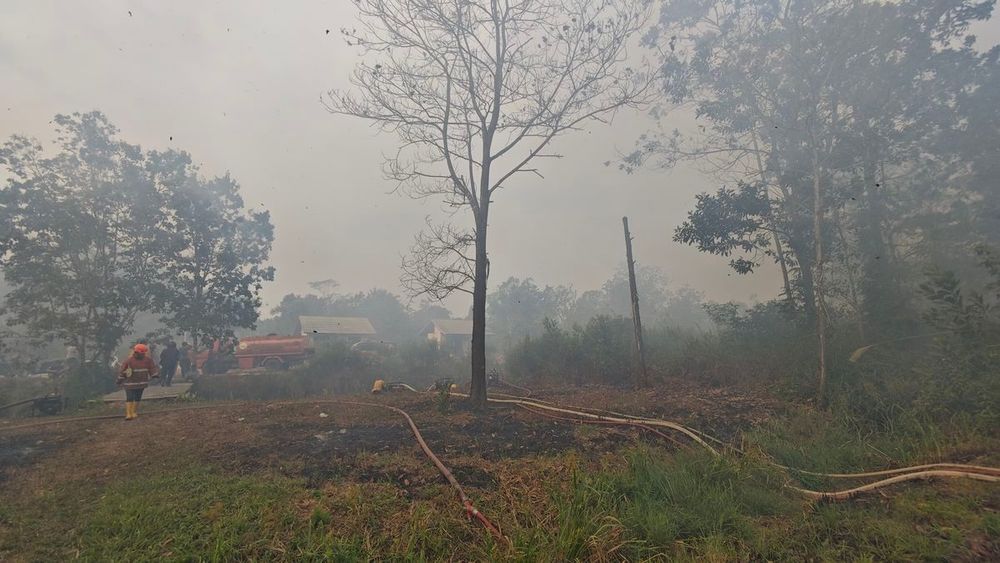
The announcement comes as Indonesia grapples with one of its worst fire seasons in recent years. By mid-October, fires had consumed over 4.1 million hectares nationwide, approximately 15 percent above the 20-year average. West Kalimantan has been particularly affected, with cumulative burned areas reaching 79,391 hectares by August, explaining the concentration of corporate suspects in that province.
Authorities are currently managing 98 police reports related to alleged criminal acts involving corporations, with a total burned area of 25,600.26 hectares under investigation. Ten regional police departments and the national Criminal Investigation Agency are handling the cases.
The human toll has been severe. As of October 9, over 283,000 people across Indonesia have suffered from acute respiratory infections caused by fire smoke, with the highest numbers in South Kalimantan and South Sumatra. More than 5 million people across Borneo and Sumatra face direct health risks from haze, and school closures forced 1.4 million students to attend classes remotely in September.
Legal Framework for Corporate Prosecution
Under Indonesia's Law No. 32 of 2009 on Environmental Protection and Management, corporations can face criminal liability for environmental crimes. The law allows prosecution of both the business entity and individuals who ordered illegal activities.
Pipit emphasized that corporations bear responsibility for their legal obligations regarding forest and land fires. When asked about potential connections to land clearing, he declined to confirm specifics but noted that palm oil companies dominate the suspect list.
The legal framework makes oil palm plantations operating in forest areas without proper permits illegal. Companies must obtain forest release decrees from the Ministry of Environment and Forestry to legally convert forest land. Government data indicates that illegal oil palm plantations currently occupy approximately 3.37 million hectares of Indonesia's forest areas, an area larger than Belgium.
Individual Suspects and Maximum Penalties
In addition to the nine corporate suspects, police have identified 223 individuals as suspects in forest fire cases, an increase from 196 individuals previously reported. These cases span 12 regional police departments involving 273 police reports and 5,157.89 hectares of burned land as of October 13.
The suspects face multiple charges carrying maximum prison sentences of up to 12 years. Pipit expressed hope that enforcement actions would change public perceptions about land clearing methods.
This should serve as a wake-up call to our fellow citizens who still believe that clearing land by burning is an easy, cheap, and effective method; that belief must be eradicated.
Environmental Impact and Ongoing Crisis
The environmental scale of the 2026 fires has drawn international attention. Between September 1-7, Indonesia released 19.7 million metric tons of fire emissions, the highest of any country globally that week and more than one-third of the worldwide total.
Emergency alerts and response periods remain in effect across multiple Kalimantan provinces through October 31. Authorities have warned that natural rainfall is not expected until mid-November in many affected areas, meaning the fire season could extend for several more weeks.
The corporate investigations represent a potentially significant shift in enforcement patterns. Legal research has documented that Indonesia's application of corporate criminal liability for environmental crimes has historically been weak, with courts predominantly applying lenient sanctions and relying on individual prosecutions rather than holding business entities accountable.